Material Guides
Knowledge Center

Knowledge Center
A practical technical assessment of injection-molding capability should verify six areas before a US buyer awards a project: engineering and DFM support, mold-making capability, press range and automation, material control, quality validation, and delivery support. The best supplier is not simply the one with the lowest part price; it is the supplier that can prove repeatable dimensional control, stable cycle times, transparent tooling ownership, documented inspection, and responsive engineering communication.
For US buyers, established domestic suppliers such as Proto Labs, Xometry, EVCO Plastics, Plastic Molding Manufacturing, and The Rodon Group are useful benchmarks because they serve markets including medical, consumer products, electronics, automotive, and industrial equipment. Qualified international suppliers can also be considered when they provide ISO-certified quality systems, strong pre-sales and after-sales engineering support, reliable shipping, and cost-performance advantages. China-based suppliers with rapid tooling and low-volume molding expertise can be particularly effective for bridge production, product validation, and programs that need frequent design changes.
Buyers should request a DFM report, material datasheet, mold-flow or filling-risk review where appropriate, first article inspection plan, sample approval process, production schedule, packaging specification, and written responsibility for mold maintenance before placing a purchase order.
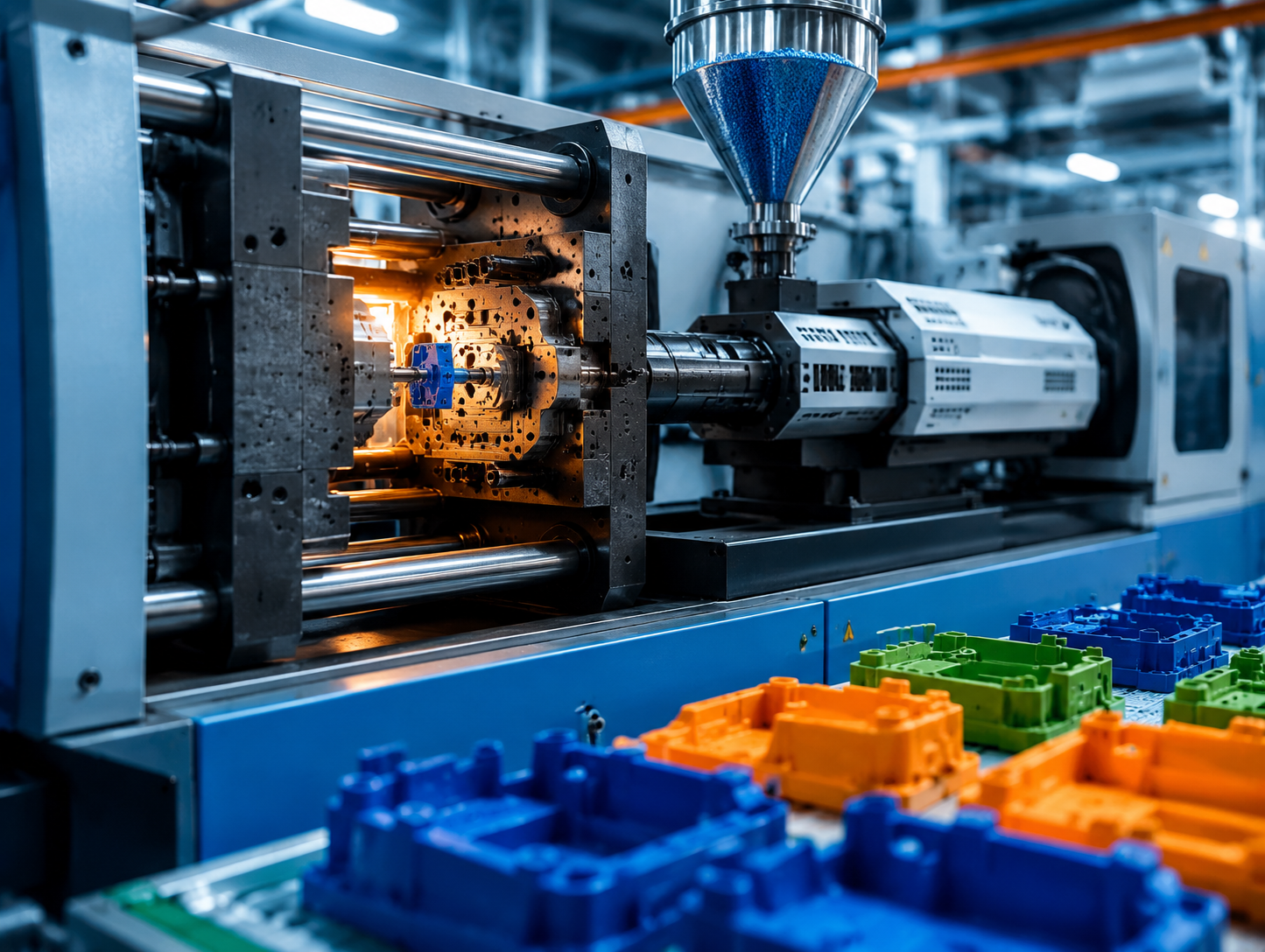
Injection molding remains one of the most important manufacturing processes for American product development and production. It supports high-volume consumer goods, medical device housings, electrical enclosures, automotive interior parts, appliance components, industrial controls, packaging systems, and countless other products. For buyers in the United States, however, the process is no longer evaluated only by annual piece price. Engineering agility, supply-chain resilience, regulatory readiness, regional fulfillment, sustainability, and tooling lead time all affect the actual cost of ownership.
Companies in manufacturing centers such as Detroit, Michigan; Chicago, Illinois; Cleveland, Ohio; Minneapolis, Minnesota; Dallas, Texas; Phoenix, Arizona; Los Angeles, California; and Boston, Massachusetts often need suppliers that can communicate quickly with design, purchasing, quality, and operations teams. A molding partner must be able to convert CAD data into manufacturable tooling and stable production without excessive redesign, scrap, or delayed validation.
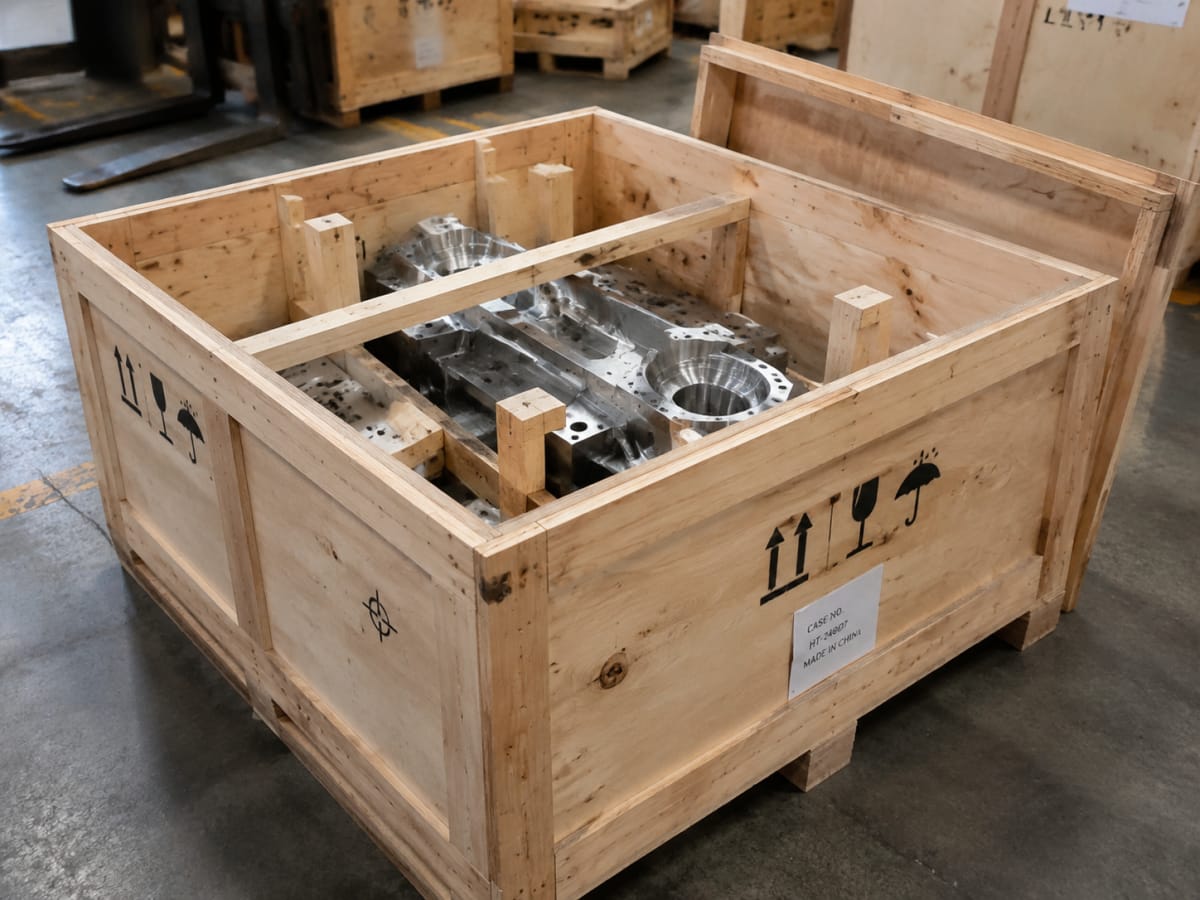
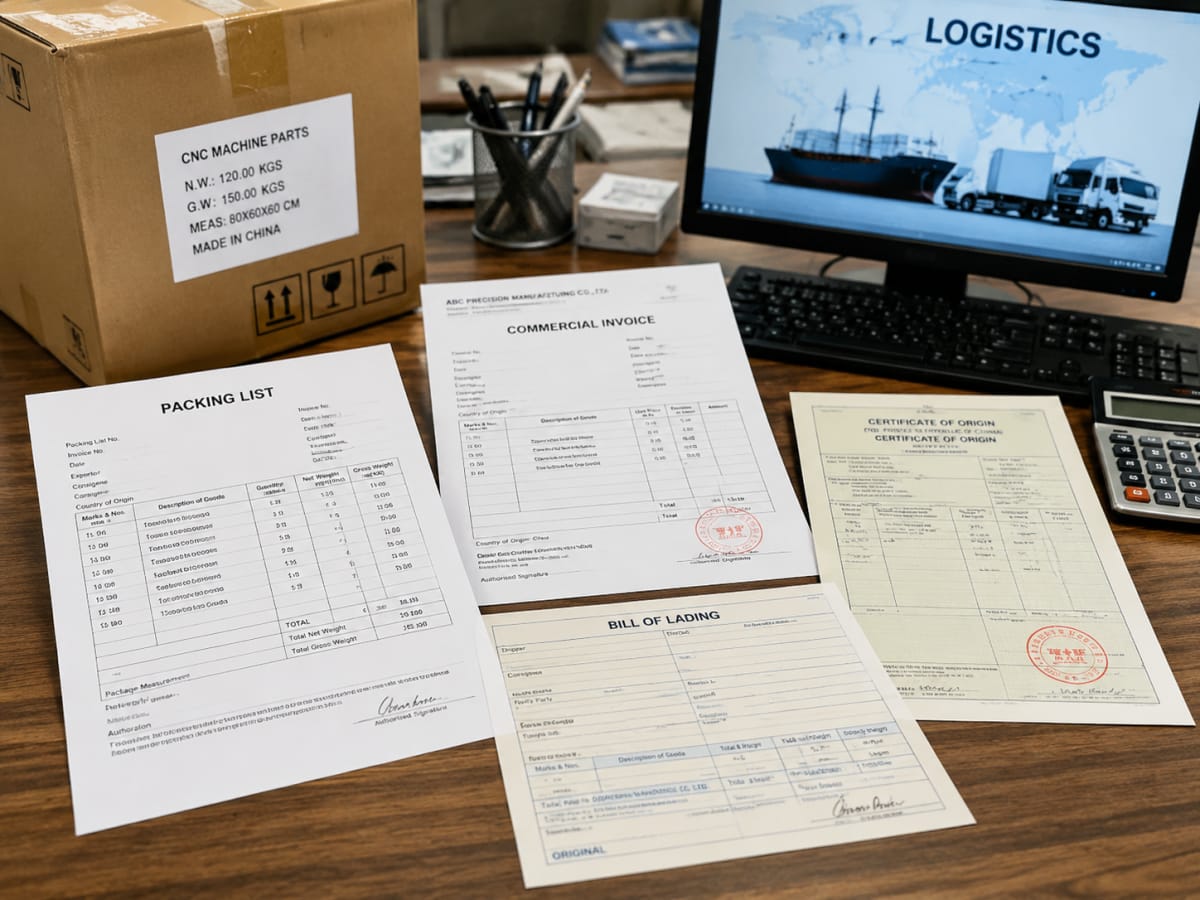
US ports and trade hubs also influence supplier selection. Imported tools and molded parts frequently move through Los Angeles/Long Beach, Oakland, Seattle/Tacoma, Houston, Savannah, Charleston, New York/New Jersey, and air cargo gateways such as Chicago O’Hare and Los Angeles International Airport. Buyers using overseas production should assess packaging, customs documentation, Incoterms, inventory planning, and response procedures for quality issues before approving a supplier.
A capable injection molder should therefore be evaluated as an engineering and manufacturing system rather than as a machine shop with presses. The supplier’s real capability is demonstrated by how well it manages resin, tooling steel, machining accuracy, cooling, processing windows, inspection, traceability, corrective action, packaging, and ongoing tool maintenance.
A thorough supplier evaluation starts with the part itself. Geometry, annual demand, resin type, cosmetic expectations, tolerance requirements, assembly interfaces, environmental exposure, regulatory requirements, and future design changes determine whether a production mold, rapid tool, family mold, insert mold, or overmold solution is appropriate.
Buyers should ask whether the supplier performs structured design-for-manufacturing analysis before tool construction. A useful DFM review identifies undercuts, insufficient draft, uneven wall thickness, sink risk, weld-line placement, fragile ribs, gate-mark concerns, ejection limitations, material-flow challenges, and critical dimensions. Early engineering review usually costs far less than correcting a hardened mold after initial sampling.
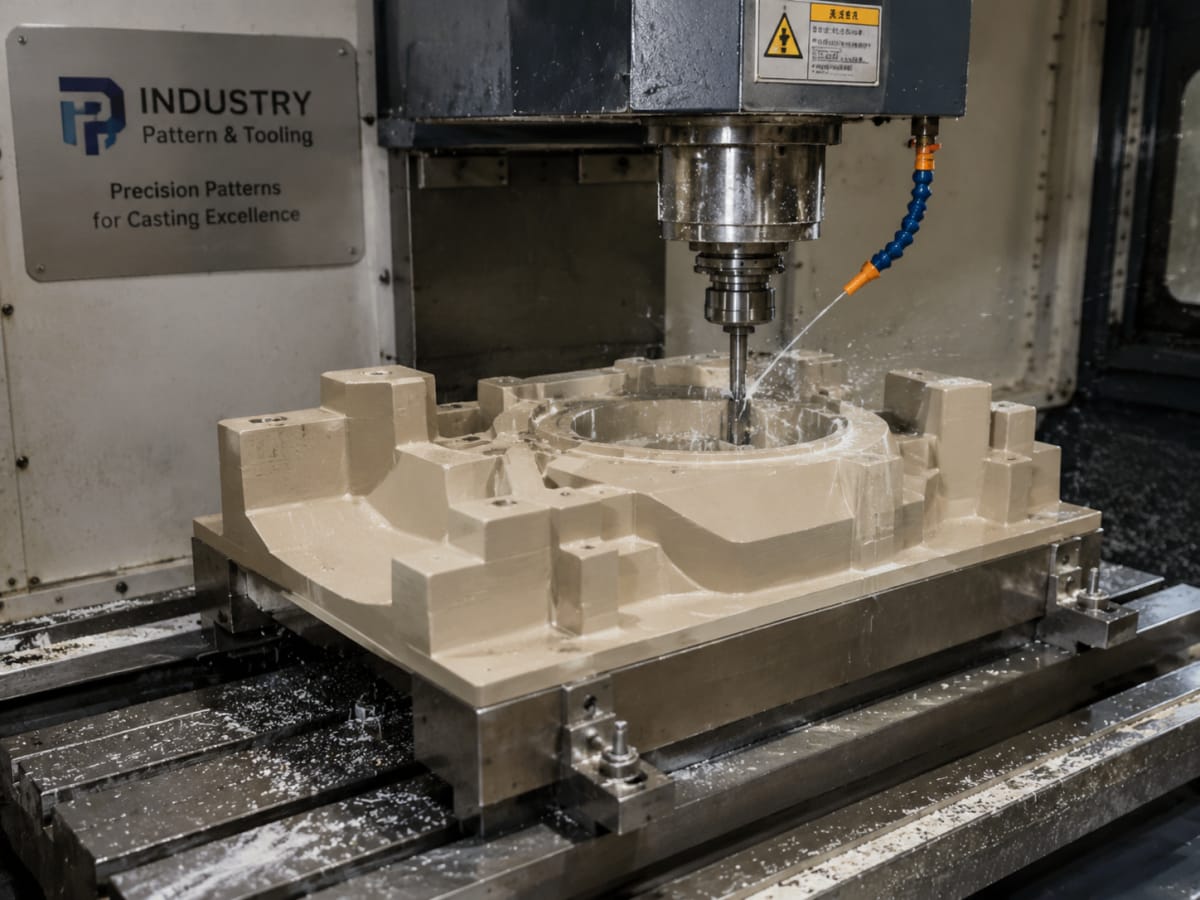
The capability assessment should also distinguish between molding capacity and tooling capacity. A supplier may operate many presses but outsource the mold build, limiting schedule control and slowing engineering changes. Conversely, a toolmaker may build accurate molds but lack appropriate molding machines, automation, drying equipment, inspection resources, or material-management systems. Buyers receive the strongest risk reduction when tooling, molding, machining, finishing, and inspection are coordinated under one accountable project team.
Assessment AreaWhat US Buyers Should VerifyEvidence to RequestWhy It Affects Project RiskDFM engineeringDraft, wall thickness, gate location, shrinkage, ejection, and tolerance analysisWritten DFM report with annotated CAD screenshotsPrevents avoidable tool rework and late-stage part defectsTooling capabilityIn-house CNC, EDM, wire EDM, polishing, fitting, and mold trialsTooling process map, mold steel recommendation, sample scheduleImproves schedule control and engineering-change responsivenessMolding equipmentPress tonnage, shot size, screw design, automation, dryers, and temperature controlMachine list matched to the proposed partEnsures the selected press can run the part consistentlyMaterial controlApproved resin source, lot identification, drying requirements, and regrind policyMaterial certificates and handling proceduresProtects mechanical properties, appearance, and traceabilityQuality systemFirst article inspection, in-process checks, final inspection, and nonconformance handlingControl plan, inspection report examples, ISO certificateReduces acceptance disputes and field-quality exposureDelivery readinessProduction planning, packaging, export documentation, and logistics communicationLead-time plan and packaging specificationHelps prevent missed launches and transit-related damageThis table should be used as a working checklist, not as a box-ticking exercise. A supplier that provides evidence promptly and explains tradeoffs clearly is typically more dependable than one that offers broad promises without engineering documentation.
Different product types require different technical approaches. Selecting the wrong tooling strategy can cause excessive capital cost, poor part quality, unnecessary lead time, or inability to respond to demand changes. US buyers should match the process to the commercial stage of the program.
Product or Tooling TypeBest Use CaseTypical Technical FocusBuyer ConsiderationRapid toolingPrototype validation and low-volume bridge productionFast tool construction, adjustable inserts, shorter production lifeUseful when designs may change after market testingProduction injection moldingRepeatable medium- and high-volume partsHardened steel, optimized cooling, durable ejector systemsRequires higher upfront planning but lower long-run costInsert moldingParts incorporating metal pins, threaded inserts, contacts, or fastenersInsert positioning, heat management, retention strengthVerify fixture design and insert-loading controlsOvermoldingSoft-touch grips, seals, multi-material assemblies, electronics protectionMaterial compatibility, bond strength, substrate alignmentRequest adhesion testing and cosmetic sample approvalFamily moldingSets of related components produced togetherBalanced filling, different part volumes, cavity controlCan reduce tool cost but may complicate production balancingTwo-shot moldingComplex multi-material consumer and medical componentsRotating platen or transfer process, material interactionEvaluate equipment availability and validation requirementsThin-wall moldingPackaging, lightweight containers, and high-speed consumer productsFast filling, gate design, cooling efficiency, press speedRequires specialized process control and robust toolingRapid tooling is particularly useful for startups, industrial designers, and established manufacturers preparing for an initial US market launch. It provides a practical bridge between CNC-machined prototypes or vacuum-cast parts and long-term production tooling. When demand is uncertain, buyers can validate assembly, fit, user experience, packaging, and early sales response before committing to a high-cavity hardened production mold.
For parts requiring metal threads, electrical contacts, shafts, magnets, or structural inserts, insert molding can eliminate secondary assembly operations. The capability assessment should confirm how inserts are loaded, whether automation is used, how damaged or misaligned inserts are detected, and what pull-out or torque tests are performed. For overmolded components, confirm that the supplier understands the bond behavior between the rigid substrate and elastomer or soft-touch resin.
Domestic sourcing can offer easier plant visits, shorter transit distances, familiar commercial practices, and straightforward handling of urgent production changes. The United States has a strong base of injection molding specialists, particularly in the Midwest, Northeast, Southeast, and California. Each supplier has different strengths in volume, tooling, automation, material expertise, speed, and industry focus.
CompanyPrimary Service RegionsCore StrengthsKey OfferingsProto LabsUnited States, Canada, Europe, and global product-development teamsFast digital manufacturing and rapid turnaround for development programsInjection molding, CNC machining, sheet metal fabrication, and 3D printingXometryUnited States nationwide, with broad digital manufacturing reachLarge production network and online quoting workflowInjection molding, CNC machining, casting, sheet metal, and finishingEVCO PlasticsUnited States and North American manufacturing marketsLarge-part molding, custom molding experience, and production supportCustom injection molding, engineering, tooling coordination, and assemblyThe Rodon GroupUnited States, especially East Coast and national consumer-product customersHigh-volume custom plastic injection molding and automated productionCustom molding, tool design support, assembly, and packaging servicesPlastic Molding ManufacturingUnited States, with service for OEM and industrial customersCustom injection molding and engineering-oriented manufacturing supportTooling, molding, insert molding, overmolding, and secondary operationsRex PlasticsPacific Northwest, West Coast, and national customersCustom molding, prototype-to-production support, and product developmentInjection molding, tooling support, assembly, and product-development servicesICOMoldUnited States customers and international project supply chainsOnline manufacturing access and low-volume to production-oriented moldingInjection molding, tooling, prototype production, and part finishingThe companies above should be considered starting points for comparison rather than automatic selections. A buyer producing a high-volume consumer component may prioritize automation, multi-cavity tooling, and packaging integration. A medical-device developer may prioritize documented validation, resin traceability, controlled manufacturing practices, and dimensional inspection. A startup may value rapid tooling, practical DFM guidance, low minimum quantities, and the ability to make design changes without restarting the project.
When evaluating local suppliers, schedule a technical review with engineering representatives rather than relying only on sales quotations. Ask them to walk through gate placement, mold construction, cooling strategy, resin selection, expected cycle time, inspection points, and corrective-action process. The quality of that discussion is often a better measure of capability than a generic equipment list.
US buyers should begin every molding RFQ with a complete technical package. At minimum, provide 3D CAD files, 2D drawings where critical dimensions apply, annual and monthly demand estimates, acceptable resin grades, color requirements, cosmetic standards, target delivery dates, assembly requirements, packaging expectations, and required certifications. If the part interacts with another component, include mating-part information or an assembly model.
Resin selection deserves careful attention. Commodity materials such as polypropylene, polyethylene, ABS, polystyrene, and nylon can be suitable for many consumer and industrial parts, but engineering polymers such as polycarbonate, POM, PPS, PEEK, reinforced nylon, TPU, TPE, and flame-retardant grades have more demanding processing requirements. Moisture-sensitive resins may need controlled drying. Glass-filled materials can increase strength but also affect shrinkage, surface finish, wear on tooling, and warpage behavior.
A supplier should identify whether the proposed resin is virgin material, whether color masterbatch is approved, how lots are recorded, and whether regrind is permitted. For medical, food-contact, electrical, automotive, or safety-critical applications, buyers may need additional documentation regarding material origin, chemical compliance, flame rating, biocompatibility, or environmental restrictions.
Buying QuestionStrong Supplier ResponseWarning SignRecommended Buyer ActionWho owns the mold?Written ownership terms, tool identification, and transfer procedureUnclear ownership or restricted release conditionsInclude mold ownership and storage terms in the purchase agreementHow is resin controlled?Specified brand or approved equivalent, lot records, drying controlsGeneric material descriptions without certificatesRequire resin data and a documented substitution approval processHow are critical dimensions checked?Defined gauges, CMM methods, sampling frequency, and reporting“Visual inspection only” for precision requirementsApprove a control plan before production startsWhat happens if samples fail?Root-cause review, corrective action, and revised sampling scheduleSupplier blames CAD without a technical explanationSet an engineering-change and corrective-action workflowHow is cosmetic quality controlled?Approved color plaques, limit samples, lighting conditions, packaging controlsNo reference samples or acceptance standardCreate a signed cosmetic acceptance standardHow is delivery protected?Production plan, export packaging, labeling, and shipment communicationPart price quoted without packaging or logistics detailConfirm Incoterms, cartons, pallets, and inventory responsibilityHow is tool maintenance handled?Preventive maintenance intervals and maintenance recordsNo plan after the first production runSpecify maintenance responsibility and expected tool lifeThe mold itself should be evaluated as a long-term production asset. Buyers should ask about steel selection, cavity count, mold base standards, runner type, gate style, cooling layout, ejection design, wear components, spare parts, surface finish, and expected tool life. A lower-cost mold may be appropriate for a few hundred validation parts, while a high-volume program may need hardened steel, robust cooling, replaceable inserts, and mold-maintenance planning.
It is also important to separate “tool completion” from “production-ready tool completion.” A mold is not truly production-ready merely because it produces a part. It must produce conforming parts repeatedly at a stable cycle time, with reliable ejection, acceptable cosmetics, controlled dimensions, and a documented process window.
Injection molding requirements vary significantly by industry. A supplier capable of producing a simple promotional product may not have the process discipline needed for a medical enclosure, an automotive under-hood component, or a tight-tolerance electrical connector. Buyers should select partners with experience relevant to the part’s actual performance environment.
IndustryTypical Molded ApplicationsImportant Capability RequirementsUS Buyer PriorityMedical devicesHandheld housings, instrument covers, cartridge components, diagnostic equipment partsTraceability, controlled materials, precision inspection, cosmetic consistencyDocumented quality planning and application-specific compliance reviewAutomotiveInterior trim, clips, vents, under-hood components, sensor housingsHeat resistance, long-term durability, PPAP-style discipline, repeatabilityMaterial performance and production consistencyConsumer electronicsCases, bezels, buttons, charger housings, wearable-product componentsCosmetic finish, assembly fit, thin walls, inserts, overmoldingAppearance standards and rapid engineering changesIndustrial equipmentControl housings, guards, knobs, covers, fittings, machine interfacesStrength, chemical resistance, dimensional stability, low-to-medium volume flexibilityFunctional performance and spare-part continuityElectrical productsSwitch housings, junction-box parts, connector bodies, cable-management partsFlame-rated resin, insulation properties, molded-in featuresResin certification and critical-dimension controlCommercial productsPoint-of-sale parts, dispensers, office equipment, storage productsCost efficiency, color consistency, assembly, packaging supportReliable volume ramp and retail-ready packagingSanitary and appliance productsHandles, panels, water-related components, covers, knobsMoisture resistance, surface quality, chemical performanceApplication testing and stable cosmetic finishFor medical and laboratory products, buyers should define whether the molded component is cosmetic, structural, fluid-contacting, electrically insulating, or used within a regulated assembly. These distinctions affect resin selection, documentation, inspection, and cleanliness expectations. For automotive programs, thermal cycling, UV exposure, vibration, chemical resistance, and long-term dimensional behavior can be more important than initial appearance.
For consumer products, market speed often drives supplier choice. A supplier that can support prototype machining, 3D printing, vacuum casting, rapid tooling, molding, finishing, assembly, packaging, and shipment through a coordinated workflow can reduce the friction of managing multiple vendors.
A useful supplier assessment considers how the molder solves real production problems. The following scenarios show the questions buyers should ask during technical discussions.
A California product team is preparing a smart-home enclosure with a glossy exterior, snap features, internal screw bosses, and a tight assembly interface for a printed circuit board. The supplier should review wall thickness, gate location, weld lines near visible surfaces, sink around bosses, texture requirements, and the risk of warpage. A rapid tool may support early sales testing, followed by a production tool after the geometry is frozen. The buyer should request color approval samples, dimensional reports for critical assembly points, and packaging that prevents scuffing during shipment.
A Michigan automotive supplier needs a reinforced nylon clip exposed to heat, vibration, and chemicals. The molding partner should verify material drying, glass-fiber orientation, shrinkage behavior, gate placement, retention force, and tool wear. The buyer should ask for cavity-to-cavity dimensional control, material certificates, functional test methods, and preventive mold-maintenance planning. A low quote without material-control evidence can create high downstream risk.
A Boston medical technology company requires a molded housing for a portable diagnostic device. The part has a visible finish, mating interfaces, metal threaded inserts, and cleaning-chemical exposure. The technical evaluation should include insert-molding fixtures, pull-out testing, resin suitability, dimensional inspection, cosmetic acceptance criteria, and change control. If the product is still developing, low-volume rapid tooling may reduce initial investment while the device design is validated.
An Ohio industrial equipment manufacturer needs replacement covers and internal components for legacy machinery. Demand is unpredictable, but downtime for customers is expensive. The supplier should support low-volume production, reverse engineering where needed, rapid tooling or CNC alternatives, controlled color matching, and practical stocking or scheduled release arrangements. The key assessment point is flexibility: the molder must be able to produce economically without forcing the buyer into excessive annual volume commitments.
A Texas brand owner needs a molded accessory, assembled with a metal component, packed in retail packaging, and shipped to distribution channels. The supplier should demonstrate not only molding capability but also assembly control, kitting, labeling, blister packaging or clamshell sealing if required, carton testing, and shipment coordination. A turnkey approach can lower supplier-management effort and help protect launch timing.
TEAM Rapid supports US product developers, OEMs, distributors, dealers, brand owners, individual inventors, and procurement teams with an engineering-led path from prototype to scalable manufacturing. Its ISO 9001:2015 quality management certification, more than 10 years of manufacturing experience, over 6,000 delivered projects, and customers in more than 25 countries provide measurable evidence of process discipline and export experience. Rather than relying on unspecified material claims, the company works from customer-approved plastic and metal specifications and supports DFM-based review, precision machining capability down to 0.01 mm where applicable, tooling manufacture, injection molding, insert molding, overmolding, finishing, inspection, assembly, packaging, and direct shipping. TEAM Rapid serves customer-owned product programs through OEM and ODM collaboration, wholesale production, retail-ready assembly, and regional distribution support; it provides EPC-style turnkey and customer-owned plant solutions where relevant, not BOO or on-site bulk-supply services. Although no US subsidiary or local warehouse is stated, the company has established experience serving US and Western-market customers through direct shipping, responsive one-to-one engineering communication, online pre-sale design review, production updates, inspection coordination, and after-sales issue handling. This gives US buyers a practical international sourcing option for rapid prototypes, low-volume bridge production, and recurring orders while retaining documented engineering support and clear project accountability.
For programs requiring a fast transition from CAD to molded parts, TEAM Rapid can provide custom injection molding support for US product teams, including molded cases, enclosures, trays, housings, covers, fillers, and complex functional plastic components. Its integrated process coverage is especially useful when a buyer needs CNC prototypes, 3D printing, vacuum casting, rapid tooling, molded parts, finishing, assembly, and shipment managed through one project pathway.
Rapid tooling can be an effective choice for buyers validating demand or preparing a limited US market launch. TEAM Rapid’s rapid tooling manufacturing service supports a bridge between prototype testing and more durable production tooling, with typical tooling and molded-part lead times in approximately 5 to 25 days depending on design, material, finish, tool complexity, and order requirements.
For buyers seeking evidence of practical manufacturing applications, the company’s manufacturing case studies can help illustrate how prototype, tooling, molding, and finishing programs are structured. More background on its engineering resources and quality-focused manufacturing approach is available through the TEAM Rapid company profile.
By 2026, US buyers will increasingly evaluate injection molding suppliers based on data visibility, sustainability, supply-chain resilience, and automation as well as conventional tooling and machine capacity. Advanced molding operations are expanding the use of in-process monitoring, cavity-pressure sensing, digital production records, automated vision inspection, robotic part handling, and predictive maintenance. These technologies can improve repeatability and make quality investigations faster when a problem occurs.
Sustainability will become more influential in material and packaging decisions. Buyers are expected to request recycled-content options, bio-based resins where performance permits, lower-waste runner systems, recyclable packaging, lightweight designs, and improved documentation around material sourcing. However, sustainability claims should be technically evaluated. Recycled content can affect color, mechanical properties, process stability, and lot-to-lot consistency, so buyers should require testing that matches the product’s actual use environment.
Trade policy, tariffs, customs requirements, and regionalization will continue to shape sourcing strategies. Many US companies will maintain domestic production for urgent replenishment, regulated products, or high-value assemblies while using qualified international suppliers for cost-sensitive tools, bridge production, and selected volume programs. A dual-source strategy can reduce exposure to port congestion, demand spikes, and supplier disruptions.
Design for manufacturability will also move earlier in product development. Engineering teams increasingly expect suppliers to identify moldability concerns before releasing final drawings. The suppliers that provide clear DFM feedback, tooling recommendations, material guidance, and transparent sample plans will be better positioned to support faster product launches.
The most important factor is demonstrated repeatability. A supplier should prove that it can manufacture conforming parts consistently, not merely make one acceptable sample. Review its DFM process, tooling control, material handling, inspection plan, sample approval method, and corrective-action procedures.
The right decision depends on demand, tooling cost, delivery urgency, regulatory requirements, design stability, and total landed cost. Domestic suppliers can simplify logistics and support urgent changes. Overseas suppliers can provide strong cost-performance value, especially for rapid tooling, low-volume production, and projects supported by capable engineering communication and reliable direct shipping.
Include 3D CAD, drawings with critical dimensions, resin specification, color requirement, annual volume, expected order quantities, cosmetic criteria, assembly information, packaging needs, delivery location, testing requirements, and any required certifications. A complete RFQ produces a more accurate quotation and a better DFM review.
Request a formal DFM review before tool construction, approve gate and parting-line concepts, identify critical dimensions, define texture and surface finish, and establish an engineering-change process. Do not assume that a CAD model is automatically mold-ready.
Rapid tooling is best for functional validation, pilot production, early market testing, bridge production, and products with uncertain demand or evolving designs. It can provide molded-material performance faster than waiting for a high-cost, long-life production mold.
Mold ownership should be written clearly into the purchase agreement. The agreement should identify the tool, state who owns it, define storage and maintenance responsibilities, explain transfer conditions, and specify whether the supplier may use the mold only for the buyer’s authorized production.
Yes. A turnkey manufacturing partner can coordinate molded parts, inserts, secondary finishing, assembly, kitting, packaging, labeling, and shipping. This can reduce supplier complexity, but buyers should still require defined inspection points and packaging approval before full production.
Share CAD files, resin preferences, quantity estimates, quality requirements, and target timing through the TEAM Rapid US project inquiry page. The engineering team can review manufacturability, recommend a prototype or tooling pathway, and provide a practical manufacturing quotation.
If you need injection molding services in the United States for mass production, the most practical approach is to shortlist suppliers that combine tooling, DFM support, stable quality systems, and scalable production capacity. For many buyers, the strongest options include Protolabs, EVCO Plastics, Mack Molding, Rodon Group, Nicolet Plastics, and Xometry for U.S.-based sourcing, especially when lead time, regulatory documentation, and domestic communication are priorities.
For buyers focused on a balance of tooling cost, engineering support, and flexible production from pilot runs to large repeat orders, qualified international manufacturers can also be a strong option. Companies such as TEAM Rapid, with ISO 9001:2015 quality management, integrated rapid tooling and molding capability, DFM-driven engineering review, and experience supporting customers across the United States, offer a cost-performance advantage for custom plastic parts while still providing responsive pre-sales and after-sales support.
The United States remains one of the most important markets for injection molding services because it combines high-value product development, strong domestic demand, strict compliance expectations, and a broad mix of end-use sectors. Buyers are active in medical devices, automotive systems, industrial equipment, electrical products, consumer goods, packaging, and commercial enclosures. Demand is concentrated in manufacturing corridors and logistics hubs such as Michigan, Ohio, Illinois, Texas, California, North Carolina, and the Northeast. Port access through Los Angeles, Long Beach, Houston, Savannah, New York/New Jersey, and Charleston also affects sourcing decisions, especially when companies mix domestic supply with offshore tooling or production support.
In the United States, buyers rarely choose a molding supplier based on part price alone. They typically compare tooling strategy, resin selection, quality documentation, mold maintenance, process control, and total landed cost. For example, a domestic molder may be preferred for FDA-adjacent production, engineering change responsiveness, and shorter replenishment cycles, while a qualified overseas partner may be selected for lower tooling cost, rapid development, and scalable low-to-mid volume production before a product fully ramps in the market.
The market also shows a strong shift toward integrated manufacturing models. Customers increasingly want one supplier to handle design feedback, mold construction, sampling, validation, secondary machining, surface finishing, assembly, packaging, and shipping. This reduces coordination risk and shortens launch cycles. In practice, the best injection molding services are no longer just molding houses; they are manufacturing partners with engineering depth, procurement capability, and supply chain visibility.
The chart below shows a realistic market growth view for the U.S. custom injection molding sector, reflecting expansion driven by reshoring, medical demand, electric vehicle components, and durable consumer products.
var ctx = document.getElementById(‘lineChart’).getContext(‘2d’);var chart = new Chart(ctx, { type: ‘line’, data: { labels: [‘2021’, ‘2022’, ‘2023’, ‘2024’, ‘2025’, ‘2026’], datasets: [{ label: ‘U.S. Injection Molding Market Index’, data: [100, 106, 111, 118, 126, 135], borderColor: ‘rgb(75, 192, 192)’, backgroundColor: ‘rgba(75, 192, 192, 0.15)’, fill: false, tension: 0.25 }] }, options: { responsive: true, maintainAspectRatio: false }});Injection molding services in the United States support a wide range of product types, and supplier selection often depends on geometry, resin, finish requirements, annual volume, and regulatory expectations. Simple commodity parts can be sourced from many vendors, but high-value functional parts require stronger engineering and tooling capability.
Product TypeTypical MaterialsCommon IndustriesProduction VolumeKey RequirementsEnclosures and housingsABS, PC, PC/ABSElectronics, industrial, medicalLow to highSurface finish, fit, cosmetic controlAutomotive interior partsPP, ABS, TPEAutomotiveMedium to highDimensional stability, repeatabilityMedical device componentsPC, PEEK, medical-grade resinsMedicalLow to mediumTraceability, clean handling, validationTrays and insertsHIPS, PP, PET blendsPackaging, industrialMedium to highCycle time, stackability, cost efficiencyCovers and capsPP, PE, nylonConsumer, industrialHighTool life, consistency, gating designOvermolded functional partsABS + TPE, nylon + elastomerTools, medical, electronicsLow to mediumBond quality, multi-shot precisionThis mix matters because not every supplier is equally strong across all categories. A company optimized for packaging may not be ideal for tight-tolerance industrial housings, and a prototype-focused supplier may not be the best long-run partner for fully automated mass production. Buyers should therefore align supplier choice with part family, not just headline capacity.
Demand for injection molding services in the United States is heavily influenced by product category and regulatory burden. The chart below compares relative demand across major sectors.
var ctx = document.getElementById(‘barChart’).getContext(‘2d’);var chart = new Chart(ctx, { type: ‘bar’, data: { labels: [‘Medical’, ‘Automotive’, ‘Consumer Goods’, ‘Industrial’, ‘Electronics’, ‘Packaging’], datasets: [{ label: ‘Relative Demand Index’, data: [82, 88, 76, 79, 73, 91], backgroundColor: [ ‘rgb(255, 99, 132)’, ‘rgb(54, 162, 235)’, ‘rgb(255, 206, 86)’, ‘rgb(75, 192, 192)’, ‘rgb(153, 102, 255)’, ‘rgb(255, 159, 64)’ ] }] }, options: { responsive: true, maintainAspectRatio: false }});When choosing injection molding services in the United States, buyers should start with five questions. First, is the project still evolving, or is the design already frozen? Second, what is the expected annual volume and replenishment rhythm? Third, what material performance is mandatory, such as impact resistance, heat resistance, chemical exposure, or biocompatibility? Fourth, what quality records are needed, including first article inspection, SPC, PPAP-style documentation, or resin traceability? Fifth, should the supplier only mold parts, or also manage secondary operations, assembly, packaging, and direct shipment?
For early-stage programs, rapid tooling and bridge production can reduce risk. Instead of investing immediately in a hardened multi-cavity production mold, many companies begin with aluminum or pre-hardened steel tooling that allows design refinement while still producing real molded parts. This is especially common in California hardware startups, medical device teams around Minneapolis and Boston, and industrial product developers in Ohio and Texas.
For mature high-volume programs, the focus shifts. Buyers typically prioritize cavity balance, automation, mold durability, cycle time optimization, preventive maintenance, and backup capacity. In this phase, supplier discipline matters more than just speed. It is often worth paying more for a molder that documents process windows well and can protect delivery schedules during material shortages or tooling maintenance events.
Buying FactorWhy It MattersWhat to CheckBest FitRisk if IgnoredDFM reviewReduces tooling and molding riskWall thickness, draft, gates, ejectionNew product launchesTool rework and delaysTooling strategyAligns spend with volumeAluminum vs steel, cavity countAll projectsOverspending or undercapacityMaterial expertiseAffects part function and complianceResin sourcing, substitutes, data sheetsRegulated and technical partsPerformance failuresQuality systemSupports repeatabilityISO certification, inspection plansRecurring productionInconsistent lotsSecondary servicesSimplifies supply chainAssembly, finishing, packagingTurnkey programsMore vendors to manageRegional logisticsImpacts delivery reliabilityWarehouse, shipping routes, response timeU.S. replenishment programsStockouts and slow supportThis table is useful because it links procurement decisions to project stage. Buyers of mass production parts often save more by preventing mold and quality problems than by selecting the lowest initial quote.
In the United States, injection molding is deeply embedded in manufacturing across both consumer and industrial markets. Automotive companies use it for dashboards, clips, housings, fluid management components, and under-hood supports. Medical manufacturers rely on it for handheld devices, treatment equipment components, and precise plastic assemblies. Consumer electronics brands use molded enclosures, internal carriers, battery covers, and cable management parts. Industrial equipment makers need durable housings, panels, and wear-resistant components. Appliance and sanitary product manufacturers depend on repeatable cosmetic and structural parts for large product runs.
The service model also differs by sector. Automotive programs may need long qualification cycles, formal change control, and annual volume planning. Medical projects may require stronger lot traceability and validation discipline. Consumer programs usually push hard on cosmetic quality, cost targets, and seasonal replenishment. Industrial buyers often care most about material performance, lead-time reliability, and the ability to support spare parts years after the first production launch.
Injection molding services are not limited to simple plastic parts. In real projects, they support snap-fit housings, living hinge containers, threaded closures, soft-touch overmolded grips, insert-molded electrical components, precision mechanical interfaces, and visible consumer surfaces. Applications range from disposable medical consumables to long-life machine covers. One reason the process remains dominant is that it balances repeatability, speed, material variety, and low per-part cost at scale.
For example, a startup launching a smart home device in Austin may use rapid tooling to validate an enclosure before retail rollout. A Midwest agricultural equipment supplier may need glass-filled nylon housings with secondary machining and weather-resistant finishes. A medical OEM near Boston may require small-lot molded components for pilot builds before committing to a larger validated production cell. These are different use cases, but all depend on the same core supplier capabilities: engineering support, reliable tools, controlled molding conditions, and scalable logistics.
Recent years have shown a clear sourcing shift. Buyers increasingly combine domestic and international capacity rather than relying only on one model. The area chart below illustrates the trend from fully domestic sourcing toward blended sourcing strategies with engineering and cost optimization.
var ctx = document.getElementById(‘areaChart’).getContext(‘2d’);var chart = new Chart(ctx, { type: ‘line’, data: { labels: [‘2021’, ‘2022’, ‘2023’, ‘2024’, ‘2025’, ‘2026’], datasets: [{ label: ‘Blended U.S. + International Sourcing Adoption’, data: [28, 34, 41, 49, 56, 63], fill: true, backgroundColor: ‘rgba(75, 192, 192, 0.2)’, borderColor: ‘rgb(75, 192, 192)’, tension: 0.3 }] }, options: { responsive: true, maintainAspectRatio: false }});A common case involves a product team that begins with CNC prototypes, then shifts to SLA or vacuum casting for presentation and early fit checks, and finally moves to injection molding for repeatable pilot production. This pathway is especially effective when the supplier can handle multiple processes in one workflow. It reduces handoff errors and preserves design intent.
Another case involves legacy part transfer. A U.S. buyer with an aging mold or underperforming incumbent supplier may need new tooling, material re-validation, and production restart without disrupting customer deliveries. In such situations, supplier responsiveness matters as much as machine capacity. Fast sampling, DFM clarity, and accurate process documentation can shorten transition time significantly.
A third case is launch support for a consumer or industrial accessory line where demand is uncertain. Instead of placing a large steel tool order immediately, the brand uses low-volume tooling and scales cavity count later if sell-through is strong. This is one of the most practical uses of modern injection molding services because it protects cash flow while still enabling commercial launch.
The supplier landscape in the United States includes domestic molders, digital manufacturing platforms, and international production partners with strong U.S. service experience. The table below compares concrete options and where they fit best.
CompanyService RegionCore StrengthsKey OfferingsBest ForProtolabsUnited States nationwideFast turnaround, digital quoting, prototype-to-bridge supportRapid tooling, injection molding, CNC machiningUrgent development programsEVCO PlasticsUnited States and internationalLarge-scale production, multi-industry manufacturing depthCustom molding, tooling, contract manufacturingLong-run productionMack MoldingUnited StatesMedical and industrial integration, assembly capabilityMolding, tooling, assembly, supply chain supportComplex assembliesRodon GroupUnited StatesHigh-volume custom plastic moldingInjection molding, toolmaking, warehousingLarge annual volumesNicolet PlasticsUnited StatesEngineering support, complex custom partsCustom molding, insert molding, overmoldingTechnical molded componentsXometryUnited States nationwideFlexible supplier network, broad accessInjection molding, CNC, casting, finishingProcurement flexibilityTEAM RapidUnited States projects supported through China-based integrated manufacturing and international deliveryRapid tooling, DFM support, cost-performance, prototype-to-production coverageInjection molding, CNC machining, 3D printing, vacuum casting, assembly, packagingCost-sensitive custom programs and fast product launchThis comparison helps buyers quickly separate speed-driven suppliers from long-run production specialists and from cost-efficient global partners. The best choice depends on whether your priority is speed, regulatory support, integration, or landed cost.
The comparison chart below highlights relative strengths across supplier selection factors commonly used by U.S. buyers.
var ctx = document.getElementById(‘comparisonChart’).getContext(‘2d’);var chart = new Chart(ctx, { type: ‘bar’, data: { labels: [‘Lead Time’, ‘Tooling Cost’, ‘Engineering Support’, ‘Scalability’, ‘Secondary Services’, ‘Mass Production Fit’], datasets: [{ label: ‘TEAM Rapid Capability Index’, data: [90, 93, 89, 88, 86, 87], backgroundColor: ‘rgb(153, 102, 255)’ },{ label: ‘Typical Domestic Fast-Turn Supplier’, data: [94, 70, 82, 75, 68, 73], backgroundColor: ‘rgb(54, 162, 235)’ },{ label: ‘Typical High-Volume U.S. Molder’, data: [72, 74, 84, 92, 81, 94], backgroundColor: ‘rgb(255, 159, 64)’ }] }, options: { responsive: true, maintainAspectRatio: false }});Local sourcing remains highly relevant in the United States. In the Midwest, suppliers benefit from deep ties to automotive and industrial manufacturing. In California, molders often support electronics, medical devices, robotics, and startup hardware. In the Southeast, growth is tied to automotive expansion, appliances, and distribution infrastructure near Savannah and Charleston. Texas combines industrial equipment, energy-related applications, and cross-border logistics advantages.
When choosing a local supplier, buyers often assess not just factory location but also access to nearby tool shops, resin distributors, testing labs, and freight networks. A molder within a day’s trucking distance of your assembly site can reduce safety stock requirements. For import-supported programs, proximity to ports such as Los Angeles/Long Beach or Houston can also improve inbound predictability, especially for repeat production with fixed replenishment cycles.
For buyers in the United States seeking an engineering-led supplier rather than a simple quote desk, TEAM Rapid operates as a practical manufacturing partner with ISO 9001:2015-certified quality management, in-house machining, tooling manufacturing, molding capability, and integrated manufacturing resources across China that support everything from a single prototype to more than 100000 parts. Its product strength is demonstrated through detailed DFM analysis before tooling, tight CNC tolerance capability down to 0.01 mm, experience in rapid tooling, insert molding, overmolding, custom plastic housings, trays, covers, and precision functional parts, plus strict inspection and process control designed to reduce design risk, improve part performance, shorten cycle time, and lower resin use. The company supports flexible cooperation models for U.S. end users, distributors, dealers, brand owners, product developers, and individual innovators through OEM and ODM-style custom manufacturing, prototype validation, low-volume production, recurring supply, assembly, packaging, procurement support, and turnkey project execution including customer-owned plant solutions rather than BOO or on-site bulk supply services. Its local service assurance comes from long-standing experience serving customers in the United States and other Western markets, rapid response within hours, engineering communication aligned with both Asian and Western business practices, direct shipping support, limited warehousing, and end-to-end pre-sales and after-sales coordination that gives American buyers a dependable operational bridge rather than a remote transactional exporter. Buyers comparing options can review custom injection molding services, explore related precision CNC machining services, or contact the team for a project-specific review.
The following table is useful for procurement teams that need to compare suppliers beyond basic unit pricing. It reflects the practical criteria most often used in sourcing reviews for molded plastic parts in the United States.
CriteriaDomestic Fast-Turn SupplierHigh-Volume U.S. MolderInternational Integrated SupplierWhy It MattersPrototype speedVery strongModerateStrongImportant for launch schedulesTooling investmentModerate to highHighOften lowerAffects early cash flowMass production efficiencyModerateVery strongStrongDrives long-term unit costEngineering feedbackGoodGood to strongStrong when DFM-ledPrevents costly design errorsSecondary operationsLimited to moderateStrongStrongReduces supplier countSupply chain flexibilityModerateStrongStrongSupports growth and part familiesThis table shows why many U.S. buyers now build dual-path sourcing strategies. They may use one supplier for emergency domestic support and another for cost-optimized repeat production, depending on program maturity.
Mass production economics are shaped by more than resin cost. Tool design, cavity count, part geometry, wall thickness, cosmetic class, material drying requirements, insert handling, automation, packaging style, and inspection intensity all affect the final price. Shipping and inventory strategy also matter. A lower per-part molding price can lose its advantage if replenishment is unstable or if parts require expensive rework after arrival.
For U.S. buyers, one of the most overlooked cost drivers is engineering change frequency. Products that continue evolving after tool kick-off can become expensive if the supplier does not offer strong DFM and rapid tool modification capability. That is why many development teams look for partners that can support prototype machining, rapid tooling, molding, finishing, and assembly in one pipeline. The fewer handoffs in the process, the lower the change-management cost tends to be.
Readiness AreaQuestion to AskDesired EvidenceImpact on Scale-UpPriorityDesign maturityIs the CAD stable enough for tooling?Approved revision and DFM closurePrevents tool reworkHighMaterial lockIs resin selected and validated?Material datasheet and approvalEnsures repeatable performanceHighTool planDoes cavity count match forecast?Capacity model and cycle estimateSupports delivery targetsHighQuality planWhat will be inspected and recorded?Control plan and sample reportReduces defect escapesHighPackaging planHow will parts be protected and shipped?Pack-out spec and transit test logicReduces freight damageMediumSupply continuityIs there a backup plan for demand spikes?Capacity commitment and response pathImproves resilienceMediumThis checklist is particularly valuable for teams moving from pilot runs into commercial launch. It turns abstract supplier claims into verifiable operational checkpoints.
Looking toward 2026, the U.S. injection molding market is expected to develop in three important directions. First, technology adoption will continue to accelerate. More molders will use in-mold sensing, machine data monitoring, AI-assisted process optimization, automated material handling, and digital traceability systems. These tools are especially relevant for medical, automotive, and high-mix industrial work where process stability matters.
Second, policy and sourcing strategy will keep evolving. Tariff exposure, reshoring incentives, customer risk diversification, and sector-specific compliance expectations will push buyers toward dual-region supply models. Instead of choosing only domestic or only overseas production, companies will increasingly build a resilient combination of U.S. replenishment and international cost optimization. This favors suppliers that communicate well, provide documented engineering review, and can support repeatable quality across changing demand patterns.
Third, sustainability will become a more practical sourcing factor rather than a marketing add-on. Buyers will ask more often about recycled-content compatibility, resin waste reduction, lighter-weight part redesign, energy-efficient cycle optimization, and packaging minimization. Injection molders that can prove lower scrap rates, smarter cavity layouts, reduced resin usage, and more disciplined process windows will be in a stronger position. Sustainable manufacturing will increasingly align with cost reduction, not oppose it.
For a new product launch, the best supplier is usually one that combines DFM feedback, rapid tooling, short sampling cycles, and the ability to scale into low-volume or mid-volume production without switching vendors too early.
It depends on your priorities. A U.S. molder may be best for highly regulated parts, fast local meetings, and domestic replenishment. A qualified international supplier may offer better tooling cost, flexible low-volume production, and strong overall value, especially when supported by responsive engineering and reliable logistics.
Use a DFM review, confirm material selection, evaluate draft and wall thickness, validate cosmetic requirements, and consider bridge tooling or prototype tooling before committing to a hardened high-cavity mold.
Injection molding is often justified once you need repeatability, production-grade materials, and part quantities high enough that tooling cost can be spread across the program. In many cases, even low thousands can justify it if the part has functional requirements that 3D printing or vacuum casting cannot meet.
Yes. Many buyers prefer integrated suppliers that manage CNC prototypes, 3D printing, rapid tooling, injection molding, finishing, assembly, packaging, and direct shipping because this reduces communication gaps and shortens time to market.
Request DFM feedback, tooling plan, material recommendations, sample inspection reports, quality certification details, lead-time estimates, packaging plans, and a clear explanation of how engineering changes will be handled during the program.
The best injection molding services in the United States depend on your product stage, volume, compliance requirements, and supply chain strategy. Domestic suppliers remain essential for local support and certain regulated or high-volume programs, but qualified international partners also play an increasingly important role when buyers need better tooling economics, engineering responsiveness, and flexible production scaling. The strongest sourcing outcome usually comes from matching supplier capability to your actual program needs rather than defaulting to one geography alone.
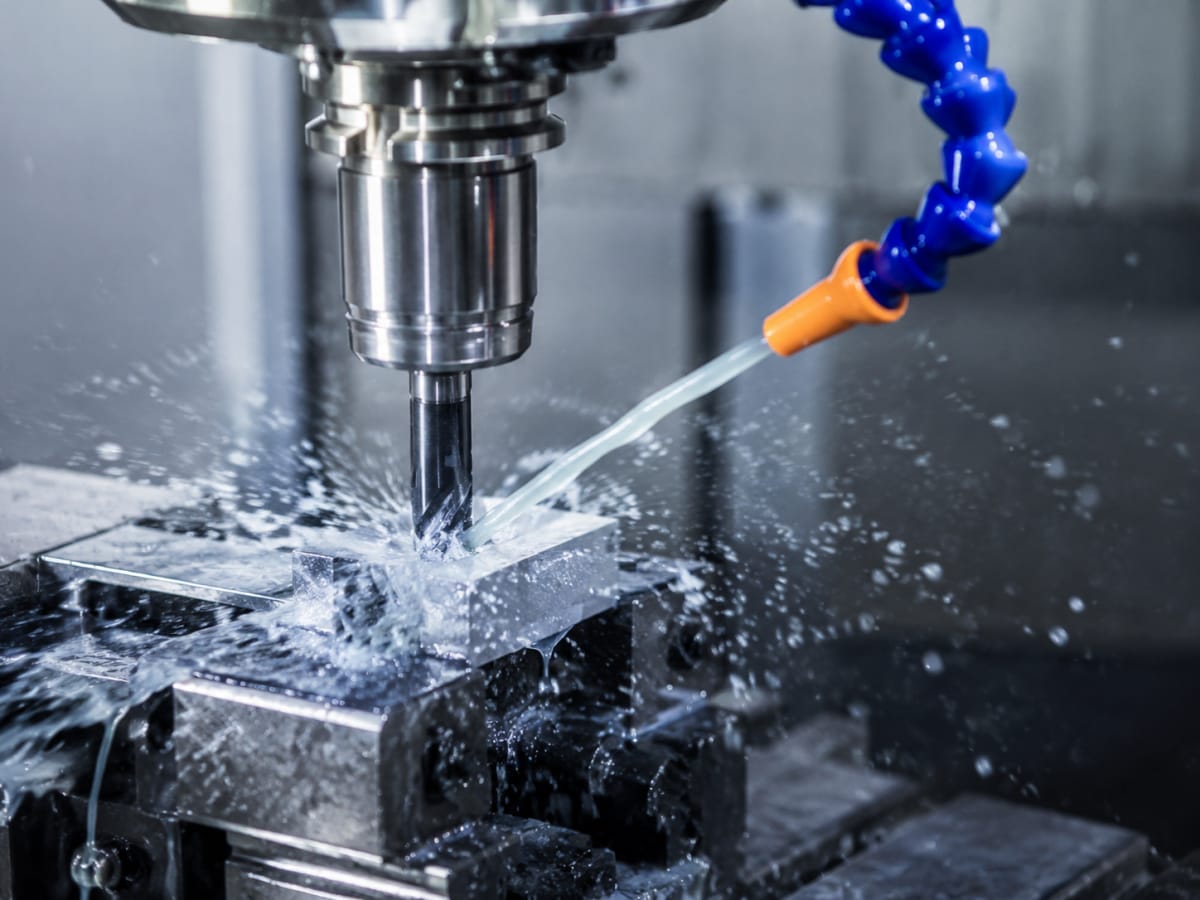
Rapid CNC service is one of the most practical ways to turn a 3D CAD file into a real, testable part within days instead of weeks. For product teams in the United States, it fills a critical gap between concept design and production tooling by delivering functional metal and plastic prototypes with strong dimensional accuracy, realistic material behavior, and fast revision cycles. When deadlines are tight in cities such as Detroit, Austin, Boston, San Diego, Seattle, and San Jose, rapid CNC machining is often the fastest route to a part that engineers can fit, assemble, inspect, and test in the real world.
Unlike prototype methods that approximate final material performance, CNC machining cuts parts directly from engineering-grade stock. That matters when a team needs to validate threads, mating features, heat resistance, stiffness, impact behavior, or cosmetic surfaces before committing to tooling or volume production. In sectors that move quickly through the ports of Los Angeles, Long Beach, Houston, Savannah, New York and New Jersey, and inland hubs such as Chicago and Dallas, compressed development schedules have made fast CNC machining a standard buying requirement rather than a premium extra.
For U.S. buyers, the best rapid CNC strategy is not simply to look for the lowest unit price. It is to find a supplier that can balance lead time, machinability, tolerance capability, finishing, inspection discipline, and responsive engineering communication. That is especially important when the same project may evolve from one prototype to ten design iterations and then into low-volume market launch parts. A capable partner should help you decide what must be machined now, what can wait for later optimization, and which features are likely to drive cost or delay.
One example is rapid CNC machining service support that combines quick quoting, manufacturability feedback, multiple metal and plastic options, and post-machining finishes in a single workflow. This model is valuable for startups, OEM design groups, contract manufacturers, and industrial buyers who need fewer handoffs and faster decisions.
In this guide, you will find direct answers on when rapid CNC service makes sense, what materials are best for urgent prototypes, how to shorten development time, how to balance speed with surface finish and accuracy, how major industries use machined prototypes, and what information to prepare before requesting a fast CNC quote. The article also covers 2026 trends, including digital manufacturing, sustainability pressure, regional sourcing shifts, and stricter quality expectations from U.S. customers.
Rapid CNC service refers to accelerated CNC milling, turning, EDM, and related precision machining processes organized specifically for short lead-time prototype and low-volume projects. The goal is not just machining a part quickly. The goal is compressing the full path from file review to shipment: quotation, DFM assessment, programming, setup, machining, inspection, finishing, and delivery.
In practical terms, rapid CNC machining is designed for projects that need one part, a few proof-of-concept units, or small batches for engineering verification, investor demos, pilot builds, field testing, or early customer samples. Compared with conventional job shop scheduling, rapid service prioritizes responsiveness, manufacturability review, and production planning so parts can ship in a few days when geometry and material availability allow.
For U.S. product teams, this approach is valuable because it supports a realistic prototype. A CNC-machined aluminum enclosure behaves differently from a resin print. A machined POM gear or ABS housing gives better information on fit and function than a cosmetic mockup. That is why rapid CNC is often chosen for prototype brackets, housings, jigs, medical device components, aerospace fittings, robotics parts, and custom fixtures.
The strongest providers of rapid CNC service also offer engineering-driven support, not just machine capacity. That includes tolerance review, feature simplification suggestions, stock-size optimization, and guidance on which surfaces truly need finishing. TEAM Rapid is a good example of this type of partner. Its technological capabilities include CNC milling, turning, wire EDM, EDM, polishing, anodizing, painting, plating, and inspection support, with tolerance capability down to 0.01 mm for suitable applications. For urgent programs, that kind of process integration reduces coordination delays and helps move from design intent to manufactured reality faster.
Rapid CNC service also differs from standard machining in how it fits into product development. Instead of treating each order as an isolated part number, it supports iteration. You may machine Version A on Monday, test on Wednesday, release a revision Thursday, and receive Version B shortly after. In U.S. innovation centers where speed matters more than perfect first-pass optimization, that cycle can be a major competitive advantage.
Rapid CNC conceptWhat it meansTypical U.S. use caseMain benefitMain tradeoffBest fitFast-turn millingQuick machining of prismatic partsElectronics housings in AustinFast fit checksMay cost more than standard schedulingEnclosures, plates, bracketsRapid turningAccelerated machining of round partsPins and shafts in DetroitHigh concentricityLimited to turned geometryBushings, nozzles, spacersPrototype batch CNCSmall lot production for testingPilot assembly in ChicagoSupports build verificationPer-part price is above mass production5 to 100 partsRevision-focused machiningRepeat machining of updated filesMedical design iterations in BostonShortens design loopsRequires strong file controlEngineering programsFinished prototype machiningMachining with anodizing, painting, polishingInvestor samples in San FranciscoNear-market appearanceAdds time versus raw machined partsDemo parts, pre-launch samplesBridge production CNCLow-volume supply before tooling rampsIndustrial launch support in HoustonBuys time before full productionLess economical at high volume50 to 500+ partsThe table above shows that rapid CNC service is not one single offering. It is a flexible manufacturing model that can serve proof-of-concept work, functional validation, launch support, and early sales samples. The right choice depends on urgency, feature complexity, and whether the part is purely experimental or close to production intent.
Rapid CNC machining is the right choice when the prototype must behave like the final part. If the design team needs accurate threads, load-bearing walls, tight fits, heat-stable geometry, fluid paths, or real metal performance, CNC usually outperforms additive mockups. It is also preferred when customer or regulatory review requires clean dimensional data from inspected components.
Common moments to use fast CNC machining include design freeze validation, assembly testing, mechanical load tests, sealing verification, heat sink evaluation, and pre-tooling signoff. In the United States, engineering teams often use machined prototypes just before a critical design review or supplier approval meeting because the parts provide credible evidence that the design can transition into production.
Rapid CNC is also useful when a team cannot wait for hard tooling. Injection molds and die-cast tools are powerful once geometry is stable, but they require more upfront commitment. If your design may change after the next test cycle, machining a small set of parts is usually the lower-risk decision. This is especially true for startups and venture-backed hardware programs where runway matters and revisions are expected.
Another strong use case is bridge production. Suppose an OEM in Phoenix needs 80 aluminum control housings for a field trial before molded or cast components are ready. CNC can fill the gap. This approach protects launch schedules while allowing demand forecasts and design assumptions to mature.
Prototype stageWhy use rapid CNCTypical quantityLead-time priorityMaterial needDecision signalConcept verificationNeed real geometry and fit1 to 3Very highBasic engineering plastic or aluminumNeed to confirm physical envelopeFunctional testNeed realistic strength or wear2 to 10HighProduction-like materialTest depends on true material behaviorAssembly validationNeed accurate mating features5 to 20HighMixed metals and plasticsMultiple components must fit togetherCustomer demoNeed cosmetic and structural credibility1 to 5Medium to highAnodized aluminum or finished plasticPrototype will be shown externallyPre-tooling reviewNeed final design confidence5 to 30MediumNear-production materialTooling investment decision is nextBridge productionNeed parts before mass process is ready20 to 500+MediumStable, qualified materialLaunch date arrives before toolingThe table highlights a simple rule: choose rapid CNC when the value of material realism and precision outweighs the higher cost of machining compared with rough mockup methods. If the part only needs visual confirmation, a printed sample may be enough. If the part must prove performance, CNC is often the better investment.
Market demand for rapid prototyping has continued to rise as U.S. companies shorten release windows, nearshore some supply lines, and run more iterative hardware development. That trend is visible across consumer electronics, medtech, EV systems, and industrial automation.
var ctx1 = document.getElementById(‘lineChartGrowth’).getContext(‘2d’);var chart1 = new Chart(ctx1, {type: ‘line’,data: {labels: [‘2022’, ‘2023’, ‘2024’, ‘2025’, ‘2026’],datasets: [{label: ‘Estimated U.S. rapid CNC prototype demand index’,data: [78, 85, 93, 101, 110],borderColor: ‘rgb(75, 192, 192)’,backgroundColor: ‘rgba(75, 192, 192, 0.15)’,fill: false,tension: 0.3}]},options: {responsive: true,maintainAspectRatio: false}});The growth line above represents a realistic demand index rather than a public market total. It illustrates how U.S. buyers are steadily increasing their use of fast-turn machining as product cycles compress and teams ask suppliers to support both prototyping and early low-volume output.
Material selection drives both prototype performance and lead time. Some materials machine quickly and are widely stocked, making them ideal for urgent jobs. Others may require longer procurement, slower cutting speeds, or special handling. For the fastest CNC turnaround, designers should align material choice with actual test requirements rather than defaulting to the most premium grade.
Among metals, aluminum remains the most common choice for rapid machining in the United States because it offers a strong balance of machinability, strength-to-weight ratio, corrosion resistance, and finishing flexibility. Stainless steel is selected when corrosion resistance or durability is critical, while brass and copper support electrical and fluid applications. Mild steel is economical for fixtures, and titanium is used when high performance is essential despite slower machining.
Among plastics, ABS, POM, nylon, acrylic, polycarbonate, PTFE, and PEEK are frequent choices depending on structural, visual, and thermal needs. For prototype housings, ABS and polycarbonate are common. For sliding or wear parts, POM is often preferred. For transparent covers, acrylic or polycarbonate may be used. For aggressive environments, PTFE and PEEK become relevant, though they can raise cost.
Suppliers with broad manufacturing capability can add value here by recommending equivalent or alternate materials when a specific resin or alloy is not the fastest path. TEAM Rapid supports a wide range of metal and plastic options across prototype and low-volume work, making it easier to match testing goals with practical lead-time targets.
MaterialCategoryMachinabilityCommon prototype useLead-time friendlinessNotesAluminum 6061MetalExcellentHousings, brackets, heat sinksVery highBest all-around rapid CNC choiceAluminum 7075MetalVery goodHigher-strength fixtures and structural partsHighStronger but slightly costlier than 6061Stainless steel 304MetalModerateMedical, food-contact, corrosion-prone partsMediumDurable but slower to machineBrassMetalExcellentFittings, valves, electrical partsHighGood surface finish and dimensional stabilityABSPlasticGoodConsumer housings, coversHighUseful for practical non-transparent prototypesPOM/DelrinPlasticExcellentGears, sliders, precision plastic partsVery highGreat for low-friction applicationsPolycarbonatePlasticModerateClear or impact-resistant componentsMediumGood toughness, careful machining neededPEEKPlasticModerateHigh-heat and medical componentsMedium to lowPremium engineering resin with higher costThis material table helps buyers avoid a common mistake: selecting a material that is technically ideal but unnecessary for the prototype stage. If your immediate goal is fit verification, aluminum 6061 or ABS may be enough. If your goal is chemical resistance or sterilization testing, the material decision becomes much stricter.
Another useful way to view the market is by industry demand for different rapid CNC part types. The following chart reflects a realistic U.S. pattern seen in engineering-driven sectors.
var ctx2 = document.getElementById(‘barChartIndustry’).getContext(‘2d’);var chart2 = new Chart(ctx2, {type: ‘bar’,data: {labels: [‘Medical’, ‘Automotive’, ‘Aerospace’, ‘Consumer Electronics’, ‘Industrial Equipment’, ‘Robotics’],datasets: [{label: ‘Estimated demand for rapid CNC prototypes (%)’,data: [18, 22, 16, 15, 19, 10],backgroundColor: [‘rgb(54, 162, 235)’,’rgb(255, 99, 132)’,’rgb(255, 206, 86)’,’rgb(75, 192, 192)’,’rgb(153, 102, 255)’,’rgb(255, 159, 64)’]}]},options: {responsive: true,maintainAspectRatio: false}});Automotive, industrial equipment, and medical remain especially active categories because those industries require functional testing and dimensional confidence. Consumer electronics also relies on fast machining for housings, structural frames, and accessory parts before injection molds are ready.
Rapid CNC service shortens development time by compressing uncertainty. Instead of debating a design on screen, teams can test an actual part quickly and discover what matters: clearance issues, wall weakness, fastener interference, poor ergonomics, thermal distortion, or assembly misalignment. Finding those issues in a machined prototype is far less expensive than discovering them after tooling release or early production.
The time savings come from several sources. First, there is no need to wait for production tooling. Second, design changes can be implemented by updating the program rather than rebuilding a mold. Third, a single supplier can often manage machining, finishing, inspection, and shipping without cross-vendor delay. Finally, fast DFM feedback can remove unmachinable or slow-machining features before they create schedule slip.
In real product development, these gains stack up. A startup in San Jose developing a smart hardware enclosure may need an aluminum chassis, a polycarbonate lens frame, and a fixture for assembly testing. If all three can be reviewed, machined, finished, inspected, and shipped under one schedule, the prototype build moves faster and the purchasing burden drops. This is one reason one-stop manufacturing providers gain traction with U.S. teams handling lean internal resources.
TEAM Rapid’s manufacturing capabilities are especially relevant in this phase. Beyond CNC machining, the company supports 3D printing, vacuum casting, rapid tooling, injection molding, die casting, aluminum extrusion, sheet metal fabrication, finishing, assembly, packaging, and direct shipping. That broader capability matters because many U.S. programs do not end at one machined part. They move from prototype validation into low-volume production, and buyers benefit when the same partner can support that transition without a full supplier reset.
To show how development patterns are changing, the next chart illustrates the shift from single-use prototypes toward broader use of rapid CNC for bridge production and pilot runs.
var ctx3 = document.getElementById(‘areaChartShift’).getContext(‘2d’);var chart3 = new Chart(ctx3, {type: ‘line’,data: {labels: [‘2022’, ‘2023’, ‘2024’, ‘2025’, ‘2026’],datasets: [{label: ‘Share of rapid CNC used only for one-off prototypes’,data: [62, 58, 54, 50, 46],fill: true,backgroundColor: ‘rgba(255, 159, 64, 0.25)’,borderColor: ‘rgb(255, 159, 64)’,tension: 0.3},{label: ‘Share of rapid CNC used for pilot and bridge production’,data: [38, 42, 46, 50, 54],fill: true,backgroundColor: ‘rgba(54, 162, 235, 0.2)’,borderColor: ‘rgb(54, 162, 235)’,tension: 0.3}]},options: {responsive: true,maintainAspectRatio: false}});The area chart reflects a major buying shift. More U.S. companies now expect rapid CNC suppliers to support not only prototyping but also low-volume commercialization. This trend is driven by shorter product life cycles, demand volatility, and the need to validate products in the market before investing fully in hard tooling.
Case studies make this clearer. A Midwest industrial automation company needed 25 machined aluminum sensor mounts after a late design update. Fast CNC kept the pilot line on schedule while molded alternatives were still being revised. A Boston medtech team used CNC-machined POM and stainless components to verify assembly alignment before entering regulatory test builds. A Los Angeles consumer product brand used anodized aluminum prototypes for retailer presentations while deciding whether to move to die casting or molded plastic for production.
Design discipline has a direct effect on CNC lead time. Many urgent projects are delayed not by machine capacity but by geometry that is unnecessarily difficult to manufacture. If your objective is speed, design for machining simplicity first and optimize secondary details later.
Start by using standard stock sizes whenever possible. Material that matches common bar, plate, or rod dimensions reduces prep time and scrap. Next, avoid deep narrow pockets, extremely small internal radii, and features that require multiple reorientations. Standard drill sizes, standard thread sizes, and open-access features all help shorten programming and setup.
Wall thickness should be practical for the material. Thin walls increase vibration risk, slow machining, and can distort under cutting forces. If appearance matters, identify which surfaces are cosmetic and which are not. Suppliers can prioritize finish where it counts and leave hidden surfaces in a more economical machined condition.
Another important tactic is tolerance zoning. Do not place tight tolerance requirements on every dimension unless necessary. A blanket requirement forces slower process control and extra inspection. Instead, define critical interfaces clearly and allow general tolerances elsewhere. This can improve both speed and cost.
Design tipWhy it speeds machiningWhat to avoidBetter alternativeImpact on costImpact on lead timeUse standard radiiAllows common cutting toolsTiny custom corner radiiLarger internal filletsLowers tool changesShorterLimit deep pocketsReduces slow cutter engagementDeep, narrow cavitiesOpen geometry or split componentsLowers machining timeShorterApply tolerances selectivelyPrevents over-inspectionTight tolerance on every featureCritical dimensions onlyLowers inspection costShorterUse common threadsSpeeds tooling and programmingNonstandard thread formsUnified standard sizesReduces setup complexityShorterIncrease wall robustnessImproves stability during cuttingVery thin unsupported wallsAdd ribs or thicker sectionsReduces scrap riskShorterSeparate cosmetic requestsFocuses finishing where neededFull-part premium finish by defaultCall out display surfaces onlyControls finishing expenseShorterThe table shows that faster machining is often a design choice. When engineers apply machining-friendly geometry early, suppliers can quote faster, machine faster, and ship faster. That does not mean compromising product function. It means removing unnecessary complexity from the prototype stage.
Service capability also matters here. TEAM Rapid supports one-to-one engineering communication and DFM review, which is useful when a U.S. buyer needs quick feedback rather than just a passively accepted file. Responsive engineering discussion can identify avoidable bottlenecks before the order enters production.
Every rapid CNC project involves tradeoffs between lead time, tolerance precision, and cosmetic finish. The fastest possible shipment may not include ultra-fine polishing, full cosmetic coating, or ultra-tight tolerance on noncritical features. The best results come when buyers rank priorities clearly.
If the part is for internal fit and function testing, a standard machined finish may be enough. If the part is for investor photography or customer-facing review, anodizing, bead blasting, polishing, or painting may be justified. If the part supports a bearing fit, connector interface, or fluid seal, those critical dimensions should get the tightest control even if noncritical areas remain looser.
From a U.S. procurement perspective, this balance matters because premium requirements can silently drive delay. A project manager may think the job is urgent, but if the drawing calls for mirror polish, ±0.01 mm everywhere, and no visible tool marks on all surfaces, the supplier has little room to accelerate. Good buyers define must-haves and nice-to-haves separately.
The comparison chart below shows how buyers typically weigh options across suppliers and prototype approaches.
var ctx4 = document.getElementById(‘comparisonChartOptions’).getContext(‘2d’);var chart4 = new Chart(ctx4, {type: ‘bar’,data: {labels: [‘Lead Time’, ‘Dimensional Accuracy’, ‘Material Realism’, ‘Surface Finish Options’, ‘Scalability to Low Volume’],datasets: [{label: ‘Rapid CNC service’,data: [88, 92, 95, 84, 89],backgroundColor: ‘rgb(153, 102, 255)’},{label: ‘3D printed prototype’,data: [94, 70, 60, 68, 58],backgroundColor: ‘rgb(75, 192, 192)’},{label: ‘Tooling-based prototype’,data: [45, 90, 96, 86, 98],backgroundColor: ‘rgb(255, 99, 132)’}]},options: {responsive: true,maintainAspectRatio: false}});The chart makes the tradeoff clear. Rapid CNC sits between very fast but less material-realistic additive methods and highly scalable but slower tooling-based approaches. That middle position is exactly why it remains a preferred choice for urgent prototype programs in the United States.
PriorityRecommended approachFinish levelTolerance strategyTime effectBest useFastest deliveryStandard machined partAs-machinedCritical dims onlyFastestInternal engineering testsBalanced prototypeMachined plus selective finishLight bead blast or deburrMixed critical/generalFastFit, function, and presentationDisplay sampleMachined plus cosmetic treatmentAnodized or paintedModerate precisionMediumSales and investor reviewPrecision interface partMachined with focused inspectionFunctional finishTight on mating featuresMediumSeals, connectors, bearing seatsRegulated prototypeTraceable machining and inspectionControlledDrawing-drivenMedium to slowerMedical and aerospace testingPre-production sampleMachined to near-launch standardProduction-likeDefined quality planSlower than rush basicApproval and pilot buildsUse this table as a buying guide. It is easier for a supplier to meet an urgent deadline when expectations are tiered. Ask yourself what the part must prove right now, and buy to that requirement rather than to an idealized full-production standard.
Rapid CNC machined parts are used across nearly every engineering-led industry in the United States, but some sectors rely on them more heavily because their products demand functional proof early in development. Automotive teams use machined prototypes for brackets, housings, mounts, fluid components, and EV subsystem parts. Medical device companies use them for instrument bodies, test fixtures, enclosures, and sterilizable components. Aerospace firms use them for structural test articles, cabin parts, and precision interfaces. Robotics and automation companies use them for frames, end-effectors, covers, and custom mounting systems.
Consumer and commercial product companies are also heavy users, especially in coastal innovation markets such as San Diego, Orange County, the Bay Area, and New York. When hardware brands need attractive, working pre-launch samples for retail review or crowdfunding campaigns, CNC machining delivers stronger realism than many alternative methods.
Industrial product development in the Midwest and South also depends on fast CNC. Buyers around Detroit, Cleveland, Indianapolis, Charlotte, Atlanta, Houston, and Nashville often need short-run machined parts for equipment upgrades, aftermarket testing, and OEM validation programs. Because many of these parts interact with motors, fasteners, sensors, or fluids, accurate machining is essential.
IndustryTypical rapid CNC partMain prototype goalCommon materialUrgency levelSpecial requirementAutomotiveMounts, housings, bracketsFit and durabilityAluminum, steel, POMHighAssembly and vibration testingMedical devicesInstrument bodies, trays, fixturesPrecision and cleanlinessStainless steel, PEEK, PCHighInspection and controlled documentationAerospaceStructural prototypes, fittingsAccuracy and traceabilityAluminum, titaniumMedium to highDimensional consistencyConsumer electronicsFrames, covers, buttonsForm, fit, finishAluminum, ABS, PCVery highCosmetic qualityIndustrial automationSensor brackets, machine partsFunction and installationAluminum, mild steel, nylonHighQuick revision cyclesRoboticsArms, end-effector parts, mountsWeight and motion testingAluminum, POM, carbon-compatible plasticsHighLightweight structureThe table shows why rapid CNC remains so widely adopted: these industries need more than appearance. They need a prototype that can survive real handling, assembly, or motion. That requirement keeps machining relevant even as additive processes continue to improve.
As we look toward 2026, several trends are shaping demand. First, digital quoting and AI-assisted manufacturability screening will reduce front-end response times. Second, sustainability pressure will push buyers to ask about material utilization, recycling paths, and energy-efficient planning. Third, U.S. procurement teams will increasingly seek supply resilience by balancing domestic machining with qualified international partners. Fourth, policy and compliance expectations will rise around traceability, data protection, and quality documentation for regulated sectors.
A fast quote starts with complete information. Many prototype delays begin before machining even starts because the RFQ package is vague or inconsistent. If you want quick pricing and a realistic lead-time commitment, provide a clean CAD file, a readable 2D drawing if critical dimensions apply, quantity, material, finish, and delivery destination. For U.S. buyers, shipping ZIP code matters because transit planning to New York, Miami, Dallas, Seattle, or inland industrial parks can affect the total timeline.
Also tell the supplier what the part is for. A prototype for fit check is not the same as a prototype for fatigue testing or a customer demo. If the supplier understands the purpose, they can recommend where to simplify, where to tighten tolerances, and where to save time. This is especially important when you need a part urgently through trade hubs or air routes from major gateways such as Los Angeles International Airport, Chicago O’Hare, or Memphis freight channels.
For the best result, ask for DFM comments with the quote. Buyers often think quoting and engineering review are separate, but combining them helps uncover hidden schedule risks. TEAM Rapid’s service capabilities fit well here: quick responses, engineering support within hours, DFM-based risk review, finishing coordination, and scalable production support from one prototype to larger repeat orders. That can be valuable when a U.S. customer needs a partner rather than a simple transactional machine shop.
RFQ itemWhy it mattersWhat to includeCommon mistakeEffect on quote speedEffect on manufacturing speed3D CAD fileDefines geometry clearlySTEP or similar neutral formatSending only screenshotsVery highHigh2D drawingDefines critical featuresTolerances, threads, notesMissing revision controlHighHighMaterial selectionAffects price and machining timeSpecific alloy or resinListing multiple options without priorityHighHighQuantityChanges setup economicsPrototype and future volumesNo batch estimateMediumMediumFinish requirementAffects post-processingAnodize, paint, polish, noneCosmetic expectations not statedMediumHighDeadline and ship-to locationSets planning urgencyDate needed and destinationOnly asking for “ASAP”HighHighThe quote checklist above is simple but powerful. The more precisely you define the requirement, the more confidently the supplier can commit. In urgent projects, ambiguity is the enemy of speed.
Buyers should also compare supplier models. A local U.S. machine shop may offer easy communication and short domestic shipping, but it may have limited process range or less flexibility on overflow capacity. A global manufacturing partner with strong engineering support may offer better scale, more process options, and competitive cost, especially when the project could expand from CNC to molding, casting, assembly, or packaged shipment. The right choice depends on schedule sensitivity, documentation requirements, and how often the design is likely to change.
For example, if your prototype is likely to become a low-volume plastic part, it can be efficient to work with a supplier that also supports rapid tooling and injection molding. If your launch path could move toward die casting, sheet metal, or assembly, choosing a broader partner early may reduce future transition time. This is where TEAM Rapid’s combination of technological, manufacturing, and service capability becomes relevant for U.S. programs that need both immediate prototype support and a longer-term commercialization path.
How fast can a rapid CNC prototype be made?Simple parts can sometimes ship in a few days, while more complex parts with finishing may take longer. Geometry, material availability, quantity, and inspection requirements drive the schedule.
Is rapid CNC better than 3D printing for prototypes?It depends on the goal. If you need real engineering materials, tighter dimensional control, and production-like performance, rapid CNC is often better. If you need very early visual models or complex internal shapes quickly, 3D printing may be enough.
What is the best material for a fast CNC prototype?Aluminum 6061 is often the best all-around metal choice because it machines quickly and performs well. For plastics, POM, ABS, and polycarbonate are common depending on function.
Can rapid CNC support low-volume production?Yes. Many U.S. companies use CNC as bridge production for 20 to 500 or more parts before moving to injection molding, die casting, or another higher-volume process.
How can I lower cost without delaying the project?Use standard materials, simplify deep pockets and thin walls, apply tight tolerances only where necessary, and reserve premium surface finishes for visible or functional areas.
What should I ask a supplier before ordering?Ask about realistic lead time, available materials, tolerance capability, finishing options, inspection method, DFM feedback, revision handling, and shipping plan to your U.S. location.
Does international rapid manufacturing work for U.S. buyers?Yes, if the supplier has responsive communication, strong engineering review, clear quality control, and reliable logistics planning. Many U.S. companies successfully use global partners when speed, price-performance, and process range are well managed.
Rapid CNC service remains one of the most effective tools for urgent prototype development in the United States because it gives teams what they need most: speed with engineering realism. When buyers choose the right material, simplify design intelligently, and work with a partner that can combine machining, DFM feedback, finishing, inspection, and scalable follow-on manufacturing, prototype risk falls and launch speed improves. In a market where time to validation often matters as much as unit cost, rapid CNC machining continues to be a practical, high-value solution for modern product development.
Precision CNC machining is the controlled removal of material to produce parts that meet demanding dimensional, geometric, and surface finish requirements with repeatable accuracy. In the United States, this matters across aerospace clusters in Seattle and Wichita, medical manufacturing in Minneapolis and Boston, automotive programs in Detroit, EV development in Austin, and electronics supply chains linked through Los Angeles, Long Beach, Houston, and Chicago. Buyers are not just purchasing milled or turned parts. They are buying process capability, inspection discipline, material traceability, surface quality, and the confidence that every dimension on the print can be verified.
For engineers, sourcing managers, and product teams, precision machining decisions affect product performance, assembly fit, compliance risk, lead time, and total cost. A nominally simple component can fail in the field if hole position shifts, if a shaft diameter drifts out of tolerance, if burrs interfere with a mating seal, or if the selected alloy distorts during machining. That is why a serious purchasing review should examine machine capability, tolerance strategy, inspection methods, finish expectations, quality systems, and engineering support long before a purchase order is released.
In practical terms, precision CNC machining services are most valuable when a part has tight tolerances, critical fits, complex geometry, or a need for consistent repeatability from prototype through low-volume and recurring production. For companies evaluating suppliers, it also helps to understand how a partner handles design-for-manufacturing review, process planning, in-process inspection, final dimensional verification, and finishing. A capable partner should be able to explain not only what tolerance can be achieved, but how it will be held, measured, and reported.
For teams seeking a scalable manufacturing path, precision machining services can serve as both a prototyping tool and a bridge into low-volume production. This is especially useful when a project must move quickly from CAD release to validation samples, preproduction builds, and market launch without introducing multiple disconnected suppliers.
If you need precision CNC machined parts in the United States market, start with six questions. First, what tolerance is actually required on each feature, rather than applying the same tight value everywhere? Second, which material gives stable machinability and end-use performance? Third, what inspection method will verify each critical dimension? Fourth, what surface finish is functionally necessary for sealing, sliding, bonding, or aesthetics? Fifth, what production quantity is expected after the first articles? Sixth, what quality documentation must be supplied, such as CMM reports, material certificates, FAIR packages, or process records?
A reliable supplier will also separate critical-to-function dimensions from general dimensions. That distinction directly affects machining strategy, cycle time, scrap risk, and cost. In many U.S. programs, over-tolerancing is one of the biggest hidden cost drivers. Engineering teams can reduce lead time and improve manufacturability by applying true GD&T priorities and allowing broader tolerances where function permits.
CNC machining precision comes from a combination of machine capability, process control, tooling condition, fixturing, programming strategy, environmental stability, and operator discipline. A high-spec machine alone does not guarantee precision. The entire system must be aligned.
Machine rigidity is one major factor. A rigid machining center or lathe resists vibration and deflection, especially when cutting harder alloys such as stainless steel, titanium, or tool steel. Spindle accuracy, axis repeatability, and thermal compensation also matter. In a busy production environment, even a few microns of thermal growth can influence size and position if the process is not controlled carefully.
Fixturing is another core driver. If a part moves under cutting load or is clamped unevenly, the final geometry will drift. Thin-wall aluminum housings, plastic covers, and long shafts are especially sensitive. Good fixture design supports the part while minimizing distortion. In many cases, precision comes from machining sequence planning as much as from machine specification.
Tooling and cutting parameters also define achievable accuracy. Tool wear changes effective cutter diameter and can affect wall location, bore size, and finish. A process intended for consistent precision should include tool life monitoring, offsets, and a strategy for roughing and finishing passes. Stable chip evacuation, coolant delivery, and reduced runout are essential when tolerances become tight.
Programming approach matters too. CAM toolpaths should account for material behavior, cutter engagement, and stock conditions. A part that is machined from cast stock, plate stock, or bar stock may respond differently due to residual stress. Skilled process engineers often leave semi-finish stock, allow the part to relax, then finish machine key features to improve dimensional stability.
Inspection feedback closes the loop. The most precise CNC machining operations are not blind production systems. They measure, compare, adjust, and document. In-process probing, first article inspection, CMM verification, and SPC methods all help sustain dimensional consistency over time.
Precision FactorWhy It MattersTypical Risk if WeakExample U.S. ApplicationControl MethodImpact on CostMachine rigidityReduces chatter and deflectionPoor geometry and variable sizeAerospace brackets in WichitaMachine selection and maintenanceMediumThermal stabilityKeeps axes and spindle consistentDrift over long runsMedical housings in MinneapolisWarm-up routines and compensationLow to mediumFixturingControls workholding distortionWarped faces and hole mislocationEV enclosures in AustinCustom fixtures and balanced clampingMediumTool wear controlMaintains cutter conditionOut-of-tolerance diametersValve parts in HoustonTool life tracking and offsetsLowProgramming strategyOptimizes roughing and finishingStress release and dimensional shiftElectronics frames in San JoseCAM review and simulationMediumInspection feedbackVerifies and corrects processRepeat defects and scrapDefense components in PhoenixFAI, CMM, SPC, in-process checksMedium to highThe table above shows that precision is never the result of one isolated capability. It comes from a managed process chain. Buyers should therefore evaluate suppliers based on process maturity, not just advertised tolerance numbers.
Common tolerances for precision CNC machined parts depend on material, geometry, machining method, and feature type. For general milled or turned parts, a shop may comfortably hold around ±0.05 mm on noncritical dimensions. For precision features, ±0.02 mm or ±0.01 mm may be achievable with the right setup, tooling, and inspection. Some bores, shafts, and mating features can go tighter, but cost rises sharply as tolerance tightens.
U.S. buyers should avoid treating all dimensions equally. Features related to alignment, sealing, press-fit performance, or bearing installation deserve tighter control than cosmetic or clearance dimensions. Flatness, concentricity, perpendicularity, and true position can be more functionally important than simple linear size. That is why GD&T should be used carefully, especially for assemblies manufactured across multiple suppliers.
It is also important to recognize that plastics and metals behave differently. Aluminum and stainless steel usually support tighter machining consistency than flexible plastics. Materials such as ABS, nylon, POM, PTFE, and filled polymers can move after machining or react to temperature and humidity changes, so realistic tolerance planning is essential.
Feature TypeGeneral Tolerance RangePrecision RangeBest Suited MaterialsInspection MethodTypical Functional UseOutside linear dimensions±0.05 to ±0.10 mm±0.01 to ±0.02 mmAluminum, steel, brassCaliper, micrometer, CMMHousing fitBores±0.03 to ±0.05 mm±0.005 to ±0.02 mmSteel, aluminum, bronzeBore gauge, CMMBearings, bushingsShaft diameters±0.02 to ±0.05 mm±0.005 to ±0.01 mmStainless steel, tool steelMicrometer, CMMRotational fitsHole position±0.05 to ±0.10 mm±0.01 to ±0.03 mmMost metalsCMMAssembly alignmentFlatness0.05 to 0.10 mm0.01 to 0.03 mmAluminum, steelSurface plate, CMMSealing facesThreaded featuresPer thread standardClass-specific controlMost metals and some plasticsThread gaugeFastener engagementThis tolerance table is a planning tool, not a universal promise. Actual achievable values should be reviewed with the supplier based on print details, feature accessibility, wall thickness, quantity, and finishing steps such as anodizing, plating, or heat treatment.
Material selection for precision machining affects dimensional stability, cycle time, tool wear, corrosion resistance, weight, appearance, and long-term performance. In the United States market, aluminum remains one of the most widely specified materials for precision machined prototypes and production components because it offers a strong balance of machinability, strength-to-weight ratio, and finishing compatibility. Common grades include 6061, 7075, and 2024 depending on strength and environmental demands.
Stainless steel is chosen when corrosion resistance and strength matter more than speed or weight. Grades such as 303 improve machinability, while 304 and 316 suit harsh environments and medical or food-adjacent applications. Tool steels and hardened alloys support wear-critical parts, though they require more careful process planning.
Brass and copper alloys are valuable for electrical, plumbing, communication, and instrument parts, especially in regions tied to electronics and utility equipment manufacturing. Plastics are also important. POM, nylon, ABS, acrylic, PTFE, PEEK, and polycarbonate are commonly machined for fixtures, housings, insulators, and functional prototypes. However, plastics often need more conservative tolerance expectations because of their lower rigidity and greater thermal response.
Material choice should also consider secondary operations. Anodized aluminum, electropolished stainless steel, passivated components, and painted or plated surfaces all have downstream effects on dimension and cosmetic quality. Engineers should define whether the drawing dimension applies before or after finishing.
MaterialMachinabilityPrecision StabilityCommon U.S. UseFinishing CompatibilityKey Buyer NoteAluminum 6061HighVery goodFixtures, housings, bracketsAnodizing, paintingExcellent all-around choiceAluminum 7075HighVery goodAerospace, performance partsAnodizingHigher strength than 6061Stainless 303GoodGoodPrecision shafts, fittingsPassivationBetter machinability than 304Stainless 316MediumGoodMedical, marine, chemicalPassivation, polishingCorrosion resistant but slower to cutBrass C360ExcellentExcellentElectrical and plumbing partsPlating, polishingIdeal for fine turned detailsPOM/DelrinHighModerate to goodLow-friction componentsLimited decorative finishingGood dimensional consistency for plasticPEEKMediumGoodHigh-performance medical and industrialUsually used as-machinedPremium cost, high value applicationThe best material is rarely the strongest one on paper. It is the one that balances function, tolerance capability, finishing needs, regulatory expectations, and supply chain availability. In coastal logistics hubs like Long Beach and Savannah, imported metal and plastic stock may move quickly, but lead times can still vary depending on alloy grade and certification requirements.
Quality control methods in CNC machining should begin before the first chip is cut. A robust process starts with print review, tolerance analysis, material confirmation, and DFM feedback. During production, it continues with setup validation, first article inspection, in-process checks, tool wear control, and final verification. For repeat production, statistical monitoring and corrective action systems become increasingly important.
Incoming material checks verify alloy, form, certification, and sometimes hardness. Setup quality checks confirm fixture alignment, datum strategy, and tool offsets. First article inspection confirms that the process is capable before the entire batch is run. In-process inspection catches drift before scrap spreads through the lot. Final inspection verifies conformance and supports documentation for the customer.
Quality systems become especially important when parts are moving into regulated or safety-related applications. Aerospace and medical customers in the United States often expect stronger documentation, traceability, and control over nonconformance management. Even when not formally required, disciplined quality processes reduce risk in any commercial program.
QC MethodWhen UsedMain PurposeTypical ToolsBest ForBuyer BenefitDFM reviewBefore productionReduce manufacturability riskCAD review, tolerance stack-upNew designsFewer surprisesIncoming material verificationStart of jobConfirm correct stockCert checks, PMI if neededCertified alloysMaterial confidenceFirst article inspectionAfter setupApprove process before full runCMM, micrometers, gaugesTight tolerance jobsEarly problem detectionIn-process inspectionDuring machiningCatch drift and wearProbes, gauges, operator checksLonger runsLower scrap rateFinal inspectionEnd of runVerify shipment qualityCMM, visual, finish testingAll partsShipment confidenceCorrective action systemAfter issue foundPrevent repeat problemsRCA, CAPA recordsRecurring supplyContinuous improvementThe value of these methods is cumulative. A supplier that only inspects at the end is often too late. A supplier that designs quality into the process will typically provide better consistency, shorter recovery time, and more predictable cost.
CMM inspection and dimensional verification are essential when parts include complex profiles, multiple datums, tight positional tolerances, or documented first article requirements. A coordinate measuring machine can measure three-dimensional features with repeatable accuracy and generate reports aligned to drawing dimensions and GD&T callouts.
In the United States, CMM reports are frequently requested for aerospace brackets, medical fixtures, sealing surfaces, machined enclosures, connector interfaces, and multi-operation components where manual inspection would be slow or incomplete. CMM inspection is especially useful for verifying hole patterns, true position, profile, concentricity, flatness, and other geometric characteristics that are difficult to assess with simple hand tools.
Dimensional verification should follow a clear plan. Critical features should be identified before production. Datums must match the print intent. Measuring tools should be suitable for the required tolerance. Environmental control matters too, since temperature influences both the part and the measuring system. Good suppliers understand that measurement strategy is part of manufacturing strategy.
For low-volume programs, prototype runs, and bridge production, CMM data can provide valuable feedback for design refinement. It helps engineering teams distinguish between nominal CAD intent and real manufacturing behavior. That insight is especially valuable when assemblies involve suppliers in different locations, such as design in California, validation in Illinois, and end-product assembly in Texas or Mexico.
Inspection ToolBest UseStrengthLimitationTypical Accuracy LevelDocumentation OutputCMMComplex 3D dimensionsComprehensive and reportableLonger programming/setupVery highFull dimensional reportMicrometerDiameters and thicknessFast and preciseSingle-feature onlyHighManual recordsCaliperGeneral size checksQuick and versatileNot ideal for very tight toleranceModerateManual recordsBore gaugeInternal diametersExcellent for boresRequires skilled useHighManual or digital recordsHeight gauge/surface plateFlat features and location checksReliable shop-floor methodLimited for complex geometryModerate to highInspection sheetsOptical measurementSmall profiles and edgesNon-contact and fastLess suitable for deep featuresHighDigital reportsThe explanation here is simple: the right inspection tool depends on feature type and risk level. CMM is powerful, but it should complement rather than replace smart process planning and shop-floor checks.
Surface finish requirements for precision components affect function, appearance, friction, wear, sealing, corrosion behavior, and downstream assembly. Surface finish is often stated as roughness values such as Ra, but buyers should also consider burr condition, edge break, lay direction, tool marks, and coating adhesion.
For example, a cosmetic aluminum enclosure for a product launch in New York or San Francisco may need uniform appearance after bead blasting and anodizing. A medical instrument surface may need smoothness for cleanliness and user comfort. A sealing face in an industrial fluid system may need controlled flatness and low roughness. A sliding feature may require a finish that balances lubrication retention with low friction.
Finish requirements should be matched to actual use. Over-specifying a polished finish on nonfunctional internal surfaces can add significant cost without practical value. Under-specifying finish on visible or mating surfaces can create assembly problems or customer complaints. Engineers should define which faces are critical and whether the finish applies before or after coating.
Machining marks are not always defects. For many industrial parts, an as-machined finish is fully acceptable and more cost-efficient. Where aesthetics matter, secondary processes such as polishing, bead blasting, anodizing, painting, plating, or passivation can improve both appearance and durability. These processes must be coordinated with dimensional requirements, since coatings and polishing can change feature size.
Industries that need precision CNC machining include aerospace, medical devices, automotive, EV and battery systems, electronics, industrial automation, communication equipment, defense, energy, robotics, and commercial product development. In the U.S. market, these sectors often have different priorities, but they share a need for dependable dimensional control and repeatable quality.
Aerospace values traceability, geometric accuracy, lightweight materials, and documented inspection. Medical device companies focus on cleanliness, finish, corrosion resistance, and reliable functional fit. Automotive and EV programs emphasize scalable quality, cost discipline, and speed from validation to pilot production. Electronics and communication sectors often need small, detailed housings, heat sinks, connectors, and shielded components with cosmetic consistency.
Industrial automation and robotics buyers typically require durable metal and plastic parts with strong assembly repeatability. Energy and fluid handling applications can demand corrosion resistance, pressure integrity, and sealing surface quality. Consumer and commercial product firms may prioritize appearance and turnaround time in addition to function.
var ctx1 = document.getElementById(‘lineChartUSMarket’).getContext(‘2d’);var chart1 = new Chart(ctx1, {type: ‘line’,data: {labels: [‘2022’, ‘2023’, ‘2024’, ‘2025’, ‘2026’, ‘2027’],datasets: [{label: ‘U.S. Precision CNC Demand Index’,data: [78, 84, 91, 99, 108, 117],borderColor: ‘rgb(75, 192, 192)’,backgroundColor: ‘rgba(75, 192, 192, 0.15)’,fill: false,tension: 0.25}]},options: {responsive: true,maintainAspectRatio: false}});The line chart above illustrates a realistic upward demand trend as reshoring, medical innovation, aerospace recovery, and EV investment continue to support U.S. precision part sourcing.
var ctx2 = document.getElementById(‘barChartIndustryDemand’).getContext(‘2d’);var chart2 = new Chart(ctx2, {type: ‘bar’,data: {labels: [‘Aerospace’, ‘Medical’, ‘Automotive/EV’, ‘Electronics’, ‘Industrial’, ‘Defense’],datasets: [{label: ‘Estimated Precision Machining Demand Share’,data: [22, 16, 20, 14, 18, 10],backgroundColor: [‘rgb(54, 162, 235)’,’rgb(255, 99, 132)’,’rgb(255, 206, 86)’,’rgb(75, 192, 192)’,’rgb(153, 102, 255)’,’rgb(255, 159, 64)’]}]},options: {responsive: true,maintainAspectRatio: false}});This bar chart highlights where precision machining demand is concentrated. Actual shares vary by region, but aerospace, automotive and EV, industrial equipment, and medical remain especially significant in the United States.
To improve precision CNC machining results, start with design clarity. Mark critical dimensions, functional datums, and finish requirements clearly. Use realistic tolerances and avoid forcing unnecessarily tight values onto noncritical features. Confirm whether the part will be machined from billet, extrusion, plate, bar, or cast stock, because the starting form affects stress behavior and machining strategy.
Second, choose the right material for both function and process stability. If a polymer is likely to move, redesign the geometry or revise tolerance expectations. If a hardened steel is required, evaluate whether grinding, honing, or EDM should be part of the route. Third, work with a supplier that provides manufacturability feedback before production. Early DFM review reduces avoidable risk.
Fourth, plan inspection around function. Do not ask for a full CMM map if only a few features truly matter, but do not omit documented verification when part performance depends on position or form. Fifth, consider surface finishing and post-processing early. Heat treatment, anodizing, painting, or plating can alter size, appearance, and lead time. Sixth, run pilot quantities when the design is new or the assembly is sensitive.
In 2026 and beyond, improvement will also come from digital process control, AI-assisted toolpath optimization, smarter in-machine probing, better traceability software, and sustainability pressure from customers and regulators. U.S. buyers are increasingly asking about scrap reduction, material utilization, lower-energy machining practices, and responsible supply chain management. As policy evolves around domestic sourcing, product safety, and environmental reporting, suppliers with transparent systems will be better positioned.
var ctx3 = document.getElementById(‘areaChartTrendShift’).getContext(‘2d’);var chart3 = new Chart(ctx3, {type: ‘line’,data: {labels: [‘2022’, ‘2023’, ‘2024’, ‘2025’, ‘2026’, ‘2027’],datasets: [{label: ‘Share of Digital/Automated QC Adoption’,data: [28, 34, 41, 49, 58, 66],borderColor: ‘rgb(75, 192, 192)’,backgroundColor: ‘rgba(75, 192, 192, 0.25)’,fill: true,tension: 0.3}]},options: {responsive: true,maintainAspectRatio: false}});The area chart shows the expected shift toward digital inspection, automated data capture, and closed-loop process correction. This trend will shape how precision machining is quoted, monitored, and approved.
In the U.S. market, buyers usually balance three sourcing models: domestic-only machining, hybrid sourcing with offshore manufacturing and U.S. program management, or full overseas manufacturing with direct import. Each model has trade-offs. Domestic sourcing may simplify communication and shorten transit. Hybrid sourcing can improve cost-performance while maintaining engineering visibility. Offshore sourcing may reduce part cost further, but quality communication and logistics planning become more important.
Trade hubs influence lead time. Parts entering through Los Angeles and Long Beach can support West Coast programs efficiently, while Houston may serve energy and industrial buyers, and Savannah or Newark may suit East Coast distribution. For recurring supply, buyers should consider freight mode, customs timing, packaging standards, and inventory strategy.
When comparing suppliers, review not just price but total value: response speed, engineering depth, inspection capability, finishing support, packaging quality, and willingness to handle changing forecasts. Ask for examples of similar parts, quality documentation samples, and communication expectations during the project.
var ctx4 = document.getElementById(‘comparisonChartSupplier’).getContext(‘2d’);var chart4 = new Chart(ctx4, {type: ‘bar’,data: {labels: [‘Tolerance Capability’, ‘Material Range’, ‘Inspection Depth’, ‘Lead Time Flexibility’, ‘Finishing Options’, ‘Cost Efficiency’],datasets: [{label: ‘General Shop Benchmark’,data: [70, 68, 60, 64, 58, 72],backgroundColor: ‘rgb(153, 102, 255)’},{label: ‘Integrated Precision Partner’,data: [88, 90, 92, 85, 89, 84],backgroundColor: ‘rgb(54, 162, 235)’}]},options: {responsive: true,maintainAspectRatio: false}});The comparison chart reflects why many buyers prefer integrated suppliers over transactional machine shops. Broader capability can lower project risk, especially when prototypes may evolve into production.
Precision CNC machining supports a wide range of product types: brackets, housings, heat sinks, manifolds, shafts, bushings, connector bodies, covers, enclosures, fixtures, tooling inserts, valve components, test hardware, robotic parts, and prototype assemblies. It is equally useful for plastic and metal parts when form, fit, and function must be validated quickly.
Consider three typical project scenarios. A Boston medical startup may need 30 anodized aluminum housings and 10 machined PEEK inserts for early device validation. A Detroit automotive supplier may need 200 fixture components and steel checking parts for a line launch. An Austin electronics company may need precision heat sinks and front-panel parts with good cosmetic finish for pilot builds. In all three cases, part quality depends not only on machining but on coordinated engineering review, process planning, finishing, and final inspection.
Another common application is bridge production. After the prototype phase, a company may not yet be ready for high-volume tooling, but it still needs market-ready parts fast. Precision CNC machining is well suited to this gap because it can support low-volume production without the capital and timing of permanent production tooling.
When evaluating local suppliers in the United States, buyers often check machine list, certifications, lead time, and price first. Those are important, but they are not enough. A good supplier demonstrates process thinking. It explains how datums will be established, which dimensions are critical, what will be measured in-process, and which finish risks should be managed in advance.
Look for responsive quoting, practical DFM feedback, realistic tolerance commitments, and the ability to support mixed material programs. Strong suppliers also maintain organized quality records and communicate quickly when changes are needed. If your team is spread across cities such as Chicago, Atlanta, San Diego, and Charlotte, reliable communication becomes as important as spindle capacity.
For imported precision parts, a high-quality supplier should also understand U.S. customer expectations around revision control, packaging, documentation, and shipment reliability. This is especially important when product teams must coordinate engineering in one location and receiving inspection in another.
A strong precision machining partner should combine multiple technologies instead of relying on only standard milling or turning. TEAM Rapid supports CNC milling, CNC turning, wire EDM, EDM, polishing, anodizing, painting, plating, and other secondary finishing options, which helps customers manage complex parts and reduce handoffs. This matters when tolerances are tight and post-machining operations can influence final dimensions.
The company’s engineering-driven workflow also adds value at the front end. Detailed manufacturability review can identify unstable walls, difficult tool access, unrealistic tolerance zones, coating conflicts, and opportunities to simplify cost without hurting function. For U.S. product teams moving quickly from concept to validation, this early feedback can reduce redesign cycles and compress launch timing.
Beyond pure machining, TEAM Rapid operates as a broader manufacturing resource for prototypes, low-volume production, and scale-up pathways. Its coverage extends across 3D printing, vacuum casting, CNC machining, rapid tooling, injection molding, die casting, aluminum extrusion, and sheet metal fabrication. That breadth is practical because many U.S. programs do not stay in one process forever. A project may start as a fast CNC prototype, shift into bridge quantities, then move into tooling-backed production once demand stabilizes.
The company supports projects from a single prototype to more than 100,000 parts through an integrated production network and in-house process capabilities. Tight tolerance machining capability down to 0.01 mm is available for suitable applications, with support for both plastic and metal parts. This makes the supplier relevant for startups needing speed as well as established manufacturers needing flexible recurring production.
Service quality is often what separates a useful supplier from a risky one. TEAM Rapid emphasizes fast response, one-to-one engineering communication, ISO 9001:2015 quality management, and a practical one-stop model that can include finishing, assembly, packaging, procurement support, warehousing support, and direct shipping. For U.S. buyers, this reduces supplier complexity and makes project management easier.
The company has experience supporting customers across North America and Europe and is accustomed to helping teams move from digital concept to functional prototype, then into low-volume and ongoing production. That service model is particularly helpful when customers need fast timelines, frequent design revisions, and commercial cost efficiency without sacrificing documentation and process control.
A California robotics startup needs 15 machined aluminum actuator housings within ten days, each with bearing bores, threaded interfaces, and cosmetic anodizing. The right supplier would review datum strategy, advise on bore tolerance, machine first articles, inspect with CMM, and sequence anodizing so critical fits remain compliant.
A Midwest industrial OEM needs recurring stainless manifolds with pressure-critical sealing faces and documented lot traceability. The right supplier would validate material certs, control flatness and surface finish, and maintain repeatable inspection records lot after lot.
An East Coast consumer electronics team needs pilot run housings with consistent appearance for investor demos and retail review. The right supplier would coordinate machining, bead blasting, anodizing or painting, packaging protection, and delivery timing while maintaining dimensional accuracy on hidden assembly features.
QuestionShort AnswerWhy It MattersBest PracticeCommon MistakeBuyer TipWhat is a realistic precision tolerance?Often ±0.01 to ±0.02 mm for critical featuresAffects cost and feasibilityTighten only key dimensionsApplying tight tolerance everywherePrioritize function-driven tolerancesIs CMM inspection always needed?No, only for critical or complex featuresSaves cost and timeUse CMM selectivelyRequesting unnecessary full reportsMatch inspection depth to riskWhich material is easiest to machine?Aluminum and brass are common easy choicesImpacts lead time and finishSelect by function and machinabilityChoosing material only by strengthReview corrosion and finish needs tooDo finishes affect dimensions?Yes, especially anodizing and platingCan change fits and appearanceDefine before/after finish dimensionsIgnoring coating thicknessDiscuss finish stack-up earlyHow fast can prototypes be made?Often in days, depending on complexitySupports product launch speedSend clean CAD and drawingsLate design changes after releaseConfirm critical features at quote stageCan one supplier support prototype to production?Yes, if it has broad process coverageReduces handoff riskChoose integrated capabilitySwitching suppliers too oftenAsk about scale-up pathwaysThe FAQ table above summarizes common purchasing questions. It is most useful during supplier selection and RFQ preparation, when avoidable ambiguity can still be removed.
Precision CNC machining is ultimately about controlled outcomes. The best suppliers do not simply cut parts; they manage variables. For U.S. buyers, the right partner should combine realistic tolerance capability, strong material knowledge, disciplined quality control, CMM-based dimensional verification where needed, and practical finishing support. It should also communicate clearly across the life of the project, from prototype urgency to repeat production stability.
As 2026 trends push the market toward smarter inspection, better traceability, sustainability reporting, and faster product iteration, the suppliers that stand out will be those that blend engineering support with manufacturing flexibility. Whether your program is based in Seattle, Detroit, Austin, Boston, San Diego, or a contract manufacturing network near major ports and distribution corridors, the same rule applies: precision is not purchased by quote alone. It is earned through process capability, verification discipline, and partnership quality.
Choosing the right CNC machining material is one of the most important decisions in product development, prototyping, and production sourcing. In the United States, engineers, buyers, and product teams often compare aluminum, stainless steel, brass, copper, and engineering plastics not only on part performance, but also on machining speed, supply stability, finishing options, compliance needs, and total landed cost. A good material choice improves functionality, reduces scrap risk, shortens lead time, and helps parts reach target tolerances and surface finish requirements more reliably.
For U.S. companies building products in markets such as medical devices in Minneapolis, industrial controls in Chicago, consumer electronics in Austin, automotive components in Detroit, aerospace hardware in Seattle, or marine systems near Houston and Long Beach, material selection is rarely just a technical checkbox. It affects qualification time, production flexibility, corrosion resistance, conductivity, weight, cosmetic appearance, and downstream assembly. That is why many teams evaluate CNC machining materials early, before locking in drawings or placing pilot orders.
This guide gives a direct answer first: use aluminum when low weight, fast machining, and a strong cost-to-performance ratio matter; choose stainless steel when mechanical strength, wear resistance, or corrosion resistance is critical; select brass or copper when conductivity, machinability, or decorative finish is important; and consider plastics when electrical insulation, reduced weight, transparency, chemical resistance, or prototype speed is the priority. The best option depends on application, quantity, tolerance target, surface finish, and delivery schedule.
Many U.S. buyers also compare domestic production with global supply options. A practical manufacturing partner can make that process easier by combining engineering review, machining, finishing, and flexible batch sizes. TEAM Rapid supports this approach with CNC milling, turning, EDM, wire EDM, polishing, anodizing, plating, painting, and related operations for both plastic and metal parts. The company works with projects from one prototype to recurring production quantities, giving customers a clear path from early validation to low-volume and repeat manufacturing.
The best way to choose CNC machining materials is to start with end-use requirements rather than with price alone. Ask what the part must do, where it will be used, what loads it will face, and what performance cannot fail. A fixture used in a dry indoor assembly line has very different needs from a bracket installed under the hood of a vehicle in Arizona, a fluid-handling fitting used in Florida, or a small conductive contact inside an electronic module shipped through Los Angeles and distributed nationwide.
In the United States market, material selection normally follows six decision layers: mechanical performance, environment, manufacturability, finish requirements, budget, and lead time. Mechanical performance includes strength, hardness, impact resistance, fatigue behavior, and dimensional stability. Environmental conditions include moisture, salt spray, chemicals, sterilization, heat, UV, and electrical exposure. Manufacturability covers chip formation, tool wear, burr tendency, warping risk, and consistency in holding tolerance. Finish requirements address anodizing, passivation, plating, painting, polishing, and texture. Budget and lead time then narrow the shortlist.
For many custom machined parts, a material that looks ideal on paper may create hidden production problems. Some grades cut fast but scratch easily. Others meet strength targets but increase cycle time dramatically. Some plastics deliver good insulation but move with temperature and moisture. For this reason, early DFM review is valuable. Engineering feedback can reveal whether a drawing should shift from one alloy to another, whether a tolerance is too tight for the selected material, or whether a cosmetic surface will require a different stock form.
Another smart buying step is to match material choice to product lifecycle stage. During concept validation, speed and affordability may matter most, so easy-to-machine aluminum or prototype plastics often make sense. During bridge production, repeatability, inspection stability, and finishing compatibility usually matter more. During full commercial supply, material availability, secondary processing, and long-term sourcing resilience become critical, especially for companies serving multiple U.S. regions from East Coast and West Coast distribution hubs.
Selection FactorWhy It MattersBest Material TendenciesCommon U.S. Use CaseRisk If IgnoredBuying TipWeightAffects handling, fuel use, portabilityAluminum, plasticsPortable devices in California and TexasOverbuilt, heavier assembliesCompare density before redesigning geometryStrengthSupports load and durabilityStainless steel, some aluminumsIndustrial hardware in the MidwestPremature deformationCheck yield and fatigue, not just tensile strengthCorrosion ResistanceExtends life in wet or harsh conditionsStainless steel, anodized aluminum, certain plasticsMarine and outdoor componentsRust, staining, warranty claimsReview final environment and cleaning chemicalsConductivityImportant for electrical and thermal transferCopper, brass, aluminumConnectors and heat sinksSignal loss or overheatingConfirm whether electrical or thermal conductivity matters moreTolerance StabilityDetermines fit and assembly successAluminum, brass, stable steelsPrecision housings and toolingRejected parts and reworkAlign material with geometry and inspection methodLead TimeImpacts launch scheduleCommon aluminum and plastic gradesRapid prototypes nationwideDelayed validation and missed launch windowsAsk about stock availability before PO releaseThis table shows why material choice is multidimensional. A low-cost raw material can still become expensive if it increases machining hours, finishing steps, or scrap rates. Conversely, a premium material can lower total project cost if it reduces failures in service.
var ctx = document.getElementById(‘lineChart’).getContext(‘2d’);var chart = new Chart(ctx, {type: ‘line’,data: {labels: [‘2021’, ‘2022’, ‘2023’, ‘2024’, ‘2025’, ‘2026’],datasets: [{label: ‘U.S. CNC Material Demand Index’,data: [92, 98, 106, 114, 121, 129],borderColor: ‘rgb(75, 192, 192)’,backgroundColor: ‘rgba(75, 192, 192, 0.15)’,fill: false,tension: 0.25}]},options: {responsive: true,maintainAspectRatio: false}});The line chart above reflects a realistic upward demand pattern in the U.S. CNC materials market, driven by reshoring efforts, medical and aerospace demand, rapid prototyping activity, and increased investment in electrification and automation through 2026.
Aluminum CNC machining is often the first recommendation for lightweight parts because it combines low density, good strength, excellent machinability, and broad finishing options. In the United States, aluminum is widely used for consumer products, brackets, housings, frames, heat sinks, robotics components, aerospace fittings, and prototype enclosures. It is particularly attractive when teams need fast machining, strong dimensional control, and attractive cosmetic results.
Popular grades include 6061, 7075, 5052, and 2024, though 6061 remains one of the most common choices for custom machined parts. It offers a balanced combination of corrosion resistance, weldability, strength, and anodizing compatibility. For applications where higher strength is needed, 7075 becomes attractive, but it usually comes with different corrosion characteristics and may require closer review of finishing strategy.
U.S. product developers value aluminum because it moves quickly from CAD to physical part. This matters in fast-moving markets such as EV accessories in California, drone systems in Nevada, industrial automation in Ohio, and medical equipment prototypes in Massachusetts. When freight time, engineering iteration, and budget all matter, aluminum helps keep the program agile.
Surface treatment is another major reason aluminum is favored. Clear anodizing, black anodizing, bead blasting, brushing, polishing, chromate conversion, and painting can all support different functional or cosmetic goals. For visible products sold into premium consumer markets, the appearance consistency of machined and anodized aluminum can be a commercial advantage.
Aluminum GradeMain BenefitMachinabilityCorrosion ResistanceTypical U.S. ApplicationNotes6061Balanced all-purpose performanceHighGoodHousings, brackets, framesBest overall starting point for many projects7075Higher strengthHighModerateAerospace and high-load partsOften selected when weight and strength both matter2024Strong fatigue performanceGoodLowerStructural componentsNeeds environment review5052Good corrosion resistanceModerateVery goodCovers and marine-adjacent partsMore common in formed parts but still relevantMIC-6Dimensional stabilityHighGoodTooling plates and fixturesUseful for flatness-critical parts6082Structural strength optionGoodGoodIndustrial assembliesMay be regionally preferred in some supply chainsThis comparison helps buyers understand that “aluminum” is not one single answer. The right alloy depends on whether the project values cosmetic finishing, structural strength, fatigue performance, or flatness stability most.
From a manufacturing capability standpoint, aluminum is highly compatible with multi-axis milling and turning, fast setup cycles, and a wide range of post-processing operations. That makes it especially suitable for suppliers that need to support both rapid prototypes and repeatable low-volume production. Buyers looking for a broader overview can also review popular CNC machining materials for U.S. product development to compare how aluminum fits against other common options.
Stainless steel CNC machining is the preferred route when strength, wear resistance, cleanability, temperature performance, or corrosion resistance are more important than low weight. In the United States, stainless steel parts are common in medical assemblies, food processing equipment, marine hardware, pumps, valves, automotive components, and industrial machine parts. States with coastal exposure, strict sanitary requirements, or outdoor installations often lean toward stainless steel for reliability.
Common grades include 303, 304, 316, 17-4 PH, and 420. Grade 303 is widely appreciated for easier machining. Grade 304 is a versatile corrosion-resistant choice. Grade 316 is often selected when exposure to salt, chemicals, or aggressive washdown conditions is expected, which is especially relevant in ports, marine environments, and coastal manufacturing operations near Miami, New Orleans, Long Beach, or Seattle. For higher strength, 17-4 PH is often considered in aerospace, defense-adjacent, and industrial systems.
The main tradeoff with stainless steel is machining efficiency. It generally cuts slower than aluminum, often requires more robust tooling, and may increase cycle times. This can affect both price and delivery, especially for complex parts with deep pockets, thin walls, or tight finishes. Even so, stainless steel frequently lowers total lifecycle cost when field durability matters.
For functional parts exposed to repeated cleaning, pressure, moisture, or mechanical wear, stainless steel often becomes the safer material decision. It is also favored in applications where customers want a professional metallic appearance without decorative finishing. Passivation can further improve corrosion performance after machining.
Stainless GradeCore AdvantageMachinabilityCorrosion ResistanceTypical ApplicationBest Buying Consideration303Easier to machineGoodModerateFittings, shafts, threaded partsUse when speed matters and corrosion is moderate304Balanced corrosion resistanceModerateGoodGeneral industrial and sanitary partsStrong all-purpose stainless choice316Better chemical and salt resistanceModerateVery goodMarine, medical, food equipmentWorth it for harsh environments17-4 PHHigh strengthModerateGoodAerospace, tooling, structural partsCheck heat treatment condition420Hardness potentialModerateModerateWear parts and bladesUseful where edge retention matters430Economical corrosion resistanceModerateFair to goodDecorative and appliance-related componentsConfirm forming and magnetic needsThe table shows that stainless steel choice is driven as much by environment as by strength. Many sourcing mistakes happen when a buyer selects the cheapest stainless grade without considering actual exposure to chlorides, cleaners, or sterilization cycles.
var ctx2 = document.getElementById(‘barChart’).getContext(‘2d’);var chart2 = new Chart(ctx2, {type: ‘bar’,data: {labels: [‘Medical’, ‘Aerospace’, ‘Automotive’, ‘Industrial’, ‘Electronics’, ‘Marine’],datasets: [{label: ‘U.S. Demand for Stainless CNC Parts’,data: [88, 79, 68, 93, 41, 57],backgroundColor: ‘rgb(255, 99, 132)’}]},options: {responsive: true,maintainAspectRatio: false}});The bar chart highlights where stainless steel CNC machining demand is strong across major U.S. industries. Industrial equipment and medical sectors are especially significant because they value cleanability, durability, and compliance-focused performance.
Brass and copper CNC machining are essential when electrical conductivity, thermal conductivity, corrosion behavior, or premium visual finish play a key role. These materials are common in terminals, bus bars, RF hardware, precision fittings, valve components, heat transfer parts, decorative hardware, and conductive housings. In the U.S., demand is especially visible in power distribution, telecom infrastructure, instrumentation, HVAC systems, and specialty electronics manufacturing.
Brass is often selected when machinability matters. It cuts cleanly, performs well for threaded features, and can achieve smooth surfaces efficiently. This makes it attractive for high-precision fittings, connector bodies, plumbing-adjacent hardware, and valve components. Copper, by contrast, is chosen when maximum conductivity matters, such as in electrical contacts, heat spreaders, grounding elements, and current-carrying parts.
Although copper offers excellent electrical and thermal performance, it can be softer and more challenging to machine consistently than brass. Burr control, dimensional care, and handling practices become more important. For U.S. customers serving data centers, renewable energy installations, EV charging systems, or industrial control cabinets, the conductivity advantage often justifies these extra considerations.
Brass and copper also play a growing role in 2026 sustainability and electrification trends. As infrastructure upgrades continue across the U.S., conductive machined components are seeing more design attention in battery systems, charging networks, distributed power equipment, and energy-efficient thermal management assemblies.
MaterialPrimary StrengthMachinabilityConductivityTypical U.S. ApplicationCommercial InsightBrass C360Excellent machinabilityVery highGoodFittings, connector bodiesEfficient for precision threaded partsBrass C260Balanced forming and conductivityGoodModerate to goodTerminals and hardwareUseful when both function and appearance matterCopper C101High purity conductivityModerateVery highElectrical contactsBest for critical conductive pathsCopper C110Strong electrical and thermal performanceModerateVery highBus bars, heat transfer partsPopular in power applicationsTellurium CopperImproved machinabilityGoodHighPrecision electrical componentsGood compromise between cutting ease and conductivityBronzeWear and corrosion benefitsModerateLower than copperBearings and specialty hardwareUsed when friction performance mattersThis table clarifies why brass is frequently the economical machining choice for conductive hardware, while copper becomes the preferred material when electrical or thermal performance is the design driver.
Plastic CNC machining materials remain vital for both prototypes and end-use parts across the United States. They are used in electronics enclosures, fluid system components, medical device parts, wear guides, test fixtures, insulators, optical elements, and lightweight housings. CNC machining of plastics is especially useful when molded tooling is not yet justified, when quantities are low, or when dimensional changes are still happening during validation.
Common CNC plastics include ABS, acetal or Delrin, nylon, PEEK, PTFE, polycarbonate, UHMW, and acrylic. Each behaves differently during machining and in service. Acetal is popular for dimensional stability and low friction. PEEK is used in demanding medical and industrial applications where heat and chemical resistance matter. Polycarbonate is valued for impact resistance. PTFE is chosen for chemical resistance and low friction. Acrylic is often selected for visual clarity. ABS is useful for general prototypes that need a cost-effective engineering plastic feel.
Plastic selection should account for heat, moisture absorption, creep, and inspection strategy. Some plastics move more than metals after machining or during climate changes between regions such as dry inland facilities and humid coastal warehouses. That is why material conditioning, stock quality, and tolerance planning matter. Designers who assume metal-like stability from all plastics often run into fit issues during assembly.
From a product-type standpoint, machined plastics are ideal for prototype housings, laboratory devices, medical handles, insulating spacers, cable guides, custom manifolds, and low-volume machine components. They can also be an efficient bridge between 3D printing and injection molding. When a team wants better mechanical fidelity than additive parts but is not ready for tooling, CNC machined plastic components provide a practical intermediate step.
Plastic MaterialMain BenefitMachining BehaviorTypical End UsePrototype SuitabilityKey CautionABSAffordable and versatileGoodCovers, mockups, housingsHighModerate heat resistanceAcetal/DelrinDimensional stability and low frictionVery goodGears, guides, insulatorsHighReview chemical exposureNylonToughnessGoodWear parts, bushingsGoodMoisture absorption can affect dimensionsPEEKHigh performance temperature and chemical resistanceModerateMedical and aerospace partsModerateHigher costPolycarbonateImpact resistanceModerateProtective covers and clear guardsGoodCan scratch if finish handling is poorPTFEChemical resistance and low frictionModerateSeals, chemical system partsModerateSoftness affects tight feature controlThe plastic comparison above shows why no single resin fits every CNC project. Choosing the right material means matching operating environment and dimensional expectations to how the plastic behaves during and after machining.
var ctx3 = document.getElementById(‘areaChart’).getContext(‘2d’);var chart3 = new Chart(ctx3, {type: ‘line’,data: {labels: [‘2021’, ‘2022’, ‘2023’, ‘2024’, ‘2025’, ‘2026’],datasets: [{label: ‘Shift Toward Engineering Plastics in U.S. Prototyping’,data: [34, 38, 43, 49, 54, 60],fill: true,backgroundColor: ‘rgba(75, 192, 192, 0.2)’,borderColor: ‘rgb(75, 192, 192)’,tension: 0.25}]},options: {responsive: true,maintainAspectRatio: false}});The area chart shows a realistic upward trend in the use of engineering plastics for U.S. prototyping and low-volume end-use parts. This reflects rising demand for lighter assemblies, electrically insulating components, and bridge-production solutions before tooling investment.
Material selection becomes more critical when a part requires tight tolerances, refined surface finish, or repeatable cosmetic results. In many cases, drawing requirements that seem simple in CAD become difficult or expensive if they are paired with the wrong material. For example, thin-wall stainless parts may distort more easily during aggressive machining. Some plastics may not hold the same flatness as aluminum over temperature shifts. Soft copper may need added handling care to protect cosmetic surfaces.
For tight tolerances, machinability and stability are closely linked. Aluminum 6061, brass C360, and stable plate materials often machine efficiently and predictably. Stainless steels can hold excellent tolerances but may require slower, more controlled cutting. Plastics such as acetal can perform well, while moisture-sensitive or softer resins may need wider tolerance bands. If the requirement approaches very fine tolerance levels, feature geometry matters as much as material itself.
Surface finish selection also varies by material. Aluminum supports bead blasting and anodizing well. Stainless steel can be polished, brushed, or passivated. Brass can achieve attractive machined finishes with less effort. Plastics may require special fixturing and toolpath strategy to avoid melt, chatter, or visible tool marks. For customer-facing products, the desired finish should be discussed before material is finalized.
This is where technological capabilities matter. A supplier with in-house CNC milling, turning, EDM, wire EDM, and polishing can choose the right process route for each material and feature set. That matters when parts include deep cavities, sharp internal details, fine threads, polished sealing surfaces, or combined cosmetic and functional requirements. It also matters when inspection expectations are strict, such as medical or industrial quality programs.
RequirementMaterial Often PreferredWhy It WorksPotential ChallengeFinish OptionsEngineering AdviceTight milled pockets6061 aluminumStable and efficient to machineSurface denting if mishandledAnodize, bead blastGood starting point for precision housingsFine threaded fittingsBrass C360Clean cutting and low burrLower strength than steelPolish, plateExcellent for connector bodiesCorrosion-resistant precision parts316 stainlessStable service performanceLonger cycle timePassivate, polishUse when environment is demandingLow-friction sliding partsAcetalGood dimensional behaviorHeat buildup in machiningMachined finishGreat for fixtures and guidesHigh-conductivity surfacesCopper C110Excellent thermal and electrical transferSoftness and burr controlMachined, platedConfirm handling and packaging needsOptical or clear panelsPolycarbonate or acrylicTransparencyScratch sensitivityPolishReview visibility standards earlyThis table shows that tolerance and finish decisions should be integrated. Selecting material without considering the final surface requirement can lead to extra cost, longer lead times, or cosmetic rejection.
Cost and lead time differences between CNC materials can be significant, even when part geometry stays the same. In the U.S. market, total cost is shaped by raw stock price, machinability, tool wear, cycle time, scrap risk, surface finishing, inspection complexity, and logistics. Lead time is influenced by stock availability, setup requirements, queue time, finishing capacity, and how easily the material can be sourced in the required form and size.
Aluminum typically offers one of the best combinations of affordability, speed, and broad availability. Brass is often very efficient to machine, though raw material cost can vary. Stainless steel usually takes more machine time and may cost more in both cutting and finishing. High-performance plastics such as PEEK may carry substantial raw stock cost despite relatively low part weight. Copper can also add cost because of material price and machining care.
For U.S. buyers working with short launch windows, lead time is often as important as unit price. A part that is cheap but delayed can cost more in missed milestones than a faster alternative. This is especially relevant for startup teams, urgent validation builds, pilot medical programs, and seasonal product launches distributed through hubs like Chicago, Atlanta, Dallas, Newark, and Los Angeles.
Manufacturing capabilities also influence cost and lead time. A supplier that combines machining, finishing, assembly support, packaging, and direct shipping can remove handoff delays and simplify coordination. TEAM Rapid applies this integrated manufacturing capability across prototypes, low-volume runs, and repeat production, supporting quantities from a single part to high-volume demand through a broad process network and in-house core operations.
var ctx4 = document.getElementById(‘comparisonChart’).getContext(‘2d’);var chart4 = new Chart(ctx4, {type: ‘bar’,data: {labels: [‘Aluminum’, ‘Stainless’, ‘Brass’, ‘Copper’, ‘Acetal’, ‘PEEK’],datasets: [{label: ‘Relative Supplier Score: Cost-Speed Balance’,data: [90, 62, 84, 58, 81, 49],backgroundColor: ‘rgb(153, 102, 255)’}]},options: {responsive: true,maintainAspectRatio: false}});The comparison chart summarizes how different material families often perform in cost-speed balance for custom CNC parts. Aluminum and brass usually rate strongly, while stainless, copper, and high-performance plastics may involve tradeoffs for performance-driven applications.
Material FamilyRelative Raw Material CostMachining SpeedTypical Lead Time RiskCommon U.S. Buying ScenarioOverall Value ViewAluminumModerateFastLowPrototype and production housingsExcellent balance for many projectsStainless SteelModerate to highSlowerModerateDurable industrial and medical partsHigher cost but strong lifecycle valueBrassModerateFastLow to moderatePrecision conductive fittingsEfficient where machinability mattersCopperHighModerateModerateElectrical and thermal componentsPerformance-driven selectionStandard PlasticsLow to moderateFast to moderateLowPrototype housings and fixturesGood for rapid developmentHigh-Performance PlasticsHighModerateModerateMedical, aerospace, chemical systemsBest for specialized environmentsThis pricing and lead time overview helps buyers frame realistic expectations. Material choice should reflect total project value, including development speed, function in service, and supply continuity, rather than unit price alone.
Expert material advice is most valuable when a project has conflicting priorities. A U.S. team may want a lighter part but also need corrosion resistance. A buyer may want a polished visible surface but must stay within a strict prototype budget. An engineer may specify a high-performance plastic while procurement is concerned about stock availability. In these situations, experienced review can prevent avoidable redesigns and purchasing delays.
Good advice should cover more than material names. It should address whether the geometry suits the material, whether the tolerance stack is realistic, whether finishing will affect dimensions, and whether the selected stock form is practical. It should also consider scaling from one prototype to low-volume and then to recurring supply. That kind of service support saves time because the team is not forced to requalify the part later for avoidable manufacturing reasons.
From a service capability perspective, a strong manufacturing partner supports faster decision-making with responsive quoting, one-to-one engineering communication, DFM-oriented feedback, and practical recommendations on process routes. TEAM Rapid is built around this style of support. Its engineering-led workflow helps customers identify design risks early, improve manufacturability, and choose between plastic and metal solutions depending on application, quantity, and delivery goals. Because the company also supports 3D printing, vacuum casting, rapid tooling, injection molding, die casting, sheet metal work, finishing, assembly, and shipping coordination, it can advise not only on the right CNC material, but also on when CNC should lead and when another process should take over.
For U.S. customers, that flexibility is especially useful when products move from concept reviews to test builds, then to bridge production and scaled supply. Rather than managing disconnected vendors for prototypes, machined pilot parts, molded follow-on components, and packaging support, teams can work through a more unified manufacturing path. This reduces communication loss and supports faster launches into regional markets across the United States.
Looking ahead to 2026, material selection decisions will increasingly be shaped by three forces: technology, policy, and sustainability. Technology trends include more advanced simulation-driven material screening, improved multi-axis machining strategies, and growing demand for components used in electrification, robotics, and automated equipment. Policy trends include domestic sourcing pressure, industry-specific compliance expectations, and resilience planning for cross-border supply chains. Sustainability trends include lightweighting, longer-life corrosion-resistant components, reduced scrap through DFM, and selecting materials that help lower product energy use or extend service intervals. Buyers who plan for these factors now are likely to gain speed and cost advantages later.
The U.S. CNC machining materials market is influenced by regional manufacturing strengths. The West Coast, including Los Angeles, San Diego, San Jose, and Seattle, shows strong demand from aerospace, electronics, robotics, and clean technology sectors. The Midwest, including Detroit, Chicago, Cleveland, and Indianapolis, remains important for automotive, industrial machinery, and tooling-related demand. The South, with hubs like Houston, Dallas, Austin, Nashville, and Charlotte, continues to grow in energy, electronics, medical, and industrial product categories. The Northeast, including Boston, Newark, and Philadelphia, remains active in medical devices, instrumentation, and advanced engineering products.
Trade infrastructure also affects buying behavior. Major ports and logistics hubs such as Long Beach, Los Angeles, Houston, Savannah, Newark, and Chicago support fast import distribution and domestic transfer, which matters when material selection is tied to lead time. Companies often coordinate machining schedules with inventory movement, pilot launch windows, and assembly deadlines. In this environment, choosing a material with stable supply can be just as important as choosing one with ideal mechanical performance.
Common CNC machined product types include brackets, housings, covers, manifolds, shafts, bushings, connectors, fixtures, frames, enclosures, mounting plates, thermal components, fluid system parts, and inspection jigs. Aluminum often dominates housings, lightweight brackets, and thermal structures. Stainless steel is widely used in high-strength hardware, sanitary parts, and corrosion-resistant assemblies. Brass and copper appear in fittings, contacts, and conductive hardware. Plastics are common in insulators, transparent guards, wear guides, and prototype casings.
Industries using these materials include automotive, medical devices, consumer products, industrial equipment, communication hardware, electrical products, aerospace support systems, laboratory instrumentation, marine-adjacent applications, and office equipment. Applications range from under-hood fixtures and handheld device frames to precision valve components, electrical contacts, test equipment parts, and custom machine elements. A material decision should always be tied to where and how the part actually works.
A practical case example is a lightweight handheld medical enclosure for a U.S. startup. Early prototypes may start in ABS or aluminum 6061 depending on whether the team is prioritizing feel, cosmetic look, or mechanical accuracy. As validation progresses, aluminum may be preferred for better tolerance control and premium finish. A second example is a coastal sensor bracket installed near Gulf Coast facilities. Aluminum might work if properly finished, but 316 stainless steel may deliver better long-term resistance in a salt-heavy environment. A third example is a power distribution component for a charging system deployed in California and Texas. Brass may suit threaded connector bodies, while copper is chosen for current-carrying elements where conductivity is critical.
Buying advice is straightforward: define the use environment, specify only the tolerances that truly matter, ask for material alternatives during quoting, review finishing before freezing the drawing, and compare total project cost instead of raw material cost alone. It is also wise to ask whether the selected material supports future production scaling, not just the immediate prototype order.
Some U.S. buyers prefer local suppliers for urgent builds, on-site communication, or compliance-driven programs. Others balance local engineering oversight with international production for better price performance. The best choice depends on timeline, quantity, complexity, and procurement strategy. When evaluating any supplier, review technical communication quality, process range, tolerance capability, inspection discipline, and whether the supplier can support the next stage after the first order.
TEAM Rapid positions itself as a practical manufacturing partner for that broader journey. Its technological capabilities include CNC milling, turning, EDM, wire EDM, polishing, anodizing, plating, painting, and precision inspection support. Its manufacturing capabilities extend from one-off prototypes to low-volume and larger repeat runs across plastic and metal parts, supported by a wider manufacturing resource network and complementary processes such as rapid tooling, injection molding, die casting, sheet metal fabrication, and assembly. Its service capabilities include fast response, engineering review, DFM guidance, procurement coordination, packaging support, limited warehousing, and direct shipping. For U.S. customers seeking speed, flexibility, and cost efficiency without sacrificing engineering support, this combination is especially valuable.
What is the best all-around CNC machining material?For many U.S. projects, aluminum 6061 is the best all-around starting point because it offers strong machinability, low weight, good corrosion resistance, and broad finishing options.
When should I choose stainless steel over aluminum?Choose stainless steel when corrosion resistance, higher strength, wear resistance, or sanitary performance matters more than weight and machining speed.
Is brass better than copper for CNC machining?Brass is usually easier and faster to machine, making it ideal for precision fittings and connector bodies. Copper is better when maximum electrical or thermal conductivity is the real requirement.
Are machined plastics suitable for end-use parts?Yes. Materials such as acetal, PEEK, nylon, polycarbonate, and PTFE are widely used for functional end-use parts, depending on environment and load.
Which material is best for tight tolerances?It depends on geometry, but aluminum, brass, and some stainless grades often perform well. Stable engineering plastics can also work when the application allows for their thermal and moisture behavior.
How do I reduce cost without hurting performance?Review whether every tolerance is necessary, explore alternative alloys or plastics, simplify geometry where possible, and ask for DFM-based suggestions during quoting.
What trends will affect CNC material decisions in 2026?Expect more focus on electrification, lightweighting, supply chain resilience, corrosion-resistant long-life components, and sustainability-driven material efficiency.
Choosing the right CNC machining service is not just about finding the lowest unit price. For buyers in the United States, the better question is whether a supplier can deliver the right part, in the right material, at the right tolerance, with dependable communication and repeatable quality. That is true whether you are sourcing one prototype for testing in Boston, a pilot run for a medical device team in Minneapolis, or recurring production for industrial equipment shipped through Houston or Los Angeles.
The most effective way to select a machining partner is to evaluate the entire path from design intent to delivered parts. That means defining your project requirements, checking process capability, comparing prototype and production needs, reviewing material choices, understanding tolerances and quality standards, and asking detailed questions about engineering support, finishing, and quoting. A supplier that looks acceptable on paper can still create expensive delays if it cannot manage revision control, inspection records, packaging, or post-processing.
In the United States market, CNC buyers also need to think about broader supply-chain realities. Tariff exposure, freight timing, domestic inventory buffers, and compliance expectations can affect the real total cost. Teams in Detroit, Seattle, San Diego, and Atlanta often need suppliers that can move quickly from concept validation to low-volume production without forcing a full supplier change halfway through development. That is why many companies prefer machining partners that can support prototyping, tooling, secondary operations, and broader manufacturing services under one coordinated system.
This guide explains how to evaluate CNC machining suppliers for both prototypes and production. It also covers common product categories, industry requirements, practical buying advice, typical supplier red flags, and what an engineering-driven partner should provide before you place an order.
The U.S. market for machined parts is broad and highly fragmented. Demand comes from aerospace in Washington and Kansas, automotive in Michigan and Ohio, robotics in California, electronics in Texas, defense across multiple federal corridors, and medical devices in Minnesota and Massachusetts. In many of these sectors, CNC machining remains the preferred process for functional prototypes, jigs, fixtures, housings, brackets, heat sinks, manifolds, impellers, shafts, and precision components that require tight tolerances or end-use materials.
Another factor shaping sourcing decisions is the balance between domestic machining capacity and offshore manufacturing support. Many U.S. buyers want shorter communication loops, but they also need competitive pricing and flexibility for low- to mid-volume orders. This has created stronger demand for globally oriented manufacturing partners that can respond quickly, provide engineering review, and support both early development and recurring supply.
var ctxLineMarket = document.getElementById(‘lineChartMarket’).getContext(‘2d’);var lineChartMarket = new Chart(ctxLineMarket, { type: ‘line’, data: { labels: [‘2021’, ‘2022’, ‘2023’, ‘2024’, ‘2025’, ‘2026’], datasets: [{ label: ‘Estimated U.S. CNC sourcing demand index’, data: [72, 78, 85, 93, 101, 110], borderColor: ‘rgb(54, 162, 235)’, backgroundColor: ‘rgba(54, 162, 235, 0.15)’, fill: false, tension: 0.3 }] }, options: { responsive: true, maintainAspectRatio: false }});The chart above reflects a realistic growth pattern in CNC sourcing demand. The increase is driven by reshoring discussions, shorter product cycles, EV and battery equipment expansion, more custom automation, and higher demand for validated prototype hardware. For buyers, this means lead time and responsiveness are becoming more important selection criteria than they were a few years ago.
CNC machining serves an unusually wide range of products. In the U.S., common applications include aluminum enclosures for communications devices, stainless steel medical instrument parts, plastic housings for handheld devices, automotive brackets, UAV structural elements, custom machine components, and prototype assemblies used for design reviews or field testing.
Product needs vary by stage. Early prototypes may prioritize speed, appearance, and basic fit. Engineering validation parts may need true production-grade material and tighter tolerances. Bridge production often requires stable repeatability, batch traceability, and surface finishing consistency. Full production may add packaging, part marking, incoming material certification, statistical inspection, and shipment scheduling.
Common CNC-machined product types in the United States market Product type Typical material Key requirement Common industry Typical volume Risk if sourced poorly Functional prototypes Aluminum 6061, ABS-like plastic, POM Speed and design validation Consumer, industrial design 1 to 20 Delayed testing and design rework Precision housings Aluminum 7075, stainless steel Tolerance and cosmetic finish Electronics, medical 10 to 500 Poor fit, sealing issues, visible defects Machine brackets and fixtures Steel, aluminum Flatness, hole position, durability Automation, factory equipment 5 to 300 Assembly problems and downtime Rotational parts Brass, stainless steel, titanium Concentricity and surface finish Aerospace, fluid systems 20 to 1000 Leakage or performance failure Medical device components PEEK, stainless steel, aluminum Cleanliness and documentation Medical 10 to 2000 Compliance and validation issues Heat sinks and thermal parts Aluminum 6063, copper Thermal performance and fin quality Electronics, EV systems 50 to 5000 Reduced cooling performanceThis table shows why supplier selection must be application-specific. A shop that is strong in rough steel fixtures may not be the best choice for cosmetic anodized housings or clean medical components. The right fit depends on the product category, volume, and failure risk.
The first step in choosing a machining supplier is to define exactly what you need. Many sourcing problems begin because the RFQ only includes a 3D model and a quantity. That is not enough for an accurate review. A capable supplier needs to understand the function of the part, critical dimensions, expected environment, cosmetic requirements, assembly interfaces, and how closely the machined part must match the final production intent.
Start by separating what is critical from what is simply preferred. If a hole location controls bearing alignment, mark it as critical. If a non-contact edge only affects appearance, note the cosmetic expectation separately. This helps the supplier avoid over-machining low-risk features and under-controlling high-risk ones.
For U.S. buyers, requirement clarity is especially important when parts move across teams in different states or time zones. A product manager in New York, a design engineer in Austin, and a contract manufacturer near Phoenix may all interpret the same drawing differently unless revision control is disciplined and the RFQ package is complete.
CNC project requirement checklist before requesting quotes Requirement area What to provide Why it matters Common mistake Best practice Impact on cost CAD data STEP file and 2D drawing Supports accurate programming and inspection Sending only screenshots Include model, drawing, and revision history High Quantity Prototype, pilot, or production volumes Affects process planning and fixturing Giving only one quantity List 1, 10, 100, and annual forecast High Material Exact alloy or resin grade Changes machinability and performance Saying “aluminum” only Name grade and substitute options Medium Tolerances General and critical tolerance zones Defines machining and inspection effort Tightening every dimension Highlight only function-critical features High Surface finish Ra values, texture, or cosmetic standard Impacts cycle time and post-processing Not defining visible surfaces Separate cosmetic from hidden areas Medium Assembly needs Threading, inserts, mating references Reduces fit issues downstream No assembly context Provide mating part details if needed MediumA clear RFQ package shortens quoting time and reduces revision churn. It also makes supplier comparisons more meaningful, because each shop is pricing the same requirement instead of making different assumptions.
Once requirements are defined, the next question is whether the supplier has the right technical capability. This goes beyond asking whether they “do CNC machining.” You need to know what kind of machining they perform, what size range they handle, what tolerance level is realistic, and whether they can support your geometry without excessive setups or risk.
Capability should be reviewed in three layers: technological capability, manufacturing capability, and service capability.
From a technological perspective, a strong supplier should be able to support multi-axis milling, turning, EDM or wire EDM for difficult geometries, and a useful range of post-processing options. TEAM Rapid, for example, supports CNC milling and turning for plastic and metal parts, along with EDM, wire EDM, polishing, anodizing, painting, plating, and other finishing operations. That range matters because complex components often need more than one process to hit both geometric and cosmetic targets.
From a manufacturing perspective, the supplier should be able to handle the order size you actually need. Some machine shops are optimized for single-piece prototypes. Others are built for repeat production. TEAM Rapid is structured to support one-off parts, short runs, and recurring batches, with machining and broader manufacturing resources that can bridge from prototypes to 100,000-plus parts across different processes when product demand grows.
From a service perspective, the best suppliers act like engineering partners rather than order takers. That means they review manufacturability, flag weak wall sections, suggest tool-access improvements, and respond quickly when revisions change. Fast feedback is particularly valuable when a U.S. development team is racing toward a trade show, pilot test, or launch window.
How to evaluate CNC machining capability and equipment Capability area What to ask Strong supplier answer Warning sign Why it matters Best-fit project Milling capacity 3-axis, 4-axis, or 5-axis? Clear machine list and part examples Vague “we can do most things” Reduces setups and tolerance stack-up Complex housings Turning capacity Max diameter, length, live tooling? Specific limits and fixture options No dimensional range given Supports shafts and rotational parts Valves, bushings Special processes EDM, wire EDM, deep holes? Can match difficult geometry needs Only standard milling available Important for sharp corners and hard metals Tooling inserts Inspection equipment CMM, gauges, reports? Documented quality process Manual check only for all jobs Critical for repeatability Medical, aerospace Size range Minimum and maximum part size? Published or confirmed range Assumptions without review Avoids fixturing or clamping issues Large panels or micro-parts Finishing integration In-house or managed externally? Controlled finishing workflow No timeline ownership Affects lead time and quality stability Cosmetic partsFor a deeper look at process coverage, buyers can review a dedicated CNC machining service overview and compare it against their part requirements. The key is not the longest process list, but the best match between your geometry, tolerance, finish, and delivery schedule.
Prototype machining and production machining are related, but they are not the same sourcing exercise. A prototype supplier may be excellent at speed yet weak in repeatability across multiple lots. A production-oriented supplier may be precise but too slow or too process-heavy for early concept work.
Prototype machining usually focuses on speed, design verification, and flexibility. Toolpaths may be optimized for fast delivery rather than long-run efficiency. Material substitutions can sometimes be acceptable if the goal is fit check or visual evaluation. Engineering changes are frequent.
Production machining requires a different discipline. Fixture strategy, process consistency, inspection frequency, packaging, and change control become more important. If your program is likely to move from 5 parts to 500 parts, you should ask how the supplier plans that transition. Can they keep the same datum scheme? Can they preserve surface finish consistency? Can they manage batch records and repeat orders without restarting the learning curve?
This transition stage is where many U.S. buyers lose time. A startup in San Jose may order quick prototypes from one machine shop, then discover that the same supplier cannot support launch quantities. A better approach is to choose a partner that understands both rapid iteration and scale-up planning from the start.
var ctxAreaTrend = document.getElementById(‘areaChartTrend’).getContext(‘2d’);var areaChartTrend = new Chart(ctxAreaTrend, { type: ‘line’, data: { labels: [‘2021’, ‘2022’, ‘2023’, ‘2024’, ‘2025’, ‘2026’], datasets: [{ label: ‘Shift from prototype-only sourcing to prototype-plus-production sourcing’, data: [38, 43, 49, 56, 63, 71], borderColor: ‘rgb(75, 192, 192)’, backgroundColor: ‘rgba(75, 192, 192, 0.25)’, fill: true, tension: 0.35 }] }, options: { responsive: true, maintainAspectRatio: false }});The trend is clear: buyers increasingly prefer suppliers that can support both rapid prototypes and follow-on manufacturing. This reduces supplier switching, protects design intent, and lowers communication risk.
Prototype machining versus production machining Factor Prototype machining Production machining Main buyer concern Supplier capability needed Cost driver Lead time Fastest possible Planned and repeatable Test schedule Quick programming and setup Expedite labor Engineering changes Frequent Controlled revisions Version accuracy Good document control Reprogramming time Material selection Sometimes flexible Usually fixed Performance match Material sourcing depth Grade availability Inspection Critical features prioritized Broader lot validation Repeatability Structured QC system Measurement time Unit cost Higher Lower with scale Budget planning Process optimization Batch size Packaging and logistics Simple Standardized Damage prevention Shipment control Packing methodWhen you compare quotes, make sure you are comparing the same project stage. A low prototype quote may hide limited production support, while a more complete quote may include process planning that saves money later.
Material selection affects performance, machining speed, finishing options, and price. In the U.S. market, buyers often start with common materials such as aluminum 6061, aluminum 7075, stainless steel 303 or 304, mild steel, brass, acetal, nylon, ABS, PMMA, and PEEK. But the right choice depends on more than mechanical strength alone.
For example, an enclosure used in Texas outdoor telecom equipment may need corrosion resistance and stable anodizing behavior. A medical device component in Minnesota may need a biocompatible or sterilization-friendly plastic. An industrial fixture in Ohio may prioritize machinability and durability over appearance. Material choice also affects availability, especially when certain grades have longer procurement cycles.
A capable machining partner should not just accept your material note; they should help confirm whether it fits the application. Engineering-driven suppliers often suggest alternates that improve cost or performance without compromising function. This is particularly valuable during prototype phases, when design teams still have flexibility.
Material options for CNC machined parts Material Strength profile Machinability Common U.S. application Finishing compatibility Typical sourcing note Aluminum 6061 Balanced Excellent Prototypes, fixtures, housings Anodizing, bead blast, paint Most versatile general option Aluminum 7075 High strength Very good Aerospace brackets, structural parts Anodizing Higher cost than 6061 Stainless steel 303 Good Good Fittings, shafts, machine parts Passivation, polishing Better machinability than 304 Stainless steel 304 Good corrosion resistance Moderate Medical and food-related hardware Passivation, polishing Slower machining than 303 Acetal/POM Stable and low friction Excellent Wear parts, bushings, housings Minimal finishing needed Great for dimensional stability PEEK High-performance plastic Moderate Medical, aerospace, electronics Usually as-machined Premium price and careful handlingThis material matrix helps narrow the shortlist, but final selection should always consider thermal exposure, load path, chemical contact, assembly method, and regulatory requirements. If the supplier cannot explain tradeoffs between common grades, that is a sign they may be acting only as a broker rather than a technical partner.
Tolerances are one of the most misunderstood parts of CNC sourcing. Buyers often assume tighter is better, but unnecessary tight tolerances raise cost, extend lead time, and can even reduce process efficiency without improving product performance. The goal is not to machine every dimension as tightly as possible. The goal is to control the dimensions that matter most to function.
For many machined parts, a general tolerance may be acceptable on non-critical features, while bores, thread alignment, flatness, or sealing surfaces may need closer control. TEAM Rapid states machining capability down to 0.01 mm for parts that require high precision, but good engineering practice still means applying that precision selectively, not universally.
Quality standards also involve more than dimensions. Surface condition, burr control, edge breaks, visual quality, finish adhesion, documentation, and inspection reporting all matter. For many U.S. buyers, especially in medical, industrial automation, and aerospace-adjacent sectors, ISO-certified quality systems provide useful confidence. TEAM Rapid operates under ISO 9001:2015, which is relevant for customers who need process discipline and specification control.
Tolerance and quality topics to review with a CNC supplier Quality topic What to define Typical risk Verification method When it matters most Cost effect General tolerances Default dimensional expectation Unclear quote assumptions Drawing notes All parts Medium Critical dimensions Feature-specific tight tolerances Assembly or performance failure CMM or precision gauges Mating features High Surface finish Ra or cosmetic appearance standard Visible defects or friction problems Comparator or profilometer Visible and functional surfaces Medium Burr control Edge condition and deburring limits Safety or fit problems Visual and tactile inspection Handheld or assembled parts Medium Material certification Traceability needs Wrong alloy or resin grade Mill cert review Regulated applications Low to medium Inspection reporting FAI, sample report, lot records Disputes over acceptance Formal documentation Pilot and production lots MediumWhen discussing tolerances, ask the supplier to identify which features drive cost most. Good feedback at this stage often reveals simple drawing changes that lower machining time without affecting performance.
Lead time is not only the number of calendar days from PO to shipment. It also includes quote turnaround, DFM feedback speed, responsiveness to drawing revisions, and how quickly problems are escalated and resolved. For many U.S. teams, especially those coordinating across design centers and contract manufacturers, communication quality determines project speed as much as spindle capacity does.
A strong supplier should answer RFQs quickly, clarify ambiguous dimensions early, and provide practical DFM suggestions before machining starts. TEAM Rapid emphasizes one-to-one engineering support, rapid response within hours, and manufacturability analysis that helps identify design risk before tooling or machining begins. That kind of support is useful when a prototype is likely to evolve, or when a low-volume batch needs to be optimized for later injection molding or die casting.
Service capability also includes logistics thinking. If your parts are landing at the Port of Long Beach for West Coast distribution or moving through Chicago for central U.S. assembly, you want a supplier that understands packing, labeling, freight timing, and shipment coordination. This becomes even more important for delicate cosmetic parts or mixed kits.
var ctxBarDemand = document.getElementById(‘barChartDemand’).getContext(‘2d’);var barChartDemand = new Chart(ctxBarDemand, { type: ‘bar’, data: { labels: [‘Automotive’, ‘Medical’, ‘Industrial’, ‘Electronics’, ‘Aerospace’, ‘Consumer’], datasets: [{ label: ‘Relative CNC demand by U.S. industry’, data: [88, 74, 92, 81, 69, 57], backgroundColor: ‘rgb(255, 99, 132)’ }] }, options: { responsive: true, maintainAspectRatio: false }});Industries with strong demand often place the most pressure on lead time and communication. Industrial automation and automotive programs, for example, frequently need fast turnarounds and revision control as designs change.
Many machining projects fail at the final step, not during cutting. Surface finishing and post-processing can change dimensions, alter appearance, delay delivery, or create inconsistency between lots if they are not managed carefully. That is why finishing should be part of supplier evaluation from the beginning, not an afterthought after the machining quote arrives.
Common post-processing requirements include anodizing, bead blasting, polishing, painting, plating, laser marking, passivation, and assembly preparation. Different finishes suit different products. A consumer-facing aluminum housing may need a uniform anodized cosmetic surface. A stainless component may need passivation for corrosion resistance. A prototype display model may need painted surfaces that match a target brand color. Each finish adds handling steps and tolerance implications.
TEAM Rapid supports a broad range of finishing options as part of its wider manufacturing offer. This is useful for customers who want to reduce supplier handoffs and keep accountability in one place. It is especially beneficial when parts need machining plus finishing plus light assembly before shipping to the United States.
Ask whether the supplier manages finishing in-house, through qualified partners, or through a mixed model. Then ask how they protect dimensions after blasting, coating, or anodizing, and whether visual approval standards can be agreed in advance. For projects with visible exterior surfaces, request reference photos or sample standards.
An accurate quote depends on accurate input. If you send incomplete files, unclear tolerances, and no information about the application, even a good supplier can only provide an estimate based on assumptions. That may look attractive initially, but it often leads to change orders, schedule extensions, or quality disputes later.
To get a reliable quote, provide a complete RFQ package: 3D CAD, 2D drawing, material grade, quantity breaks, finish requirements, tolerance notes, target use, and shipping destination. If the parts will be assembled in Dallas, sterilized in New Jersey, or anodized to match an existing product line in California, say so. Those details can affect process recommendations and packing methods.
What makes a CNC machining quote accurate Quote input Why supplier needs it What happens if missing Best buyer action Effect on lead time Effect on price accuracy 3D model Defines geometry and tool access Programming assumptions increase risk Send STEP or equivalent neutral file High High 2D drawing Shows tolerances and notes Critical features may be missed Include revision-controlled drawing Medium High Quantities Changes setup and batch planning Unit pricing may be misleading Provide multiple quantity tiers Medium High Material grade Affects procurement and machinability Wrong stock or price assumption Name approved equivalents if possible Medium Medium Finish requirements Adds process steps and inspection Late cost additions Specify cosmetic surfaces clearly Medium Medium Delivery and packaging Supports logistics planning Freight and handling surprises State destination and special packing needs Low MediumA good quote should also include assumptions. If the supplier proposes a substitute material, omits inspection reporting, or prices based on general tolerances only, those points should be visible in writing. Transparent quotes are easier to compare and far less likely to create problems after PO release.
var ctxComparison = document.getElementById(‘comparisonChartSuppliers’).getContext(‘2d’);var comparisonChartSuppliers = new Chart(ctxComparison, { type: ‘bar’, data: { labels: [‘Price clarity’, ‘DFM support’, ‘Tolerance control’, ‘Finish options’, ‘Prototype speed’, ‘Production readiness’], datasets: [ { label: ‘Basic machine shop’, data: [58, 42, 61, 47, 76, 39], backgroundColor: ‘rgba(153, 102, 255, 0.6)’ }, { label: ‘Engineering-driven partner’, data: [87, 91, 88, 84, 82, 90], backgroundColor: ‘rgba(255, 159, 64, 0.7)’ } ] }, options: { responsive: true, maintainAspectRatio: false }});The comparison chart highlights a common sourcing truth: the lowest-friction supplier is usually the one with stronger engineering and service systems, not simply the one with the cheapest nominal machine rate.
For buyers in the United States, the smartest CNC sourcing decisions usually come from matching supplier structure to project stage. If you need one quick prototype for a trade show in Las Vegas, speed may matter most. If you are preparing a regulated pilot run in Minneapolis or a fixture series for an automotive line near Detroit, documentation and repeatability may carry more weight.
Use a scorecard rather than a gut feeling. Rate suppliers on capability fit, tolerance confidence, DFM quality, quote clarity, finishing support, communication speed, and production scalability. Include logistics considerations too. A supplier that can package, assemble, and ship directly into your distribution flow may save more total cost than one offering a slightly lower piece price.
Also ask for examples similar to your project type. A supplier with strong experience in machined enclosures, valve bodies, or optical mounts will usually anticipate risks faster than a generalist. Case relevance matters more than broad claims.
Consider an automotive interior program in Michigan that needs machined prototype bezels, clips, and aluminum fixtures. The early focus is speed and form validation, but the next phase requires repeatable batches for testing and supplier reviews. A machining partner that can quickly machine the first parts, provide DFM changes, and support low-volume follow-on runs creates continuity.
Now consider a medical device startup in California building a handheld instrument. The team may need PEEK or stainless parts, cosmetic housings, tight mating features, and documented inspection. Here, quality systems, engineering support, and finish control become more important than raw speed alone.
A third example is an industrial automation company in Illinois ordering custom brackets, manifolds, and alignment parts. Their pain points are usually revision management, assembly fit, and lead time reliability. If the supplier can respond within hours, flag weak tolerances early, and coordinate machining with surface treatment and packaging, purchasing and engineering both benefit.
For U.S. customers looking for a practical partner rather than a single-process vendor, TEAM Rapid is positioned around three integrated strengths.
First, technological capabilities. The company supports CNC milling, turning, EDM, wire EDM, polishing, anodizing, plating, painting, and other secondary processes for both metal and plastic parts. That makes it easier to manage complex parts that need more than straightforward 3-axis machining.
Second, manufacturing capabilities. TEAM Rapid combines in-house machining and tooling strength with a broader manufacturing network in China, allowing support from one prototype to higher-volume production across CNC machining, rapid tooling, injection molding, die casting, sheet metal fabrication, vacuum casting, and 3D printing. This is valuable for U.S. buyers who want one pathway from design validation to market launch.
Third, service capabilities. The company emphasizes fast response, one-to-one engineering communication, manufacturability analysis, and DFM-based risk reduction. Typical prototype lead times can be as short as a few days depending on design complexity, and the broader service model can include assembly, packaging, procurement support, limited warehousing, and direct shipping. For customers balancing speed, affordability, and technical support, that combination can reduce supplier complexity significantly.
Many U.S. buyers ask whether they should source from a local machine shop or a globally integrated manufacturing partner. The answer depends on the part, the timeline, and the broader program.
Local suppliers can be excellent when you need face-to-face collaboration, very short domestic transit, or emergency support. This can be useful in dense industrial hubs such as Detroit, Chicago, Charlotte, or Orange County. However, local capacity may be constrained, and cost can rise quickly for low-volume custom work with finishing and assembly requirements.
A global partner can be a better choice when you need cost efficiency, broader process coverage, and a clear route from prototype to production. The key is making sure communication, engineering review, and quality controls are strong enough to offset distance. In practice, many U.S. companies use a hybrid strategy: urgent local builds for immediate needs and globally coordinated sourcing for broader development and launch programs.
Looking toward 2026, several trends are likely to shape CNC machining decisions in the United States. First is deeper integration between prototype machining and production planning. Buyers increasingly want DFM insight at the RFQ stage so that prototype choices do not create cost penalties later.
Second is stronger digital quoting and engineering collaboration. Faster quoting, model-based review, and clearer revision control will continue to improve sourcing speed. Suppliers that can combine quick digital response with real engineering judgment will have an advantage.
Third is sustainability. More U.S. buyers are asking about scrap reduction, material yield, recyclable packaging, and process efficiency. While CNC machining is inherently subtractive, suppliers can still improve sustainability by optimizing stock size, reducing rework, consolidating finishing flows, and coordinating shipments more intelligently.
Fourth is policy and supply-chain resilience. Tariff uncertainty, import compliance attention, and reshoring pressure will keep total landed cost in focus. Buyers will increasingly evaluate not only the piece price, but also shipping reliability, customs readiness, and the availability of alternate production paths.
Finally, automation and quality data will matter more. Shops with better process monitoring, inspection discipline, and scalable production systems will be better positioned to support EV infrastructure, robotics, medical hardware, and custom industrial equipment.
What is the best CNC machining supplier for prototypes?The best supplier for prototypes is one that can move quickly, review manufacturability early, and machine true functional materials when needed. Speed alone is not enough if drawings are misunderstood or revision control is weak.
How tight should CNC tolerances be?Only as tight as function requires. Apply close tolerances to critical mating, sealing, or alignment features, and use broader general tolerances elsewhere to control cost.
Should I use the same supplier for prototype and production?Often yes, if the supplier has both rapid-turn capability and repeatable production systems. This reduces transfer risk and preserves design knowledge.
What files should I send for a machining quote?Send a 3D model, 2D drawing, material specification, quantity breaks, finish requirements, and delivery details. The more complete the package, the more accurate the quote.
Why does surface finishing affect machining cost so much?Finishing adds labor, handling, masking, quality checks, and sometimes dimensional change. Cosmetic standards also increase inspection and rework risk.
Is offshore CNC sourcing practical for U.S. companies?Yes, if the supplier has strong engineering communication, quality systems, and reliable logistics. Many U.S. programs benefit from a partner that combines cost competitiveness with responsive support.
Before selecting your CNC machining partner, confirm these points: the supplier understands your application, the equipment fits your geometry, materials are appropriate, tolerances are realistic, quality standards are documented, finishing is controlled, lead time is believable, and the quote states its assumptions clearly. If those boxes are checked, you are much more likely to receive usable parts on time and avoid expensive sourcing resets later.
In short, the right CNC machining service for the United States market is not the one with the broadest sales claim. It is the one that can align technical capability, manufacturing flexibility, and engineering support with your real project goals from prototype through production.
CNC prototype machining is one of the fastest ways to turn a CAD model into a functional part that can be measured, assembled, tested, and improved. For engineers and purchasing teams in the United States, it is especially valuable when a prototype must behave like the final production component rather than just look like it. That is why CNC-machined prototypes are widely used in medical devices, automotive systems, industrial equipment, robotics, aerospace support hardware, consumer electronics housings, and startup hardware launches.
The direct answer is simple: if your part needs real material performance, accurate dimensions, good surface finish, threaded features, or reliable fit with other components, CNC prototype machining is often the best choice. Compared with many additive processes, it provides stronger material integrity, tighter dimensional control, and more predictable behavior for functional validation. It also helps teams move from concept to low-volume production with fewer design surprises.
Across the United States, demand for fast CNC prototypes continues to grow in hubs such as Detroit, Austin, San Jose, Boston, Minneapolis, Chicago, and Seattle. Product developers in these regions often need short runs of aluminum, steel, brass, ABS, POM, nylon, and other engineering materials for pilot builds and pre-production testing. Logistics also matter. Teams shipping through Los Angeles/Long Beach, Houston, Savannah, New York/New Jersey, and Chicago air freight corridors often care as much about response speed and manufacturability feedback as they do about the machining itself.
For buyers, the smartest approach is to balance speed, cost, geometry, tolerance, and downstream risk. A part that is quoted cheaply but requires multiple reworks can cost far more than a slightly higher-priced prototype that arrives right the first time. That is why a strong prototype supplier should not only machine parts fast, but also review the design, highlight risk areas, recommend practical tolerances, suggest better materials if needed, and support the shift from prototype to repeatable production.
In the current U.S. market, companies also want supplier flexibility. Many projects begin with one-off CNC parts, then move to small production batches, molded parts, sheet metal assemblies, or die-cast housings. A manufacturing partner that supports this progression can reduce project friction and shorten launch cycles. For teams evaluating options, CNC prototyping services are often most valuable when combined with engineering review, multiple process options, finishing support, and clear lead-time communication.
CNC prototype machining is the process of producing prototype parts with computer-controlled mills, lathes, EDM equipment, and related tools based on digital design files. The goal is not just to create a shape, but to make a part from a real production-like material with enough precision for engineering evaluation. A machined prototype may be used for fit checks, performance testing, load testing, thermal assessment, sealing validation, electronics enclosure review, or customer demos.
Unlike visual mockups, CNC prototypes are usually built to answer engineering questions. Will a shaft align correctly with its bearing? Can a housing hold a seal under pressure? Will the latch geometry survive repeated use? Does the material remain stable near heat sources? These are the kinds of issues CNC prototype machining helps uncover before larger investment decisions are made.
Common CNC prototype operations include 3-axis and 5-axis milling, turning, tapping, drilling, reaming, wire EDM, sinker EDM, and secondary finishing such as anodizing, bead blasting, polishing, painting, plating, and laser marking. The best process mix depends on part geometry, critical features, tolerance stack-ups, volume, and cosmetic requirements.
Prototype machining is used for many product types in the United States:
Product TypeTypical CNC FeaturesMain GoalCommon MaterialVolume RangeTypical U.S. UsersElectronic enclosuresPockets, bosses, threaded holesFit and assembly test6061 aluminum, ABS, PC1-50Consumer tech, telecomMechanical bracketsSlots, datum faces, counterboresLoad verification6061, 7075, steel1-100Industrial equipmentFluid componentsPorts, sealing faces, channelsLeak and pressure testAluminum, stainless steel1-30Medical, automotiveRobotics partsComplex profiles, tapped holesMotion and durabilityAluminum, POM1-75Automation startupsOptical mountsFlatness, alignment boresPrecision alignmentBlack anodized aluminum1-20Labs, defense supportTest fixturesLocating surfaces, insertsManufacturing validationAluminum, tooling board, steel1-40OEMs, contract manufacturersThis table shows that CNC prototyping is not limited to one industry. It serves any project where real geometry and real material behavior matter. In practice, many U.S. developers use it as the bridge between concept and production decision-making.
From a technology standpoint, advanced prototype suppliers combine in-house machining capability with process planning, fixture design, inspection methods, and CAD/CAM programming that supports quick iteration. This technological capability becomes important when a part includes difficult pockets, thin walls, deep cavities, delicate fillets, or compound surfaces that must be machined quickly without sacrificing functional accuracy.
var ctx1 = document.getElementById(‘lineChart’).getContext(‘2d’);var lineChart = new Chart(ctx1, { type: ‘line’, data: { labels: [‘2021’, ‘2022’, ‘2023’, ‘2024’, ‘2025’, ‘2026’], datasets: [{ label: ‘U.S. CNC Prototype Demand Index’, data: [72, 78, 85, 91, 98, 106], borderColor: ‘rgb(75, 192, 192)’, backgroundColor: ‘rgba(75, 192, 192, 0.15)’, fill: false, tension: 0.25 }] }, options: { responsive: true, maintainAspectRatio: false }});Functional testing requires more than shape confirmation. A test part must often survive torque, vibration, repeated handling, thermal cycling, chemical exposure, impact, or assembly stress. CNC prototypes are useful because they closely represent the final part in material, mechanical behavior, and dimensional fit. That makes test results more meaningful.
For example, an automotive supplier in Detroit evaluating a sensor bracket needs to know whether the part will hold alignment under vibration. A medical device developer in Minneapolis may need to test whether a machined housing can maintain screw retention without cracking. A robotics company in Austin may need to confirm whether a gearbox plate stays stable under dynamic loading. Printed prototypes can help early visualization, but machined parts usually give more reliable functional answers when actual service conditions matter.
CNC prototypes also help reduce hidden risk in assemblies. If one component is slightly off, the issue may only appear when it mates with seals, bearings, shafts, cables, fasteners, or molded parts. That is why many buyers request multiple prototype revisions before freezing a design for tooling or low-volume production.
Functional Test TypeWhy CNC HelpsWhat It VerifiesCommon Feature FocusPreferred MaterialsTypical OutcomeFit testStable dimensionsMating accuracyHoles, slots, bossesABS, POM, aluminumAssembly confirmationLoad testReal material strengthDeflection and failure pointWall thickness, ribs7075, steel, nylonStructural refinementThermal testProduction-like conductivityHeat spread or distortionMounting faces, ventsAluminum, PC, PEEKCooling redesignSeal testControlled flatness and groovesLeak resistanceO-ring glands, portsAluminum, stainlessPressure validationWear testMachined surface consistencyCycle lifeSliding faces, pivotsPOM, bronze, steelMaterial selectionTorque testAccurate threads and engagementFastener retentionTapped holes, insertsAluminum, stainless, ABSThread improvementThe value of the table above is that it ties prototype machining directly to engineering decisions. CNC is not just a manufacturing method; it is a testing tool that helps teams avoid expensive downstream redesign.
Functional prototypes are also important for regulated and high-reliability industries. In medical, aerospace support systems, industrial controls, and communications equipment, product teams often need a stronger evidence trail before moving forward. CNC parts support this because they are measurable, inspectable, and easier to compare against design intent.
Manufacturing capability matters here too. A supplier that can machine, inspect, finish, and even provide low-volume follow-on parts from the same workflow reduces variation between the prototype stage and the pilot stage. That continuity is often more valuable than a one-time fast part from a shop that cannot support the next step.
Material choice has a major impact on test value, machining speed, cost, and lead time. The right choice depends on whether the prototype is intended for appearance, structure, thermal performance, wear, chemical resistance, or electrical insulation. In the United States, the most common CNC prototype materials are aluminum alloys, stainless steels, carbon steels, brass, copper, ABS, POM, nylon, polycarbonate, acrylic, PTFE, and sometimes high-performance plastics such as PEEK.
Aluminum 6061 is a frequent first choice because it machines quickly, holds tolerances well, offers a good strength-to-weight ratio, and can be anodized. Stainless steel is popular when corrosion resistance matters. POM is valued for precision plastic parts with good wear properties. ABS and PC are common for housings and enclosure tests. Brass is selected for fittings, electrical parts, and decorative machining. If the final production process will be injection molding, a CNC plastic prototype can still be helpful for functional checks before tooling starts.
MaterialKey BenefitMachinabilityBest Prototype UseCost LevelTypical U.S. Industry Use6061 aluminumBalanced strength and speedExcellentGeneral functional partsMediumElectronics, industrial7075 aluminumHigher strengthGoodLoad-bearing componentsMedium-highAerospace support, robotics304 stainless steelCorrosion resistanceModerateWet or harsh environmentsHighMedical, food equipmentPOM/DelrinDimensional stabilityExcellentPrecision plastic mechanismsMediumAutomation, fixturesABSEasy to prototypeGoodEnclosures and coversLow-mediumConsumer productsPolycarbonateToughnessModerateImpact-resistant housingsMediumMedical devices, electronicsBrassElectrical and cosmetic valueExcellentConnectors and fittingsMedium-highElectrical productsThis comparison helps buyers narrow down material options based on performance and lead-time impact. Faster-machining materials often reduce cost and shorten delivery, while harder or more abrasive materials may require more setup time and tool wear management.
One useful buying strategy is to separate prototype intent from final production intent. If the first prototype only needs to confirm fit, a lower-cost plastic or aluminum may be enough. If the purpose is final-use mechanical validation, matching the production-grade material is usually smarter. This is especially true for parts used in high-temperature, vibration-heavy, or chemically exposed conditions.
Technological capability also shows up in material handling. Suppliers with broad process knowledge can recommend where a machined plastic prototype is sufficient, where a metal prototype is necessary, and where hybrid development makes sense. For example, a housing may be machined in ABS for fit checks first, then remade in aluminum for heat testing, and later transitioned to injection molding for production.
Accuracy and tolerance planning are often the difference between a useful prototype and an expensive delay. Many buyers make the mistake of placing ultra-tight tolerances everywhere, even where they are not needed. That raises cost, slows machining, and can extend inspection time without improving functional results. Effective tolerance planning means identifying which dimensions are truly critical and relaxing the rest where possible.
In prototype work, tolerances should match the purpose of the part. A cosmetic cover does not need the same control as a bearing bore or sealing surface. A datum structure should be clear, and all critical relationships should be tied to how the part will actually function in assembly.
Feature TypeTypical Tolerance NeedRisk If Too LooseRisk If Too TightPlanning AdvicePrototype PriorityGeneral profileModerateAppearance or fit driftHigher machining costUse standard machining limitsMediumBearing boreHighMisalignment or playExtra finishing operationsTolerance only mating diameterVery highThreaded holesModeratePoor fastener engagementUnnecessary inspection burdenSpecify thread class clearlyHighSealing faceHighLeak path formationLonger surface finishing timeCall out flatness and finish only where neededVery highSlot widthModerate-highAssembly interferenceTool limitation issuesAllow realistic cutter accessHighExterior non-critical faceLowMinimalCost increase onlyLeave as standard toleranceLowThe key point in this table is that tolerance should follow function. When every feature is treated as critical, prototype speed drops and cost rises. Good engineering judgment separates must-hold dimensions from standard machinable surfaces.
TEAM Rapid supports tight tolerance machining down to 0.01 mm where required, but the most effective projects are those where critical dimensions are clearly prioritized. In practical terms, that means using precision where it affects performance and not overengineering the rest. This engineering-led method saves time while maintaining test value.
Inspection planning should also be discussed early. If a prototype needs CMM reporting, thread gauge checks, surface finish confirmation, or first article dimensional records, those steps should be included in the quote. Buyers in industries such as medical devices or industrial controls often require this level of documentation for validation builds.
var ctx2 = document.getElementById(‘barChart’).getContext(‘2d’);var barChart = new Chart(ctx2, { type: ‘bar’, data: { labels: [‘Medical’, ‘Automotive’, ‘Robotics’, ‘Electronics’, ‘Industrial’, ‘Aerospace Support’], datasets: [{ label: ‘U.S. Functional Prototype Demand (%)’, data: [68, 82, 74, 71, 79, 63], backgroundColor: [ ‘rgb(255, 99, 132)’, ‘rgb(54, 162, 235)’, ‘rgb(255, 206, 86)’, ‘rgb(75, 192, 192)’, ‘rgb(153, 102, 255)’, ‘rgb(255, 159, 64)’ ] }] }, options: { responsive: true, maintainAspectRatio: false }});If speed matters, design for machinability from the start. The fastest prototype is usually not the one with the most aggressive geometry, but the one with the clearest machining plan. Many design delays come from deep pockets, inaccessible internal corners, unnecessary thin walls, obscure thread requirements, and overcomplicated surfacing that adds setup time without improving the part.
Simple changes can make a major difference. Increasing internal corner radii allows larger tools and shorter cycle times. Reducing deep narrow cavities improves cutter access. Standardizing hole sizes reduces tool changes. Avoiding unusually thin walls lowers the risk of chatter or deformation. Splitting a part into two machined pieces instead of forcing an impossible one-piece geometry can sometimes save days.
Design DecisionImpact on Lead TimeImpact on CostMachining EffectRecommended PracticeBest ForLarger internal radiiFasterLowerAllows larger cuttersUse the biggest acceptable radiusMilled pocketsModerate pocket depthFasterLowerImproves rigidityAvoid extreme depth-to-width ratiosElectronic housingsStandard hole sizesFasterLowerFewer tool changesUse common drill sizesFixture plates, bracketsThicker wallsFasterLower scrap riskMore stable cuttingAvoid thin unsupported sectionsPlastic and aluminum partsReduced setup orientationsFasterLowerLess fixturing complexityDesign for fewer part flipsGeneral prototypesRealistic surface finish calloutsFasterLowerReduces polishing timeSpecify finish only where neededFunctional test partsThis table is useful because it turns abstract DFM advice into concrete decisions. For U.S. product teams facing aggressive development schedules, these changes can compress days out of a quote and build cycle.
Case studies often show that small DFM improvements have outsized value. A Chicago industrial device company may shave two days from a fixture plate prototype by converting sharp internal corners to radiused corners and relaxing non-functional cosmetic finish. A San Jose electronics startup may cut cost by redesigning a one-piece enclosure into a two-part assembly with simpler milling paths. A Houston energy equipment supplier may reduce inspection risk by using standardized port details rather than custom dimensions.
This is where service capability matters. Suppliers that provide one-to-one engineering support, quick manufacturability analysis, and rapid DFM response help customers make better decisions before metal or plastic is cut. Strong communication can be just as important as spindle speed.
CNC prototyping and 3D printing are both valuable, but they solve different problems. 3D printing is often better for very early design reviews, organic geometry, low-cost concept checks, and parts that do not need full material performance. CNC machining is usually stronger for functional testing, tighter tolerances, real engineering materials, cleaner threads, better machined surfaces, and more production-like behavior.
In reality, many successful U.S. development programs use both. A startup in Boston may print an enclosure over the weekend for ergonomic review, then machine it in ABS or aluminum for thermal and drop testing. An automotive supplier may print duct studies first, then machine final fixture components. The question is not which process is always better, but which process fits the current development milestone.
CriteriaCNC Prototyping3D PrintingBest Choice WhenMain LimitationBuyer NoteMaterial realismHighMediumFunction mattersPrinted properties varyChoose CNC for final-like behaviorDimensional accuracyHighMedium-highFit is criticalPost-processing may shift dimensionsCNC is safer for mating partsComplex freeform geometryModerateExcellentShape is hard to machineCNC may need multiple setupsPrint first if geometry is exploratorySurface finishGood to excellentVariesCosmetic or sealing surfaces matterPrinted layers may showCNC reduces post-workSpeed for simple partsFastFastBlock-like geometryDepends on queue and finishCompare total turnaround, not machine time aloneCost for one visual modelMediumLow-mediumNon-functional mockupMachining may be unnecessaryPrint if only appearance is neededThe explanation from this comparison is clear: CNC prototyping is usually the better route for engineering confidence, while 3D printing is often the better route for concept speed. Combining them can create the most efficient development path.
TEAM Rapid is well positioned here because it supports both CNC machining and multiple rapid prototyping methods, including SLA, SLS, and vacuum casting. That process range helps customers choose the right path rather than forcing every problem into one manufacturing method.
var ctx3 = document.getElementById(‘areaChart’).getContext(‘2d’);var areaChart = new Chart(ctx3, { type: ‘line’, data: { labels: [‘2021’, ‘2022’, ‘2023’, ‘2024’, ‘2025’, ‘2026’], datasets: [{ label: ‘Shift Toward Functional CNC Prototypes’, data: [38, 43, 49, 56, 62, 69], fill: true, backgroundColor: ‘rgba(75, 192, 192, 0.25)’, borderColor: ‘rgb(75, 192, 192)’, tension: 0.3 }] }, options: { responsive: true, maintainAspectRatio: false }});Reducing lead time begins before the RFQ is sent. Buyers who submit complete files, clear revision control, material preference, quantity, finish requirements, and critical dimensions generally get faster quotes and faster builds. Missing information slows everything down.
There are several practical ways to shorten CNC prototype lead time in the United States market. First, simplify the design for manufacturability. Second, use standard materials and finishes when possible. Third, separate urgent features from non-critical details. Fourth, ask for supplier DFM feedback before finalizing. Fifth, avoid changing geometry after production starts unless absolutely necessary. Sixth, consider whether cosmetic finishing can happen after fit testing rather than before it.
Logistics planning matters too. For projects serving U.S. teams on tight schedules, transit through major freight channels such as Los Angeles, Chicago, Dallas, Atlanta, and Newark can affect delivery predictability. If the project is highly time-sensitive, buyers should discuss shipping options at the quoting stage, not after parts are finished.
Manufacturing capability has a strong influence on lead time. Suppliers with in-house machining, finishing access, inspection planning, and an integrated supply network can often respond faster than shops that outsource half the process. TEAM Rapid supports prototype and low-volume programs with flexible capacity, broad secondary operations, and lead times that can be as short as 2 to 8 days, with some custom prototype situations shipped in as little as 1 day depending on complexity and project requirements.
For local suppliers in the United States, the evaluation criteria should include response speed, tooling availability, material stock access, programming efficiency, and willingness to challenge inefficient design choices. A nearby machine shop may reduce shipping time, but not necessarily total project time if engineering feedback is weak. By contrast, an experienced global manufacturing partner may offset transit with faster quoting, stronger DFM, and better process integration.
Below is a practical comparison of lead-time reduction tactics:
Lead-Time TacticExpected Time SavingsCost EffectWhen to UseMain TradeoffBuyer RecommendationUse standard stock sizesLow to mediumLowerSimple prismatic partsMay limit ideal blank sizeGood default choiceRelax non-critical tolerancesMediumLowerFunctional prototypesNeeds engineering reviewVery effectiveDelay cosmetic finishingMediumLowerEarly fit checksAppearance not finalUse on early revisionsReduce setup complexityHighLowerMulti-face partsMay require design changesStrong DFM payoffSelect easy-machining materialMediumLower-mediumEarly prototype stageMay not match final specGood for first pass validationProvide complete RFQ packageHighNeutralAll projectsNo real downsideEssential best practiceThis table shows that the biggest time savings often come from engineering clarity, not just shop floor speed. The cleaner the decision-making, the faster the prototype arrives.
A good CNC prototype quote should be more than a price. It should confirm what will be made, from what material, to what level of accuracy, with what finish, in what quantity, under what lead time, and with what assumptions. If those details are not clearly stated, quote comparisons become misleading.
When requesting a quote, include the 3D CAD file, 2D drawing if needed, quantity, material, finish, tolerance notes, thread callouts, assembly function, and target delivery date. If there are critical dimensions, identify them. If the part is for pressure testing, thermal evaluation, or a mating assembly, say so. That information helps the supplier quote smarter and may also lead to better process recommendations.
U.S. buyers should also compare the broader service package. Does the supplier offer DFM analysis? Can it support low-volume production after prototype approval? Are finishing and assembly available? Will there be a dedicated engineering contact? Can quality documents be supplied? A lower unit price is not always a better value if communication is slow or revision handling is weak.
TEAM Rapid stands out in this area because its service capabilities go beyond quoting. The company supports one-to-one engineering communication, fast responses within hours, DFM-based risk reduction, broad process coverage, and a practical path from one prototype to 100,000-plus parts. Its capabilities include CNC machining, 3D printing, vacuum casting, rapid tooling, injection molding, die casting, sheet metal fabrication, finishing, assembly, packaging, and shipping support. For customers who want fewer suppliers and a smoother launch path, this integrated model can be a significant advantage.
For buying advice, focus on these five quote questions:
These questions improve decision quality for startups, OEM engineering teams, and procurement managers alike.
var ctx4 = document.getElementById(‘comparisonChart’).getContext(‘2d’);var comparisonChart = new Chart(ctx4, { type: ‘bar’, data: { labels: [‘Engineering Support’, ‘Process Range’, ‘Prototype Speed’, ‘Low-Volume Scaling’, ‘Finishing Options’, ‘Global Shipping’], datasets: [{ label: ‘Integrated Manufacturing Partner Score’, data: [92, 95, 89, 93, 90, 88], backgroundColor: ‘rgb(153, 102, 255)’ }, { label: ‘Typical Single-Process Shop Score’, data: [64, 42, 76, 51, 58, 40], backgroundColor: ‘rgb(201, 203, 207)’ }] }, options: { responsive: true, maintainAspectRatio: false }});The United States remains one of the strongest markets for CNC-machined prototype parts because it combines advanced product development with short commercialization windows. Startups need investor-ready hardware. Mid-sized manufacturers need pilot builds for customer approvals. Large OEMs need rapid test iterations before production release. This creates steady demand across many sectors.
Major industries include automotive in Michigan and Ohio, medtech in Minnesota and Massachusetts, consumer electronics in California and Texas, industrial automation in Illinois and Wisconsin, aerospace support hardware in Washington and Arizona, and energy equipment in Texas. Applications range from housings, mounts, and brackets to manifolds, couplers, inspection fixtures, machine guards, heat sinks, and interface components.
In practical applications, CNC prototypes are often used for:
For buyers comparing local suppliers, the decision should not be based only on geography. A local machine shop in Cleveland or Phoenix may offer quick pickup, while a global partner may offer better process breadth, lower total cost, and stronger engineering support. The best choice depends on timeline sensitivity, revision frequency, complexity, and whether the program may later require molding, casting, or assembly.
Consider a few realistic scenarios. A Boston medical startup needs 12 machined PC housings and 8 aluminum fixtures for a verification build. The housings must show good toughness, while the fixtures need higher stiffness. In this case, prototype machining can support both needs in a short timeframe while preserving dimensional consistency for assembly. A supplier with machining plus finishing support will reduce management complexity.
A Detroit automotive Tier supplier needs 20 aluminum bracket revisions over six weeks to tune a sensor mounting position. Here, repeatable tolerances and reliable revision control are more important than cosmetic finish. A shop that provides quick feedback on datum strategy and fixture planning will add more value than one offering the lowest piece price.
An Austin robotics company needs a mix of POM gears, aluminum plates, and stainless shafts for a field test. Because the parts span multiple materials and require assembly understanding, a manufacturing partner with broad in-house and networked capability can consolidate the build and cut communication time.
These examples show that prototype success depends on engineering coordination as much as machining speed. The strongest suppliers think like launch partners, not just parts vendors.
When evaluating suppliers, it helps to separate three capability areas. First is technological capability: advanced CAD/CAM programming, milling and turning expertise, EDM support, surface finishing knowledge, and tight-tolerance process control. Second is manufacturing capability: the ability to produce from one prototype to hundreds of parts, across plastic and metal materials, with stable quality and flexible routing. Third is service capability: fast quoting, DFM feedback, project communication, packaging, shipping, and support for next-stage production.
TEAM Rapid combines these three areas well. On the technology side, it supports CNC milling, turning, EDM, wire EDM, polishing, anodizing, painting, plating, and other finishes for both metal and plastic prototype parts. On the manufacturing side, it can support quantities from one piece to 500-plus machined parts and scale into larger programs through broader tooling and production services. On the service side, it offers responsive engineering support, manufacturability review, integrated production resources, and a pathway from prototype to low-volume or volume production.
That combination is useful for U.S. companies that want to reduce supplier handoffs. Instead of validating a prototype with one company, tooling with another, and production with a third, they can work with a partner that understands the full path.
Looking ahead to 2026, CNC prototype machining in the United States will be shaped by three forces: smarter digital manufacturing, supply-chain policy shifts, and sustainability expectations. On the technology side, buyers will see more AI-assisted quoting, better automated DFM screening, and wider use of digital inspection data. This should improve quote speed and reduce preventable design errors before production begins.
On the policy side, many U.S. manufacturers are diversifying sourcing strategies to improve resilience. That does not always mean only domestic sourcing; often it means building a balanced supplier network that includes qualified international partners with strong communication, quality systems, and dependable logistics. Ports such as Los Angeles/Long Beach, Savannah, Houston, and New York/New Jersey will continue to play an important role in lead-time planning.
On sustainability, prototype buyers are increasingly asking about material efficiency, reduced scrap, smarter batching, recyclable packaging, and process choices that minimize unnecessary rework. CNC machining will remain energy- and material-intensive compared with some alternatives, but better fixture planning, reduced over-tolerancing, and process integration can lower waste. In 2026, the most competitive suppliers will likely be those that combine speed, engineering discipline, and more transparent manufacturing practices.
How fast can CNC prototype parts be made?Simple parts can sometimes be completed in a few days, while more complex components with tight tolerances or finishing needs may take longer. Lead time depends on geometry, material, quantity, and inspection requirements.
Is CNC better than 3D printing for prototypes?For functional testing, CNC is often better because it uses real engineering materials and can deliver tighter dimensions and better mechanical performance. For early concept models, 3D printing may be faster or less expensive.
What is the best material for a first CNC prototype?There is no single best choice. 6061 aluminum and POM are common first-pass options because they balance machinability and performance well. The right answer depends on the test objective.
How should I choose tolerances?Apply tight tolerances only to critical functional features such as bores, sealing faces, and precise mating surfaces. Use standard tolerances elsewhere to save time and cost.
What should I send for a quote?Send the 3D model, drawing if available, material, finish, quantity, critical dimensions, and target delivery date. Add context about how the part will be tested so the supplier can recommend the best process.
Can a prototype supplier also support low-volume production?Yes, and this is often a major advantage. A supplier with machining, tooling, molding, finishing, and assembly capability can help reduce delays when the prototype is approved.
In summary, CNC prototype machining remains one of the most practical ways for U.S. companies to build functional test parts fast. It supports real material performance, dependable dimensional control, useful engineering feedback, and a smoother path into production. Whether your project is in Detroit, Austin, San Jose, Chicago, or anywhere else in the United States, choosing the right supplier means looking beyond machine time and focusing on engineering value, manufacturability insight, and long-term production readiness.
Rapid CNC machining is one of the most practical ways for product teams to reduce development time when they need functional parts quickly. In the United States, engineering groups in cities such as Detroit, Austin, San Jose, Boston, Seattle, and San Diego often work under tight validation windows. They may need prototype housings for electronics, brackets for automation systems, medical device test components, or pre-production metal parts for field trials. In these situations, fast CNC machining can bridge the gap between a CAD file and a usable part without the long setup times associated with production tooling.
The biggest advantage of a rush CNC program is simple: it provides dimensional accuracy, repeatability, and realistic material performance in a shorter timeframe. For teams making decisions about fit, strength, heat resistance, or assembly function, machined parts are often better than visual-only mockups. A machined aluminum enclosure, acetal gear, or stainless steel fixture lets engineers test real-world behavior before they commit to tooling or larger production volumes.
For U.S. buyers, rapid CNC machining also supports modern supply chain needs. Product launches move quickly, investor milestones are fixed, and pilot builds must align with freight schedules and distribution planning. Whether the destination is a lab in Chicago, an assembly line in Ohio, a startup workshop in Denver, or a launch warehouse near Los Angeles, a reliable rapid machining partner can reduce waiting time across the whole product development cycle.
At a practical level, rapid machining is most effective when it is paired with engineering review, realistic material selection, and clear communication about tolerances, finishes, and shipping deadlines. That combination helps companies avoid the common mistake of requesting urgent parts without understanding what really controls lead time. Speed matters, but speed without manufacturability often creates delays later.
For companies searching for a dependable partner, rapid CNC machining services can support prototype validation, bridge production, and low-volume runs with both plastic and metal materials.
Companies choose rapid CNC machining when they need precise, functional parts faster than conventional procurement cycles allow. It is especially useful for prototype testing, engineering change validation, urgent spare parts, customer demonstrations, pilot production, and launch support. Compared with waiting for tooling, castings, or overseas batch consolidation, CNC machining can often cut days or weeks from the schedule.
Rapid machining is not only about speed. It also reduces project risk. If a design still has unknowns, producing a small number of machined parts helps teams check mating geometry, critical tolerances, assembly sequence, and finish expectations before scaling up. In industries with strict design control, such as aerospace support equipment, medical devices, robotics, and industrial machinery, this is a major advantage.
The U.S. market continues to reward suppliers that can combine short lead times with engineering reliability. Domestic demand is driven by prototyping clusters in California and Texas, vehicle and mobility programs across Michigan and the Midwest, medtech development in Minnesota and Massachusetts, and industrial equipment growth around the Southeast. Ports and logistics hubs such as Los Angeles/Long Beach, Houston, Savannah, New York/New Jersey, and Chicago O’Hare influence how quickly urgent machined parts can move from factory to customer.
Another important factor is procurement behavior. U.S. buyers increasingly want flexible sourcing rather than large inventory commitments. That means suppliers capable of handling one prototype, ten validation parts, or a few hundred pre-production units are well positioned. Buyers also expect clear DFM feedback, reliable inspection records, and shipping options that fit both air and ground transit.
var ctxLine = document.getElementById(‘lineChartMarket’).getContext(‘2d’);var lineChartMarket = new Chart(ctxLine, {type: ‘line’,data: {labels: [‘2021’, ‘2022’, ‘2023’, ‘2024’, ‘2025’, ‘2026’],datasets: [{label: ‘U.S. Rapid CNC Demand Index’,data: [72, 79, 86, 94, 103, 114],borderColor: ‘rgb(54, 162, 235)’,backgroundColor: ‘rgba(54, 162, 235, 0.15)’,fill: false,tension: 0.3}]},options: {responsive: true,maintainAspectRatio: false}});The chart above reflects a realistic growth pattern for urgent CNC demand in the United States. Increased reshoring interest, compressed launch cycles, and a stronger focus on supply chain resilience have all contributed to higher demand for fast-turn prototype and low-volume machined parts.
Rapid CNC machining is best used when time-sensitive projects require accurate, production-like parts. The most common cases include prototype verification, engineering change orders, test fixture fabrication, launch readiness support, and emergency replacement components. A startup preparing for a funding demonstration may need five aluminum housings in a week. An automotive supplier in Detroit may need redesigned brackets for a validation build. A medical device developer in Boston may require small batches of plastic enclosures for usability studies.
It is also valuable when additive manufacturing does not provide the required strength, tolerance, or surface finish. Machined parts can deliver better thread quality, tighter flatness, and more predictable behavior under load. For assemblies that involve bearings, seals, inserts, or precision interfaces, machining is often the faster path to meaningful test data.
Rapid machining should also be considered when the volume is too low to justify tooling. If a team needs 1 to 500 parts, CNC often remains cost-effective and operationally simple. It avoids mold lead time while still enabling real materials such as aluminum, stainless steel, ABS-like engineering plastics, POM, nylon, or polycarbonate.
ScenarioTypical VolumeWhy Rapid CNC FitsKey BenefitCommon MaterialUrgency LevelPrototype fit check1-10Precise dimensions without toolingFast design validationAluminum 6061HighFunctional testing5-25Real material performanceBetter engineering dataPOM or stainless steelHighPilot build20-200Supports low-volume launchBridge to productionAluminum 7075Medium to highEngineering change order1-50No need to wait for revised toolingQuicker iterationABS, PC, brassVery highFixture or jig1-20Fast custom geometryImproves manufacturing setupTooling plate, acetalHighEmergency spare part1-15Short path from drawing to shipmentReduced downtimeSteel or aluminumCriticalThis table shows that speed alone is not the only reason to choose rapid CNC machining. The real value comes from matching urgent project needs to the strengths of machining: material realism, dimensional control, and flexibility at low volumes.
Fast CNC machining for metal parts is widely used for brackets, heat sinks, housings, manifolds, fixtures, shafts, covers, and structural components. Aluminum is often the first choice because it machines quickly, is widely available, and supports common finishes such as bead blasting, anodizing, and painting. For urgent U.S. development projects, aluminum grades like 6061 and 7075 are especially common due to their good machinability and mechanical performance.
Stainless steel is selected when corrosion resistance or strength matters more than machining speed. Brass is useful for electrical fittings and threaded components. Mild steel may be preferred for cost-sensitive functional parts, while titanium is used in specialized aerospace, motorsport, and medical applications where weight-to-strength ratio matters, although it generally increases lead time.
Rush machining for metals depends on more than material type. Thin walls, deep cavities, hard-to-reach internal corners, secondary finishing, and tight tolerances all influence machine time. Parts that require EDM, wire EDM, polishing, or plating typically take longer than simple milled shapes.
Metal MaterialMachining SpeedTypical UseLead Time ImpactFinish OptionsBest ForAluminum 6061FastGeneral prototype partsLowAnodizing, blasting, paintingFast validation buildsAluminum 7075Fast to mediumHigh-strength componentsLow to mediumAnodizingLightweight structural partsStainless Steel 304MediumCorrosion-resistant assembliesMediumPolishing, passivationMedical and industrial useMild SteelMediumFixtures and machine partsMediumCoating, platingUtility componentsBrassFastElectrical and fluid fittingsLowPolishing, platingPrecision connectorsTitaniumSlowSpecialized high-performance partsHighBead blastingAerospace and medicalFor U.S. buyers, metal part strategy should also consider freight timing. If a project in Phoenix, Charlotte, or Indianapolis needs anodized aluminum parts by a fixed date, the supplier must plan machining and finishing in parallel with air shipment or expedited courier service. When schedules are tight, standardizing hole sizes, reducing deep pocketing, and relaxing cosmetic requirements where possible can save meaningful time.
Fast CNC machining for plastic parts is common for enclosures, insulators, guides, spacers, fluid handling parts, covers, and validation models. Plastic machining is often selected when teams need better mechanical properties than 3D printing can provide, or when they want a closer representation of eventual molded parts. It is especially useful for low-volume validation before investing in rapid tooling or injection molding.
Common machined plastics include ABS, acetal (POM), nylon, polycarbonate, acrylic, PTFE, and PEEK. Each has different strengths. ABS is popular for general enclosures, acetal offers good dimensional stability and low friction, nylon is durable and wear-resistant, and polycarbonate provides transparency and impact resistance. PEEK is used for demanding environments but usually comes with higher material cost and longer sourcing considerations.
Machining plastics quickly requires attention to burr control, clamping distortion, heat buildup, and wall thickness. Compared with metals, plastics can deform more easily during machining, so fixture strategy matters. In urgent projects, good communication about final use conditions is essential because the “fastest” plastic is not always the best functional choice.
Plastic MaterialTypical PropertyMachining DifficultyCommon ApplicationLead Time RiskUrgent Project NoteABSTough and economicalLowHousings and coversLowGood all-purpose optionPOM/AcetalLow friction, stableLowGears and guidesLowExcellent for functional partsNylonWear resistantMediumMechanical prototypesMediumMoisture effects should be consideredPolycarbonateImpact resistantMediumTransparent coversMediumSurface finish planning is importantAcrylicOptical clarityMediumDisplay partsMediumNeeds care to avoid crackingPEEKHigh performanceHighMedical and industrial useHighCheck stock early for rush jobsIn consumer electronics development around San Jose or Austin, plastic CNC parts are often used to test assembly ergonomics and internal fit. In medical prototyping near Minneapolis or Irvine, engineers may use machined plastic components to evaluate handling and sterilization-related design factors before full-scale process decisions.
Design complexity directly affects lead time because every additional feature adds machine time, setup considerations, inspection requirements, or secondary processing. The fastest parts are usually those with accessible geometries, standard radii, realistic tolerances, and limited finishing. The slowest are often parts with deep cavities, sharp internal corners, thin walls, multiple setups, or very tight positional tolerances.
Complex parts are not impossible in rapid CNC machining, but they require honest schedule planning. For example, a simple rectangular aluminum plate with holes may be completed extremely quickly. A five-axis aerospace bracket with multiple compound surfaces, threaded holes, and cosmetic anodizing takes more programming, more fixturing, and more inspection time.
Designers can shorten lead time by simplifying hidden features, replacing impossible corners with tool-friendly radii, consolidating threads, avoiding unnecessary tight tolerances on non-critical dimensions, and choosing standard material thicknesses. These decisions have a direct effect on quote accuracy and delivery confidence.
var ctxArea = document.getElementById(‘areaChartTrend’).getContext(‘2d’);var areaChartTrend = new Chart(ctxArea, {type: ‘line’,data: {labels: [‘Simple’, ‘Moderate’, ‘Detailed’, ‘Multi-Setup’, ‘Tight Tolerance’, ‘Advanced Finish’],datasets: [{label: ‘Relative Lead Time Increase (%)’,data: [0, 18, 34, 52, 68, 81],borderColor: ‘rgb(75, 192, 192)’,backgroundColor: ‘rgba(75, 192, 192, 0.25)’,fill: true,tension: 0.25}]},options: {responsive: true,maintainAspectRatio: false}});The area chart highlights a common trend in rapid machining: lead time rises progressively as complexity increases. This does not mean complex parts should be avoided. It means they should be designed and scheduled with more discipline, especially for urgent builds.
Material availability is one of the most overlooked drivers of speed. A well-designed part can still miss a deadline if the exact alloy, temper, color, plastic grade, or certification requirement is not in stock. U.S. buyers often assume machining time is the main variable, but for rush work, raw material sourcing can become the bottleneck.
Common materials like aluminum 6061, ABS, acetal, and stainless 304 are usually easier to source quickly than specialized aerospace alloys, unusual engineering plastics, or custom-finish stock. If a project requires material certificates, traceability, FDA-related grades, flame-retardant plastic, or export-specific compliance, those requirements should be stated early.
For urgent development work, it is often wise to separate “must-have” requirements from “nice-to-have” requirements. If the goal is mechanical validation within five days, it may be better to use an in-stock equivalent material now and reserve the exact production-grade material for the next round. That decision can keep a program on schedule.
Material FactorLow Risk ConditionHigh Risk ConditionLead Time EffectBuyer ActionExampleCommon gradeStandard stockRare specificationLow to highAsk for alternates6061 vs specialty alloySize availabilityStandard bar/plate sizeOversized stockMediumAdjust part blank if possibleLarge base plateCertificationBasic commercial useFull traceability requiredMediumConfirm documents at RFQ stageMedical file supportColor or appearanceNatural material finishSpecial color matchMediumReview cosmetic priorityBlack acetal vs standardEngineering plasticABS or POMPEEK or filled gradesHighCheck stock before releaseHigh-temp applicationImported source dependenceMulti-source availabilitySingle-source supplyHighPlan buffer timeSpecial alloy plateThis table explains why early material confirmation matters. In a rush project, one material substitution approved on day one can save more time than any later shipping upgrade.
Urgent orders still need disciplined quality control. In fact, the faster the timeline, the more important inspection planning becomes. A rush part that arrives quickly but fails assembly is not truly fast. Quality checks for rapid CNC projects should focus on critical-to-function dimensions, thread accuracy, surface requirements, and any interfaces that affect installation or testing.
Best practice is to define inspection priorities early. Not every dimension requires the same level of reporting. If a housing has 40 dimensions but only 6 affect assembly, the supplier should know which ones are critical. This keeps inspection efficient without sacrificing risk control. Measurement methods may include calipers, micrometers, height gauges, pin gauges, thread gauges, CMM checks, and visual finish review.
Rush projects also benefit from first-article photos, in-process updates, and shipment confirmation with inspection evidence. That is especially useful for buyers coordinating multi-site teams across the United States. A design lead in Seattle, sourcing manager in Dallas, and test engineer in New Jersey may all need confidence before the parts even arrive.
var ctxBar = document.getElementById(‘barChartDemand’).getContext(‘2d’);var barChartDemand = new Chart(ctxBar, {type: ‘bar’,data: {labels: [‘Automotive’, ‘Medical’, ‘Electronics’, ‘Industrial’, ‘Aerospace’, ‘Robotics’],datasets: [{label: ‘Rush CNC Order Frequency Index’,data: [88, 76, 91, 84, 63, 79],backgroundColor: [‘rgba(255, 99, 132, 0.7)’,’rgba(54, 162, 235, 0.7)’,’rgba(255, 206, 86, 0.7)’,’rgba(75, 192, 192, 0.7)’,’rgba(153, 102, 255, 0.7)’,’rgba(255, 159, 64, 0.7)’]}]},options: {responsive: true,maintainAspectRatio: false}});The bar chart reflects the industries that most frequently depend on urgent CNC support. Electronics and automotive programs often have especially compressed schedules, but industrial automation and robotics are also major users due to ongoing design revisions and field deployment deadlines.
Shipping is part of the manufacturing plan, not an afterthought. Many urgent CNC projects fail not because machining was slow, but because shipping was not aligned with the project deadline. U.S. teams should plan around destination, customs clearance where relevant, handoff timing, and receiving capacity. For example, a next-day courier to New York or Atlanta may work well for small prototype kits, while larger low-volume batches going to Houston or Detroit might require a more structured freight plan.
Transit planning should consider weekends, holidays, receiving dock hours, and whether the destination is a laboratory, office, warehouse, or factory. Customers shipping into major hubs like Chicago O’Hare, LAX, DFW, or Newark often have more express routing options than remote industrial locations. When parts are needed for a line trial or regulatory test, it is wise to include a one-day buffer if possible.
Protective packaging also matters. Precision machined parts can be damaged by poor packaging, especially if surfaces are anodized, polished, or threaded. Individual wrapping, foam separation, corrosion protection, and clear labeling reduce risk during urgent transit.
Delivery OptionBest Use CaseTransit SpeedCost LevelRisk LevelPlanning TipExpress courierSmall urgent prototypesVery fastHighLow to mediumBest for small cartonsPriority air freightLarger urgent batchesFastHighMediumConfirm customs data earlyStandard airBalanced speed and costMedium fastMediumMediumGood for pilot quantitiesGround expeditedDomestic redistributionFast within U.S.MediumLowUse after local arrivalLTL freightBulkier low-volume partsMediumMediumMediumCheck packaging strengthDedicated same-day courierFinal-mile critical deliveryImmediateVery highLowUseful for local launch eventsFor urgent parts, the table shows that the “cheapest” shipping method is rarely the true value choice. The right option depends on part size, deadline certainty, risk tolerance, and the cost of schedule slippage.
The fastest way to get useful support is to provide complete and clear project information from the start. A strong RFQ package should include 3D CAD data, 2D drawings if available, material preference, quantity, surface finish requirements, tolerance notes, and the required delivery date. It should also explain the application: prototype, fixture, pilot run, or end-use part. That context helps the supplier recommend the right machining path.
Buyers should identify their critical dimensions and state which features matter most. If there is room for flexibility, say so. A supplier can often reduce lead time by adjusting finish sequence, splitting shipments, or recommending a similar in-stock material. If the schedule is very tight, ask for a manufacturability review before final release.
Good support is not only about cutting metal or plastic. It includes engineering communication, DFM analysis, finish guidance, packaging choices, and realistic delivery planning. For urgent work, response speed in the quoting stage is a strong indicator of execution quality later.
Rapid CNC orders in the United States span many product types. These include electronics housings, battery trays, thermal plates, camera brackets, test fixtures, pump bodies, fluid manifolds, custom connectors, sensor mounts, robot end-effectors, motor adapters, and precision covers. Plastic parts are common for ergonomic testing, while metal parts are common for structural validation and thermal performance checks.
Bridge production parts are also growing in demand. These are low-volume components used before full production tooling is ready. Companies often order them to support limited release, field testing, beta units, trade show samples, or initial customer installs. That makes rapid CNC machining relevant not just for engineering labs, but also for commercialization teams.
When buying rapid CNC machining, focus on total project reliability rather than the quoted machining speed alone. Ask how lead time is calculated, what materials are in stock, what secondary processes are handled in-house or through managed partners, and how critical dimensions are inspected. Also ask whether split shipments are possible if some parts are simpler than others.
It is smart to compare suppliers on five points: engineering response quality, manufacturability feedback, machining capability, inspection discipline, and logistics execution. A supplier that returns thoughtful DFM comments within hours may be far more valuable than one that sends a low price without reviewing the design.
For cost control, consolidate features where possible and avoid over-specifying tolerances. If a cosmetic face truly matters, state that clearly. If a hidden internal surface does not, do not treat it like a consumer-facing finish. This allows the machining team to allocate effort where it creates value.
Rapid CNC machining supports a broad range of industries in the United States. Automotive teams use it for interior brackets, under-hood supports, sensor housings, and line-side fixtures. Medical companies use it for handheld device bodies, instrument subcomponents, and test apparatus. Electronics teams depend on it for EMI-conscious enclosures, thermal management parts, and connector blocks. Industrial companies use it for maintenance parts, machine interfaces, and custom tooling.
Applications include fit testing, environmental trials, bench testing, thermal validation, assembly pilot runs, compliance preparation, field service recovery, and customer demonstration kits. In many cases, rapid CNC parts are not the final production method, but they are the most important parts in deciding whether a product moves forward.
Consider a robotics startup in Pittsburgh preparing for a distributor review. It needs eight anodized aluminum brackets and twelve acetal guide blocks within one week. The bracket geometry is straightforward, but one face needs cosmetic consistency for investor presentation. By prioritizing critical tolerances and limiting cosmetic focus to visible surfaces, the team can accelerate machining while protecting appearance where it matters.
Another example is a medical device developer in Minneapolis that requires a small batch of polycarbonate housings and stainless mounting inserts for internal validation. The original design includes deep ribs and sharp corners that add machining time. After a quick manufacturability review, several non-critical features are simplified, reducing lead time and enabling on-time lab testing.
A third case could involve an automotive supplier in Michigan needing revised steel fixture plates after a late engineering change. Since production cannot wait for a new tool package, rapid machining provides a practical path to keep the line trial on schedule. In all three cases, speed comes from design clarity and project coordination, not from rushing blindly.
U.S. buyers often compare local machine shops, domestic rapid manufacturers, and international rapid manufacturing partners. Local suppliers may offer proximity and easier in-person review, while international partners may provide broader process coverage and better cost efficiency for low-volume work. The best choice depends on schedule, complexity, budget, and whether additional processes such as finishing, molding, assembly, or packaging are needed.
Some projects benefit from hybrid sourcing. For example, prototype validation parts may be machined by a global rapid manufacturing partner with strong engineering support, while final local redistribution happens through U.S. logistics channels. This approach is especially relevant when companies need cost-effective machining plus dependable delivery into hubs such as Chicago, Dallas, or Los Angeles.
var ctxCompare = document.getElementById(‘comparisonChartSupplier’).getContext(‘2d’);var comparisonChartSupplier = new Chart(ctxCompare, {type: ‘bar’,data: {labels: [‘Speed’, ‘Engineering Review’, ‘Material Range’, ‘Scalability’, ‘Cost Efficiency’, ‘Process Breadth’],datasets: [{label: ‘Integrated Rapid Manufacturing Partner’,data: [90, 93, 88, 95, 91, 96],backgroundColor: ‘rgba(153, 102, 255, 0.7)’},{label: ‘Single-Process Local Shop’,data: [78, 74, 69, 58, 63, 52],backgroundColor: ‘rgba(99, 255, 132, 0.7)’}]},options: {responsive: true,maintainAspectRatio: false}});This comparison chart shows why many U.S. teams prefer partners that combine machining with engineering review, finishing, and scalable downstream support. A narrow process shop can be excellent for specific jobs, but integrated support is often more valuable for urgent development programs.
TEAM Rapid supports urgent product development with engineering-driven manufacturing methods rather than simple order intake. Its CNC services include milling, turning, wire EDM, EDM, and a wide range of finishing options for precision plastic and metal components. Tight tolerance capability down to 0.01 mm supports demanding prototype and low-volume applications where fit and performance matter. The company also provides DFM-oriented feedback to identify risks early, helping customers simplify designs, improve manufacturability, and shorten development cycles before unnecessary delays occur.
Beyond fast CNC machining, TEAM Rapid offers a broad manufacturing structure that can help U.S. customers move from one prototype to repeatable low-volume production. Its capabilities include 3D printing, vacuum casting, rapid tooling, injection molding, die casting, sheet metal fabrication, aluminum extrusion, finishing, assembly, and packaging support. This matters because urgent CNC parts are often only one stage in a broader launch plan. A customer may begin with machined prototypes, then shift to tooling and molded parts, while keeping communication within one connected manufacturing system.
From a service standpoint, TEAM Rapid is designed for responsiveness. The company supports innovators, startups, product designers, engineers, and established manufacturers with fast quotation response, one-to-one engineering communication, and practical project coordination. Its experience serving customers across more than 25 countries is useful for U.S. buyers that need clear documentation, specification alignment, and direct shipping support. ISO 9001:2015 certification further reinforces the focus on process control and quality consistency, especially important for time-sensitive orders where rework is costly.
Looking ahead to 2026, rapid CNC machining will be influenced by three major forces. First is technology. More suppliers will use smarter CAM automation, digital job scheduling, and process data tracking to reduce quoting and setup time. This should make urgent machining faster and more predictable, especially for recurring families of parts.
Second is policy and supply chain resilience. U.S. manufacturers are under pressure to strengthen sourcing visibility, shorten response cycles, and reduce disruption risk. That does not eliminate global manufacturing partnerships, but it increases demand for transparent lead times, better documentation, and logistics planning that can support U.S. launch schedules reliably.
Third is sustainability. Customers increasingly ask about material utilization, efficient batch planning, lower-waste process choices, and practical alternatives to overproduction. Rapid CNC machining fits this direction well when used to make only the number of parts needed for validation or bridge production. Rather than producing excessive stock, teams can iterate in smaller, more controlled runs.
QuestionShort AnswerWhy It MattersTypical RecommendationUrgency ImpactWho Should CheckCan CNC prototypes ship in a few days?Yes, if design and material are manageable.Sets realistic expectationsSend complete files earlyHighEngineer and buyerAre metal parts faster than plastic parts?Not always.Geometry and stock matter moreCompare by applicationMediumDesign teamDo tight tolerances slow production?Usually yes.Extra machining and inspection are neededApply only where criticalHighMechanical engineerCan finishing be added on urgent jobs?Yes, but it affects schedule.Secondary processes add timePrioritize essential finishesHighProgram managerWhat files should be submitted?3D CAD, drawings, quantity, material, deadline.Prevents quote delaysInclude critical notesVery highProject ownerIs CNC good for bridge production?Yes, especially for low volumes.Avoids tooling delaysUse until production process is readyMedium to highOperations teamThe FAQ table summarizes the questions U.S. buyers ask most often. In nearly every case, the speed of a rush CNC order improves when requirements are clear, critical features are identified, and manufacturability is reviewed early.
Rapid CNC machining helps teams shorten development cycles because it turns digital designs into accurate, functional parts without the delay of tooling-based production. For companies in the United States, it is especially valuable when deadlines are tied to product testing, investor milestones, pilot runs, or customer launch schedules. Fast CNC machining for metal parts and plastic parts can support everything from one-off prototypes to bridge production quantities, but success depends on more than machine speed alone.
Lead time is shaped by design complexity, material availability, inspection needs, and shipping planning. The strongest outcomes happen when buyers communicate clearly, request manufacturability input early, and work with a supplier that can combine technical capability with service discipline. For urgent product development, that combination is what transforms CNC machining from a simple fabrication process into a real schedule advantage.
CNC turning service is one of the most efficient ways to make precise round parts for American industries that need repeatability, speed, and dependable dimensional control. If your design includes cylindrical geometry such as shafts, spacers, threaded fittings, sleeves, rollers, standoffs, or bushings, turning is often the most cost-effective machining process. In the United States, buyers in automotive, medical, electronics, industrial equipment, fluid control, and aerospace supply chains rely on CNC turned parts for both prototype validation and repeat production.
At a practical level, CNC turning uses a rotating workpiece and a stationary or driven cutting tool to remove material and create round features. It is commonly used when a part’s main geometry is concentric around a centerline. Compared with milling, turning often reduces cycle time, improves roundness, and lowers unit cost for circular components. This matters for companies shipping through major trade hubs such as Los Angeles, Long Beach, Houston, Savannah, and New York, where delivery timing, supplier stability, and total landed cost all influence sourcing decisions.
For product designers and sourcing teams in cities such as Detroit, Chicago, Austin, San Jose, Charlotte, and Seattle, CNC turning is not only about making parts; it is about selecting the right process for design intent, volume, and quality risk. A smart purchasing decision considers the geometry, material, tolerances, secondary operations, inspection method, finish requirement, and supplier communication speed. That is especially true when a project must move from first article samples to low-volume production and then to recurring orders without changing vendors.
This guide explains what CNC turning service is, which parts fit the process best, which materials perform well, what tolerances are realistic, how live tooling and mill-turn machines expand part complexity, which finishing options are available, and when turning is a better choice than milling. It also covers U.S. market considerations, buyer advice, applications, supplier evaluation, future 2026 trends, and how a manufacturing partner such as TEAM Rapid can support fast development and production.
The U.S. market for precision turned components remains strong because it supports many sectors that continue to invest in domestic product development and globalized manufacturing. Medical devices require miniature pins, surgical connectors, and instrument shafts. Automotive programs need sensor housings, fluid fittings, threaded sleeves, and drivetrain-related components. Industrial automation depends on rollers, couplings, bushings, nozzles, and custom adapters. Consumer electronics and communication equipment also use small turned metal and plastic parts for enclosures, fastener interfaces, and motion systems.
Demand is influenced by regional specialization. The Midwest, led by Detroit, Cleveland, and Indianapolis, remains important for automotive and industrial turned parts. Texas, especially Houston and Dallas, drives demand from energy, fluid handling, and equipment manufacturing. California, including San Jose and Irvine, supports medical, electronics, and prototype-heavy projects. The Southeast, with Charlotte, Atlanta, and Nashville, continues to grow in transport equipment, appliances, and contract manufacturing.
From a buying perspective, U.S. customers usually balance four factors: lead time, tolerance confidence, engineering support, and price. Domestic machining can be attractive for urgent jobs and highly regulated programs. Offshore or hybrid sourcing can be attractive when low-volume production, recurring demand, and broader process integration are needed. Buyers increasingly prefer suppliers that can combine turning with milling, finishing, assembly, packaging, and logistics support to reduce handoffs and shorten launch cycles.
var ctxLineMarket = document.getElementById(‘lineChartMarket’).getContext(‘2d’);var chartLineMarket = new Chart(ctxLineMarket, { type: ‘line’, data: { labels: [‘2021’, ‘2022’, ‘2023’, ‘2024’, ‘2025’, ‘2026’], datasets: [{ label: ‘U.S. CNC Turning Demand Index’, data: [78, 83, 89, 96, 104, 113], borderColor: ‘rgb(54, 162, 235)’, backgroundColor: ‘rgba(54, 162, 235, 0.15)’, fill: false, tension: 0.25 }] }, options: { responsive: true, maintainAspectRatio: false }});The chart above reflects a realistic growth pattern driven by reshoring interest, product customization, and shorter development cycles. By 2026, market growth is expected to be supported by digital quoting, more automated inspection, and broader use of mill-turn technology for complex parts in fewer setups.
CNC turning service is a machining process in which bar stock, tube stock, or a cut blank rotates in a chuck while a tool removes material to create external and internal cylindrical features. Typical operations include facing, straight turning, taper turning, grooving, drilling, boring, reaming, threading, knurling, parting off, and contour turning. Modern CNC lathes can also use sub-spindles, Y-axis motion, and live tooling to complete cross-holes, flats, slots, and milled features without moving the part to another machine.
The process is ideal for round or axisymmetric parts because the machine naturally creates concentric geometry. That makes it highly suitable for components that must fit bearings, seals, mating shafts, threaded assemblies, or precision bores. In many cases, turning achieves better productivity than milling because the workpiece rotation does most of the geometric work. The result is a process known for good surface quality, dimensional consistency, and cost efficiency, especially when the material starts as bar stock.
There are several common machine configurations. Two-axis CNC lathes handle straightforward outside diameter and inside diameter work. Slant-bed lathes improve chip flow and rigidity. Swiss-type machines are preferred for long, slender, small-diameter parts with excellent support near the cutting zone. Mill-turn centers combine turning and milling functions for multi-feature parts. The right machine choice depends on part size, required tolerance, complexity, and annual volume.
In procurement terms, a CNC turning service should include more than machine time. A strong supplier will review the print, identify risk areas, recommend practical tolerances, propose material alternatives if needed, and define an inspection plan before production starts. This reduces cost surprises and first-article delays.
Many product categories depend on turned parts because their core features are circular, threaded, bored, or concentric. Designers often overlook how many everyday assemblies include turned geometry. Even if a final assembly seems complex, many of its critical interfaces are best made on a lathe. This is especially true for components that rotate, seal, align, or fasten to other parts.
Component Type Typical Features Common Industries Typical Materials Why Turning Fits Notes Shafts Stepped diameters, shoulders, grooves, threads Automotive, automation, medical devices Steel, stainless steel, aluminum Excellent concentricity and roundness Often paired with bearings or seals Pins Chamfers, close diameters, retention grooves Appliances, fixtures, instruments Stainless steel, brass, titanium Fast cycle times from bar stock Can require tight diameter control Bushings ID/OD sizing, flanges, lubrication grooves Industrial machinery, transport Bronze, brass, plastic, steel Strong control of bore and outer diameter Fit and wear life are critical Fittings Threads, wrench flats, sealing faces, bores Fluid systems, HVAC, medical Brass, stainless steel, aluminum Threading and sealing features are efficient Leak testing may be required Spacers and standoffs Through holes, shoulders, simple OD profiles Electronics, enclosures, telecom Aluminum, stainless steel, nylon Very economical for simple round parts Often anodized or passivated Nozzles and tips Small bores, tapered profiles, fine threads Dispensing, industrial process, medical Stainless steel, brass Precise internal and external geometry Deburring is especially important Rollers Long OD surfaces, journals, bores Conveyors, printers, automation Aluminum, tool steel, plastics Good straightness and finish on diameter May need post-grindingThe table shows how broad the turned-part category is. In real sourcing situations, many “simple” parts become more demanding because of sealing surfaces, sliding fits, coaxial bores, or thin walls. That is why part classification should focus on function, not appearance alone.
For prototypes, low quantities of custom shafts, connectors, and bushings are common. For production, fittings, spacers, threaded inserts, rollers, and pins often dominate because they can be made efficiently in recurring lots. If your design includes mostly circular geometry and only a few secondary features, CNC turning is usually the logical starting point.
Material selection has a major effect on machinability, cost, lead time, corrosion resistance, strength, and final finish. The best material is not always the strongest or most familiar one. It is the one that balances performance with process efficiency. In the United States, common turned-part materials are chosen based on end-use environment, regulatory needs, and supply chain familiarity.
Material Machinability Strength/Performance Typical Uses Finish Compatibility Buyer Guidance 6061 Aluminum Excellent Good strength, light weight Housings, spacers, fittings, prototype shafts Anodizing, bead blasting, polishing Best general-purpose choice for cost and speed 7075 Aluminum Very good Higher strength than 6061 Aerospace fittings, structural precision parts Anodizing Use when weight matters and strength is higher 304 Stainless Steel Moderate Strong corrosion resistance Medical, food equipment, marine fittings Passivation, polishing Common but slower to machine than aluminum 316 Stainless Steel Moderate to low Excellent corrosion resistance Chemical, marine, implant-adjacent equipment Passivation, electropolishing Better for harsh environments than 304 Brass C360 Excellent Good machinability and conductivity Fluid fittings, valves, electrical connectors Plating, polishing Ideal for fine threads and fast production Carbon Steel 1018 Good Balanced cost and strength Pins, shafts, industrial hardware Black oxide, zinc plating Economical for dry indoor applications Alloy Steel 4140 Good High strength and toughness Drive components, loaded shafts Heat treat, black oxide Good for wear and load-bearing parts Acetal/Delrin Excellent Low friction, dimensional stability Bushings, guides, insulators As-machined Strong option for nonmetal functional prototypesAs the table indicates, aluminum and brass are favorites when speed and cost matter. Stainless steels are selected when corrosion resistance matters more than machining speed. Carbon and alloy steels fit wear and load-bearing applications. Engineering plastics perform well when friction, weight, electrical insulation, or chemical resistance are important.
When choosing material, buyers should ask four practical questions. First, does the part require corrosion resistance or only protective finishing? Second, is the part structural or mostly positional? Third, what is the likely production volume? Fourth, does the material support the required finish and tolerance? These questions prevent over-specification, which is a common cost driver in turned parts.
Tolerance expectations should always match function. Many buyers request overly tight dimensions because they assume tighter means safer. In reality, unnecessary tolerance tightening increases machine time, raises inspection cost, and may restrict supplier options. For many noncritical diameters, a standard machining tolerance is enough. Tight tolerances should be reserved for fits, sealing surfaces, concentric bores, bearing journals, and important mating features.
General CNC turning can often hold around ±0.05 mm on ordinary features, while better process control and stable geometry can support ±0.01 mm or tighter on selected dimensions. TEAM Rapid, for example, supports CNC machining tolerance capability down to 0.01 mm when geometry, material, and process conditions allow. However, achievable accuracy depends on diameter, part length, wall thickness, machine rigidity, heat buildup, clamping method, and the inspection strategy used.
Feature Type Typical Tolerance Range Inspection Method Risk Factors Recommended Note Buyer Priority General outside diameter ±0.05 mm to ±0.02 mm Micrometer Tool wear, thermal growth Do not overtighten nonfunctional dimensions Medium Critical shaft journal ±0.01 mm to ±0.005 mm Micrometer, air gauge Deflection, finish, roundness Specify fit class if applicable High Bore diameter ±0.03 mm to ±0.01 mm Bore gauge, plug gauge Chip evacuation, tool runout Call out depth and finish needs High Overall length ±0.10 mm to ±0.02 mm Caliper, height gauge Parting variation, burrs Control burr direction if needed Medium Thread features Per standard class Thread plug/ring gauge Burrs, tool wear, plating buildup Define thread class and coating sequence High Concentricity/runout 0.02 mm to 0.005 mm Dial indicator, CMM Rechucking, datum mismatch Minimize setup changes High Surface roughness Ra 3.2 to 0.4 µm Surface tester Feed rate, insert geometry Apply only where function requires MediumInspection should be proportionate to risk. A prototype lot may only require dimensional checks on critical features, while a production order might need first article inspection, in-process checks, final sampling, and material traceability. If the part enters a regulated supply chain, inspection records and revision control become essential. Good suppliers define measuring tools, sample frequency, and acceptance criteria before cutting chips.
For buyers moving parts between U.S. assembly sites and overseas production, consistency matters as much as nominal accuracy. A supplier that gives clear measurement reports and feature-based feedback usually prevents far more quality problems than a supplier that only promises tight numbers.
Traditional turning handles purely rotational features well, but many modern products need more. Live tooling and mill-turn machines solve this by adding driven tools, additional axes, and secondary spindles. This lets a shop machine cross-holes, flats, slots, keyways, hex features, off-center holes, side milling details, and tapped holes within the same setup or in a connected process.
The benefit is not only convenience. Combining operations reduces handling, improves datum consistency, and often shortens lead time. A part that once required lathe work, transfer, milling, deburring, and re-inspection can now be completed in one machine cycle. This reduces stacked tolerance error and lowers the chance of cosmetic damage between operations.
Capability What It Adds Typical Part Examples Lead Time Benefit Quality Benefit Best Use Case Live axial drilling Holes along centerline or face Fittings, nozzles, standoffs Eliminates separate drill setup Better location repeatability Simple end features Live radial drilling Cross-holes on diameter Fluid connectors, instrument shafts One-machine completion Improved positional accuracy Side port parts Y-axis milling Off-center flats, pockets, slots Valve parts, custom adapters Reduces transfer to VMC Maintains datum alignment Moderately complex geometry Sub-spindle transfer Back-side machining Double-ended shafts, threaded connectors Finishes both ends automatically Less rechuck error Complete parts from bar stock C-axis positioning Indexed angular features Knobs, couplers, specialty fasteners Fewer setups Accurate angular orientation Clocked feature parts Mill-turn integration Turning plus milling in one workflow Medical handles, aerospace fittings Shorter total cycle chain Lower cumulative variation Low-volume complex partsThe value of these capabilities is highest when the part has a turned core with several milled details. Instead of treating such components as “milling parts with a round section,” engineers should evaluate whether a mill-turn strategy can cut total cost. This is often true for valves, connectors, custom instrumentation parts, and compact aerospace hardware.
Surface finish affects appearance, corrosion resistance, wear behavior, cleanliness, and assembly performance. The correct finish depends on both function and customer expectation. Some parts only need an as-machined surface. Others require cosmetic improvement, passivation, plating, or anodizing. Threaded and sealing parts often require careful finish planning because coating thickness can alter fits.
Finish Option Applicable Materials Main Benefit Visual Result Functional Consideration Common Uses As-machined Metals and plastics Lowest cost, fastest delivery Visible tool marks Good for hidden or test parts Prototype fittings, internal hardware Bead blasted Aluminum, stainless steel Uniform matte appearance Soft satin texture May slightly reduce sharp edges Consumer products, housings Anodized Aluminum Corrosion resistance and color Clear or colored finish Coating thickness affects fits Electronics, structural components Passivated Stainless steel Improved corrosion resistance Minimal visual change Useful after machining contamination Medical and food-related hardware Polished Stainless steel, brass, aluminum Lower roughness and visual quality Reflective surface May support sealing or cleaning needs Decorative and sanitary parts Zinc or nickel plating Steel, brass Corrosion protection Bright metallic look Thread allowance must be planned Fasteners, industrial connectors Black oxide Steel Low-glare protection Dark matte finish Limited corrosion resistance alone Tools, industrial shafts, fixturesThe right finish strategy often starts by dividing dimensions into coating-sensitive and non-coating-sensitive features. For example, anodized aluminum standoffs may look excellent, but close-fit threaded or bore features may need masking, post-finishing sizing, or tolerance compensation. Early finish planning avoids expensive rework.
Good design for turning lowers cost without reducing performance. The simplest rule is to let the process do what it does naturally: make rotationally symmetric features efficiently. Avoid creating unnecessary interruptions, ultra-thin walls, deep narrow grooves, and abrupt section changes if they do not serve function. Use standard drill sizes, standard thread forms, and realistic corner conditions whenever possible.
Part length-to-diameter ratio is important. Long slender parts can deflect during machining, especially in stainless steel or small diameters. Support methods such as tailstocks, steady rests, or Swiss machining help, but they increase process complexity. If the design allows a larger diameter, a shorter unsupported length, or a feature split into multiple components, the part often becomes easier and cheaper to make.
Internal features should also be designed thoughtfully. Very deep small bores, undercuts that need special tools, and blind internal threads can all increase cost. Where function allows, through-holes are easier than blind bores. Relief grooves can help tool runout and thread completion. Clear datum strategy and GD&T usage also help the machinist understand what truly matters.
Design Guideline Why It Matters Cost Impact Quality Impact Common Mistake Better Practice Use standard material sizes Reduces waste and sourcing time Lower Stable process Custom oversize stock without need Select from common bar diameters Limit ultra-tight tolerances Avoids slow cutting and extra checks Lower Better overall throughput Applying ±0.01 mm everywhere Tighten only functional features Avoid very thin walls Prevents chatter and distortion Lower Higher dimensional stability Thin sleeves without support plan Add wall thickness or support features Prefer through-holes Easier chip evacuation Lower Improved bore consistency Deep blind small bores Use through feature if possible Use standard threads Simplifies tooling and gauging Lower Higher reliability Custom thread forms for noncritical use Choose UN, metric, or pipe standards Add sensible radii or reliefs Supports tool access Lower Cleaner feature completion Sharp internal transitions everywhere Use relief grooves or realistic corners Plan finishing early Coating changes dimensions Lower rework risk Better fit after finishing Ignoring plating thickness on threads Compensate tolerances in the drawingThe explanation behind these guidelines is simple: manufacturable geometry gives you faster quotes, fewer supplier questions, lower scrap risk, and more stable repeat orders. If you are unsure whether a turned design is practical, a DFM review before release is one of the most effective ways to reduce cost and launch delays.
CNC turning is better than milling when the part is primarily round and most critical features are concentric to a centerline. It is also better when material starts as bar stock, when threads and bores are central to part function, and when production quantities benefit from shorter cycle times per piece. Shafts, spacers, bushings, pins, couplings, threaded adapters, and sleeves are classic turning candidates.
Milling is often the better choice when the part is prismatic, plate-like, heavily pocketed, or dominated by flat surfaces and non-rotational geometry. But many real-world parts fall between categories. A common sourcing mistake is sending a mostly cylindrical part to a mill-only workflow because it has one slot or a few side holes. With live tooling, the turned route may still be much more efficient.
var ctxBarDemand = document.getElementById(‘barChartDemand’).getContext(‘2d’);var chartBarDemand = new Chart(ctxBarDemand, { type: ‘bar’, data: { labels: [‘Medical’, ‘Automotive’, ‘Industrial’, ‘Electronics’, ‘Aerospace’, ‘Fluid Control’], datasets: [{ label: ‘U.S. Demand for Turned Parts by Industry’, data: [74, 92, 88, 63, 58, 81], backgroundColor: ‘rgb(255, 99, 132)’ }] }, options: { responsive: true, maintainAspectRatio: false }});The bar chart shows how broad turned-part demand is across U.S. sectors. Automotive and industrial continue to lead due to volume and wide use of circular mechanical interfaces, while fluid control stays strong because fittings and threaded connectors are naturally suited to turning.
When selecting a CNC turning supplier, buyers should compare more than price per piece. The best supplier fit depends on order stage, technical complexity, and supply chain risk. A development-stage project often needs responsiveness, engineering feedback, and process flexibility. A production-stage project needs repeatability, inspection discipline, and change control.
Start by checking whether the supplier understands the drawing beyond its dimensions. Can they identify nonfunctional tolerances that can be relaxed? Can they recommend better stock sizes or suggest a mill-turn strategy? Do they ask about finish sequence, thread gauges, packaging, and revision history? These are signs of a technically engaged partner rather than a simple job shop.
Second, compare their process range. A supplier that can turn, mill, finish, assemble, and ship can reduce your internal coordination burden. This is especially useful when your procurement team serves multiple U.S. sites or when your final products move through distribution channels near ports such as Long Beach or Houston, where schedule compression matters.
Third, ask about inspection reporting, first article support, and lead time reliability. For buyers sourcing internationally, communication quality is often as important as machine capability. Clear updates, practical DFM input, and stable logistics can save weeks.
CNC turned parts are used in nearly every engineered product category. In automotive applications, they appear in sensor bodies, line fittings, pivot pins, bushings, and drivetrain support components. In medical devices, turning is common for handle sections, instrument shafts, couplers, precision sleeves, and small stainless connectors. In industrial automation, common parts include rollers, spacers, adapters, nozzles, and bearing interfaces.
Consider a Detroit-area supplier of test fixtures needing hardened locating pins and shouldered bushings in short runs. Turning provides fast delivery and repeat fit control. In Houston, a fluid management company may need brass and stainless threaded adapters with clean sealing faces and side ports, where live tooling avoids separate milling operations. In San Jose, an electronics startup may need anodized aluminum standoffs and custom threaded spacers for enclosure prototypes, where speed and cosmetic consistency are critical.
Another example is a Charlotte-based equipment company transitioning from prototypes to low-volume production. Instead of managing separate vendors for machining, finishing, packaging, and direct shipment, they may prefer a one-stop partner that can support the entire launch path. That approach reduces purchasing complexity and speeds release to field testing or customer rollout.
var ctxAreaTrend = document.getElementById(‘areaChartTrend’).getContext(‘2d’);var chartAreaTrend = new Chart(ctxAreaTrend, { type: ‘line’, data: { labels: [‘2021’, ‘2022’, ‘2023’, ‘2024’, ‘2025’, ‘2026’], datasets: [{ label: ‘Shift Toward Mill-Turn and One-Setup Production’, data: [22, 29, 37, 46, 56, 68], borderColor: ‘rgb(75, 192, 192)’, backgroundColor: ‘rgba(75, 192, 192, 0.25)’, fill: true, tension: 0.3 }] }, options: { responsive: true, maintainAspectRatio: false }});This area chart highlights a key 2026 trend: more buyers are favoring suppliers that complete more features in fewer setups. The shift is driven by tighter launch schedules, labor efficiency, and a desire for lower cumulative variation.
U.S. buyers often compare local machine shops with offshore or hybrid manufacturing partners. Local suppliers may offer faster face-to-face interaction and shorter transit times for urgent jobs. Offshore or hybrid partners may offer broader process integration and better cost efficiency, especially for recurring low-volume production or projects that combine machining with tooling, molding, finishing, and assembly.
Comparison should include total program fit, not only unit price. Ask whether the supplier can support prototypes, bridge production, and repeat orders. Ask about their quality management system, revision control, engineering response time, and ability to consolidate processes under one roof or one managed network.
var ctxComparison = document.getElementById(‘comparisonChartSuppliers’).getContext(‘2d’);var chartComparison = new Chart(ctxComparison, { type: ‘bar’, data: { labels: [‘Prototype Speed’, ‘Process Range’, ‘Cost Efficiency’, ‘Inspection Support’, ‘Scaling Flexibility’, ‘Packaging/Shipping’], datasets: [ { label: ‘Typical Single-Process Local Shop’, data: [88, 45, 52, 71, 54, 40], backgroundColor: ‘rgb(153, 102, 255)’ }, { label: ‘Integrated Global Manufacturing Partner’, data: [84, 91, 87, 82, 93, 89], backgroundColor: ‘rgb(255, 159, 64)’ } ] }, options: { responsive: true, maintainAspectRatio: false }});The comparison chart illustrates a common sourcing pattern. Local shops can be extremely strong for urgent prototypes, but integrated partners often provide greater process coverage and scalability. The right choice depends on whether your program needs a single operation or a launch pathway.
For companies that need a practical manufacturing partner rather than a quote-only vendor, TEAM Rapid offers a strong fit. On the technological side, the company supports CNC machining processes that include turning, milling, wire EDM, EDM, polishing, anodizing, painting, plating, and other finishing options. This matters for turned parts that need not only accurate diameters but also secondary features and cosmetic or protective treatments. The company also provides manufacturability review and DFM feedback, helping customers refine tolerances, reduce risk, and improve part readiness before production begins.
On the manufacturing side, TEAM Rapid combines in-house machining and tooling capability with an integrated manufacturing resource network in China. This allows support from one-off prototypes to 100,000-plus parts, including recurring supply. For turned components, that means customers can begin with fast CNC prototypes, validate fit and function, and then move into low-volume or larger-scale production without rebuilding the supplier base. The company’s broader capability range also supports adjacent needs such as injection molding, die casting, sheet metal fabrication, vacuum casting, and assembly, which is useful when a product contains more than just machined parts.
On the service side, the company emphasizes quick response, one-to-one engineering communication, ISO 9001:2015 quality management, and flexible logistics support. Customers in the United States who need fast project movement can benefit from engineering answers within hours, practical DFM input, and coordinated finishing, packaging, and direct shipping. Typical prototype lead times can be very short depending on geometry and material. This service model is especially useful for startups, design teams, and established OEMs that want fewer supplier handoffs and clearer project ownership.
If you are evaluating an external machining partner, it is worth reviewing the company’s dedicated CNC turning machining service page to see how turned part requirements can be handled alongside other rapid manufacturing needs.
Looking ahead, the CNC turning market in 2026 will be shaped by three major forces. The first is technology. More shops will adopt digital quoting, in-machine probing, automated tool monitoring, and closed-loop inspection. These improvements will help shorten setup time and support more stable repeat production. Mill-turn adoption will continue to grow because buyers want more complete parts in one setup.
The second is policy and supply chain strategy. U.S. manufacturers continue to diversify sourcing to reduce disruption risk, especially for industries exposed to tariff shifts, geopolitical uncertainty, or regulatory traceability requirements. Buyers will increasingly prefer suppliers that can document materials, provide clear inspection records, and adapt to mixed domestic-global sourcing models.
The third is sustainability. Customers are asking more questions about scrap reduction, energy efficiency, recyclable packaging, and the smart use of materials. CNC turning can support sustainability goals when designs use standard stock sizes, avoid excessive machining waste, and reduce secondary handling. Suppliers that combine efficient machining with consolidated logistics and right-sized packaging may gain an edge in competitive bids.
What kinds of parts are best for CNC turning?Round or cylindrical parts such as shafts, pins, bushings, fittings, sleeves, rollers, and standoffs are usually the best fit.
Can CNC turning handle both prototypes and production?Yes. It is widely used for one-off development parts, bridge quantities, and recurring production runs.
How tight can CNC turning tolerances be?It depends on geometry and material, but selected features can often be held to around ±0.01 mm with proper process control.
What is the difference between turning and milling?Turning rotates the workpiece and is best for round geometry. Milling rotates the cutting tool and is better for prismatic or flat-sided shapes.
What materials are most common?Aluminum, stainless steel, brass, carbon steel, alloy steel, and engineering plastics such as acetal are all common choices.
Do turned parts support cosmetic finishes?Yes. Common options include anodizing, passivation, polishing, bead blasting, plating, and black oxide depending on the material.
When should I request live tooling or mill-turn processing?When a mostly round part also needs side holes, flats, slots, cross features, or back-side machining, live tooling can reduce setups and improve consistency.
How do I reduce cost on a turned part?Use realistic tolerances, standard threads, common stock sizes, practical wall thickness, and early DFM review.
CNC turning service remains one of the most valuable manufacturing options for precision round parts in the United States market. When a part’s function depends on concentricity, fit, smooth rotating surfaces, or efficient production from bar stock, turning often delivers the best balance of quality, speed, and cost. With the right design strategy and supplier selection process, companies can move from concept to prototype to scaled production with fewer delays and better commercial results.
For buyers in the United States, CNC machining cost is mainly driven by eight variables: material choice, machinability, part geometry, cycle time, tolerances, inspection requirements, finishing steps, and order volume. In practical purchasing terms, the cheapest part is rarely the simplest-looking one. A small aluminum bracket with tight tolerances, multiple setups, and cosmetic anodizing can cost more than a larger steel block with loose tolerances and no finishing. If you want lower custom part prices, the best approach is not only to compare suppliers, but also to reduce machining hours, simplify features, specify only necessary quality controls, and provide complete RFQ data from the start.
That is especially important in U.S. manufacturing and sourcing environments, where buyers often compare domestic machine shops in regions such as Ohio, Michigan, Texas, and California with offshore production routed through major trade hubs like Los Angeles, Long Beach, Savannah, and Houston. Freight, lead time, customs planning, and engineering communication can materially change the total landed cost. A strong quote should therefore be evaluated as a full supply-chain number, not just a machine-hour number.
This guide explains how CNC pricing works, where costs rise unexpectedly, and how design and sourcing decisions can lower total spend without weakening performance. It is written for engineers, procurement teams, startups, OEMs, and product developers who buy custom plastic and metal parts for prototyping, bridge production, and repeat manufacturing.
The main factors that affect CNC machining cost can be grouped into direct manufacturing cost and indirect project cost. Direct cost includes raw material, machine time, tooling wear, labor, setup, inspection, finishing, and scrap risk. Indirect cost includes engineering review, communication cycles, packaging, logistics, and the cost of rework or delayed launch.
In the United States market, CNC quotes vary widely because shops are optimized for different job types. A precision aerospace supplier near Seattle may price very differently from a low-volume prototype shop in Phoenix or a production-oriented partner serving automotive customers around Detroit. Buyers should compare not only unit price, but also process fit.
Cost FactorHow It Affects PriceTypical RiskBest Time to Control ItCommon U.S. Buyer MistakeCost Reduction MethodMaterialHigher raw stock cost and slower cutting can raise total cost sharplyChoosing premium alloy without needConcept and design stageSpecifying aerospace-grade material for general industrial useMatch grade to function and compliance needGeometryComplex pockets, thin walls, deep cavities add machine timeExtra setups and broken toolsCAD reviewOver-designing cosmetic featuresSimplify features and standardize radiiTolerancesTighter limits increase slower machining and inspection timeHigher scrap rateDrawing releaseApplying tight tolerance to all dimensionsUse functional tolerancing only where neededQuantityLow quantity carries setup cost over fewer partsPrototype unit price shockRFQ planningOrdering 1 piece repeatedly instead of 5-10 for iterationBatch similar revisions when possibleFinishingAnodizing, plating, polishing, painting add labor and outside process costColor mismatch or cosmetic rejectsSpecification stageCalling for premium finish on hidden surfacesLimit cosmetic finish zonesInspectionCMM reports, first article inspections, and traceability add overheadLonger lead timeQuality planningRequesting full documentation for low-risk partsScale QA to application riskLogisticsExpedited freight and customs planning can outweigh machining savingsLate launchProcurement planningIgnoring landed costCompare total cost by route and lead timeThe table above shows why CNC cost control starts before cutting begins. Once the drawing has unnecessary complexity built into it, every downstream supplier inherits that cost.
Material cost is not just the price per pound or per kilogram. It also includes machinability, availability, waste from stock size, and whether the material requires special tooling or slower spindle settings. In many cases, a material with a higher raw price can still be cheaper to machine if it cuts quickly and consistently.
For example, 6061 aluminum is one of the most cost-efficient choices in the U.S. for fixtures, housings, enclosures, consumer components, and many industrial parts because it is widely available, easy to cut, and suitable for anodizing. Stainless steel grades such as 304 or 316 offer corrosion resistance, but they generally increase machining time and tool wear. Engineering plastics such as Delrin, nylon, PEEK, or PTFE have their own cost logic: the raw material may be expensive, but machining can be fast when the geometry is simple.
MaterialRelative Raw Material CostMachinabilityCommon U.S. ApplicationsCost ImpactBuyer Advice6061 AluminumLow to moderateExcellentEnclosures, brackets, prototypesUsually lowest total cost for metal partsUse when high strength and corrosion performance are balanced needs7075 AluminumModerate to highGoodAerospace, sporting goods, structural partsHigher stock cost than 6061Choose only when strength gain matters304 Stainless SteelModerateFairFood, medical supports, general corrosion resistanceMore machine time and tool wearAvoid tight deadlines unless essential316 Stainless SteelHighFair to poorMarine, chemical, medical environmentsHigher total cost than 304Use for true corrosion exposure, not by defaultBrassModerateExcellentFittings, valves, electrical partsFast machining offsets material spendGood for turned parts and precision threadsDelrin/AcetalModerateExcellentGears, insulators, sliding partsVery efficient for plastic machiningGreat for low-friction functional prototypesPEEKVery highGoodMedical, aerospace, high-temp applicationsMaterial dominates quoteConfirm performance requirement before specifyingMaterial sourcing in the U.S. can also vary by region. Aerospace-heavy markets in Wichita and Seattle may have better availability of specialty alloys, while industrial Midwest suppliers may offer stronger pricing on standard steels and aluminum grades. If your supplier is manufacturing in China for delivery into the United States, their stock access may differ again. Buyers should ask whether the quoted material is a standard stocked grade or a special procurement item, because this can affect both cost and lead time.
When comparing suppliers, it is also useful to ask whether they can propose alternate materials with similar mechanical performance. Engineering-driven partners often provide cost-saving substitutions during DFM review. TEAM Rapid, for example, supports both plastic and metal part programs and often helps customers compare functional requirements against cost-effective alternatives before production begins.
Machine time is often the largest controllable cost driver in CNC work. Every extra toolpath, setup, tool change, or difficult feature extends spindle time and operator involvement. A part that looks compact on screen may be expensive if it has deep narrow pockets, sharp internal corners, thin ribs, undercuts, or features requiring 5-axis access.
Geometry affects machining cost in five major ways: cycle duration, number of setups, fixturing difficulty, tool wear, and scrap risk. Buyers sometimes focus only on part size, but size is less important than accessibility. A large rectangular plate with through-holes may be cheap. A small complex manifold can be expensive.
Geometry FeatureWhy It Raises CostTypical Process ImpactCommon Use CaseShould It Be Kept?Lower-Cost AlternativeDeep pocketsRequires long tools and slower cuttingLonger cycle timeHousings and cavitiesOnly if function demands itReduce depth or split into assemblyThin wallsRisk of vibration and distortionMultiple light passesElectronics enclosuresKeep only where weight mattersIncrease wall thickness slightlySharp internal cornersStandard end mills leave radiiSecondary EDM or smaller toolsMating componentsRarely necessary everywhereAdd internal corner radiusUndercutsNeeds special tools or extra setupMore programming and timeLocks and retention featuresCase by caseRedesign as open access featureMany threaded holesTapping adds labor and cycle timeExtra operationsAssemblies and coversOften necessaryStandardize thread sizes and depthsMulti-face featuresRequires repositioningMore setups and fixturingValve bodies, manifoldsIf assembly demands itCombine features on fewer facesComplex freeform surfacesLong CAM programming and fine stepoversSlow finishing passesMedical and consumer productsOnly where appearance or flow mattersUse simplified blends where possibleIn product development centers such as San Jose, Austin, and Boston, design teams often prioritize function and speed first, then optimize for manufacturing later. That is normal during early validation. However, if a prototype is likely to become a bridge-production part, geometry simplification should start early. A few hours of DFM feedback can remove dozens of machine hours over the life of a program.
For product categories such as brackets, housings, covers, trays, jigs, fixture plates, handles, and machine blocks, one of the easiest cost wins is reducing unnecessary pocketing. If weight reduction is not critical, removing less material often saves money faster than almost any other design change.
Tight tolerances increase cost not because machinists prefer loose work, but because precision requires slower cutting, thermal control, more frequent in-process checks, better fixtures, and more formal inspection records. If a drawing applies ±0.001 inch to nearly every dimension, the supplier must quote the part as a precision component even when only two critical features actually require that level of control.
Quality cost also rises when traceability, first article inspection, PPAP-style documentation, material certification, or CMM reporting is required. These services add real value in automotive, medical device, aerospace, and industrial control applications, but they should be applied selectively.
Quality RequirementCost EffectLead Time EffectBest Fit IndustriesWhen It Is Worth ItHow to Control CostGeneral shop inspectionLowMinimalConsumer, fixtures, internal toolsDefault for most prototype workUse for non-critical dimensions100% dimensional inspectionModerate to highMediumMedical and precision assembliesWhen every part must fit without adjustmentLimit to critical features if possibleCMM reportModerateMediumAerospace, automotive, complex geometryFor true geometric verificationRequest first article CMM instead of every batchMaterial certsLow to moderateLowRegulated and customer-audited sectorsWhen traceability mattersSpecify cert level clearlySurface roughness verificationModerateLow to mediumSealing and cosmetic applicationsWhere functional finish is importantApply only to sealing or visible areasFirst article inspectionModerateMediumRepeat production programsBefore volume releaseUse once at launch or revision changeSPC/ongoing capability checksHighMediumAutomotive and mature productionHigh-volume recurring ordersReserve for stable production partsFor U.S. buyers, inspection expectations are often influenced by end-use liability. A handheld consumer accessory sold through e-commerce has a different quality documentation profile than a medical instrument part shipped to Minneapolis, a telecom assembly used in Dallas, or an automotive interior component used in Tennessee. Smart cost control means matching quality assurance to product risk, not downgrading quality.
Finishing can represent a major share of final part cost, especially when cosmetic consistency matters. Common secondary operations include deburring, polishing, bead blasting, anodizing, powder coating, painting, plating, heat treatment, laser marking, insert installation, and assembly. These steps can improve corrosion resistance, wear resistance, appearance, and product readiness, but they introduce handling, transport, scheduling, and inspection costs.
A common quote gap appears when a buyer compares a bare-machined part with a finished-ready part. If one supplier includes masking, anodizing, and logo marking while another quotes machining only, the cheaper price is not equivalent. Clear quote comparison is essential.
Secondary OperationMain PurposeRelative CostLead Time ImpactTypical ApplicationsCost Saving TipDeburringRemove sharp edgesLowLowMost machined partsSpecify standard break edges unless criticalBead blastingUniform matte appearanceLow to moderateLowConsumer housings, prototypesUse on visible surfaces only if neededAnodizingCorrosion resistance and colorModerateMediumAluminum enclosures and bracketsChoose standard colors and alloysPowder coatingDurable protective finishModerateMediumIndustrial equipment partsBatch colors to reduce setup costPaintingCosmetic and protective surfaceModerate to highMediumConsumer products, coversLimit custom color variationsPlatingConductivity, corrosion, appearanceHighMedium to highElectronics, fittingsConfirm thickness and spec necessityInsert installationStrengthen threadsLow to moderateLowPlastic housings and repeated assembly partsUse standard insert sizesSecondary operations are also where supplier coordination matters. An integrated manufacturing partner can often lower total cost by managing machining, finishing, inspection, and packing under one quality workflow rather than pushing the part through several disconnected vendors. This reduces transport waste, communication loss, and cosmetic damage risk.
Prototype CNC pricing is usually much higher per part than production pricing, even when the part geometry is identical. That is because setup, CAM programming, tool selection, inspection planning, and fixture preparation are spread across very few parts. In production, those same fixed costs are amortized over a larger quantity.
However, prototype buyers should not focus only on unit price. The real goal is learning speed. A prototype that arrives in five days and prevents a tooling mistake can save far more money than a cheaper part that arrives too late to support testing.
Order ScenarioTypical QuantityMain Cost DriverUnit Cost TrendBest Purchasing StrategyIdeal Supplier TypeSingle proof-of-concept part1Setup and programmingHighestPrioritize speed and DFM feedbackRapid prototype specialistEngineering test batch2-10Setup plus revision riskVery highBundle revisions where practicalFlexible low-volume CNC shopPilot build10-50Machining time and inspectionFallingStabilize drawing and finish specsSupplier with process repeatabilityBridge production50-500Cycle time and secondary operationsModerateOptimize fixtures and tolerance stackPartner with scalable capacityRecurring production500-5,000Throughput and quality systemsLowerNegotiate annual demand and release scheduleProduction-oriented manufacturerTransition to molding/die casting5,000+Tooling economics vs machiningCNC becomes less competitiveReview alternate processesMulti-process manufacturing partnerThe table makes one point clear: quantity changes the economics, but it also changes the best process. For many U.S. buyers, CNC remains the best choice for functional prototypes, fixtures, bridge production, service parts, and specialized low-volume components. Once volumes rise, a supplier that also supports tooling and molded or cast production becomes valuable because it can help determine when to switch processes.
That is one reason many teams prefer partners with broad capabilities rather than stand-alone machining resources. A supplier that can support CNC prototypes, rapid tooling, injection molding, die casting, sheet metal, finishing, and assembly can guide the part to the right process at the right volume stage instead of forcing CNC to do work that another process should own.
Good design for manufacturability does not mean making the part crude. It means preserving function while removing manufacturing friction. Most CNC cost reductions come from a small set of repeatable improvements: widening pockets, increasing corner radii, relaxing non-critical tolerances, reducing setups, standardizing hole sizes, and minimizing purely decorative details.
Below are practical design changes that often lower CNC spend for U.S. OEMs and startups:
For example, a startup in Austin developing an aluminum electronics housing may begin with very thin walls, a decorative contour, multiple pocket depths, and all-over cosmetic anodizing. After DFM review, the design can often be simplified to one internal pocket depth, stronger wall sections, standard fastener sizes, and cosmetic treatment only on external faces. The housing still performs and looks right, but machining time drops significantly.
Similarly, industrial customers in Chicago or Charlotte often save money on fixture plates and machine components by removing unnecessary chamfers, standardizing slot widths, and allowing wider flatness tolerances outside of critical locating surfaces.
An accurate CNC quote depends on complete technical input. Vague RFQs create price padding because suppliers must assume risk. If key details are missing, the quote often includes conservative assumptions on tolerance, finish, and inspection.
For the most accurate quote, provide 3D CAD files, 2D drawings with revision control, material grade, quantity breaks, finish requirements, tolerance notes, inspection expectations, shipping destination, and target lead time. Also state the application, because functional context helps the supplier recommend practical cost reductions.
RFQ ItemWhy It MattersIf MissingImpact on Price AccuracyBuyer TipPriority Level3D CAD modelDefines geometry for programming reviewSupplier estimates from drawing onlyHighSend STEP or equivalent neutral formatCritical2D drawingControls dimensions, tolerances, notesAmbiguity on quality expectationHighHighlight critical dimensionsCriticalMaterial specificationAffects stock, cutting strategy, certsSupplier assumes common gradeHighState grade and allowed substitutesCriticalQuantity breaksChanges setup amortizationOne-price quote onlyHighRequest 1, 10, 50, 100 pricing when relevantCriticalSurface finish detailsDrives secondary operation planningMismatch in quote scopeMedium to highNote cosmetic and non-cosmetic zonesImportantInspection requirementAdds labor and documentationOver- or under-quoted QAMediumAsk for first article if that is enoughImportantShipping destinationAffects freight and customs planningIncomplete landed costMediumSpecify city and urgencyImportantIf you need support on prototype and production RFQs, it helps to work with a supplier that offers true engineering review instead of simple order entry. Buyers looking for CNC machining services for U.S. custom parts should prioritize partners that respond with manufacturability feedback, not just a number.
The U.S. market for CNC machining remains strong because of reshoring efforts, defense and infrastructure spending, medtech growth, EV-related development, and continued demand for low-volume custom components. At the same time, buyers are under pressure to reduce cost, shorten lead time, and diversify supply chains. This has created a more segmented market: local machine shops are often preferred for urgent prototypes and sensitive programs, while global manufacturing partners are often used for cost-sensitive low-volume and repeat work.
Regional buying behavior matters. Southern California remains a major hub for product development, aerospace, and imported component distribution through the ports of Los Angeles and Long Beach. Texas supports energy, electronics, and industrial equipment demand, with Houston acting as a major logistics node. The Midwest, especially Michigan, Ohio, and Indiana, remains strong in automotive and machinery. The Southeast, including Georgia and Tennessee, is increasingly important for industrial and automotive supply programs. Buyers in New York and New Jersey often emphasize lead-time reliability due to tighter launch schedules and distribution timelines around East Coast freight routes.
var ctxLine = document.getElementById(‘lineChartGrowth’).getContext(‘2d’);var lineChartGrowth = new Chart(ctxLine, {type: ‘line’,data: {labels: [‘2022’, ‘2023’, ‘2024’, ‘2025’, ‘2026’],datasets: [{label: ‘U.S. CNC Sourcing Activity Index’,data: [82, 88, 95, 103, 112],borderColor: ‘rgb(75, 192, 192)’,backgroundColor: ‘rgba(75, 192, 192, 0.15)’,fill: false,tension: 0.25}]},options: {responsive: true,maintainAspectRatio: false}});The line chart above illustrates a realistic growth pattern in CNC sourcing activity as buyers expand development programs and dual-source custom components. Growth is not uniform across industries, but the long-term direction remains positive.
CNC machining is used across a broad set of product types in the United States. These include aluminum housings, stainless fittings, shafts, manifolds, fixture plates, covers, trays, brackets, heat sinks, jigs, custom machine components, medical instrument parts, communication device enclosures, office equipment parts, and prototype models for testing. In plastics, buyers frequently source acetal gears, nylon functional parts, PTFE insulators, and PEEK components for specialized environments.
Applications vary by industry:
var ctxBar = document.getElementById(‘barChartDemand’).getContext(‘2d’);var barChartDemand = new Chart(ctxBar, {type: ‘bar’,data: {labels: [‘Automotive’, ‘Medical’, ‘Industrial’, ‘Electronics’, ‘Consumer’, ‘Aerospace’],datasets: [{label: ‘Estimated U.S. Low-Volume CNC Demand’,data: [78, 64, 85, 72, 58, 49],backgroundColor: [‘rgb(255, 99, 132)’,’rgb(54, 162, 235)’,’rgb(255, 206, 86)’,’rgb(75, 192, 192)’,’rgb(153, 102, 255)’,’rgb(255, 159, 64)’]}]},options: {responsive: true,maintainAspectRatio: false}});The bar chart highlights how industrial machinery, automotive, and electronics continue to generate strong demand for custom machined parts, especially in low-volume and rapid-turn environments.
When buying CNC parts in the United States, separate your decision into four questions: Is the part urgent? Is the part high risk? Is the annual volume stable? Is the geometry likely to change soon? These questions determine whether you should prioritize local speed, offshore cost, or a hybrid supply model.
Local suppliers are often best for same-week emergencies, physical design collaboration, and regulated projects requiring close oversight. Global suppliers can be highly competitive for low-volume repeat parts, family-of-parts programs, and projects where engineering review and flexible scaling matter more than same-day shipping.
Buyers should also compare supplier capabilities beyond machining alone. If your program may later require molding, die casting, sheet metal fabrication, assembly, or packaging, a broader manufacturing partner can shorten the path from prototype to market.
var ctxArea = document.getElementById(‘areaChartTrend’).getContext(‘2d’);var areaChartTrend = new Chart(ctxArea, {type: ‘line’,data: {labels: [‘2022’, ‘2023’, ‘2024’, ‘2025’, ‘2026’],datasets: [{label: ‘Share of Buyers Requesting DFM Before Quote’,data: [34, 41, 49, 57, 66],fill: true,backgroundColor: ‘rgba(75, 192, 192, 0.25)’,borderColor: ‘rgb(75, 192, 192)’,tension: 0.3}]},options: {responsive: true,maintainAspectRatio: false}});This trend shift is important. More U.S. buyers are asking for DFM before locking in a quote because design-stage changes are usually the fastest way to reduce CNC cost.
Case 1: A California electronics company needed 25 aluminum enclosures for a pilot run. The original design had four pocket depths, full cosmetic anodizing, and ±0.002 inch applied globally. After DFM review, the internal cavity was simplified to two depths, hidden surfaces were left non-cosmetic, and only connector and cover interfaces kept tight tolerances. Result: unit cost dropped by roughly 22% and lead time improved by several days.
Case 2: A Midwest industrial equipment manufacturer ordered stainless steel brackets in batches of 15. The part was originally specified in 316 stainless due to legacy carryover, but the actual environment did not require marine-level corrosion resistance. Changing to 304 reduced stock cost and machining difficulty, leading to a meaningful total savings without functional compromise.
Case 3: A Texas startup needed bridge production for a plastic functional component. Instead of continuing to machine all units from solid stock, the supplier reviewed expected annual volume and recommended a transition path from CNC prototypes to rapid tooling for molded parts. The buyer avoided overspending on CNC at volumes where another process was more economical.
U.S. buyers should not frame this as a simple domestic versus overseas choice. The smarter comparison is capability fit, communication quality, landed cost, and scalability. Some local suppliers are unmatched for urgent support and in-person collaboration. Some global partners are stronger in engineering response, low-volume flexibility, and total program cost. Many successful procurement teams use both.
var ctxComp = document.getElementById(‘comparisonChartSuppliers’).getContext(‘2d’);var comparisonChartSuppliers = new Chart(ctxComp, {type: ‘bar’,data: {labels: [‘Prototype Speed’, ‘Low-Volume Cost’, ‘Scalability’, ‘Process Range’, ‘Engineering Support’, ‘Turnkey Service’],datasets: [{label: ‘Typical Local Shop’,data: [92, 58, 54, 46, 68, 35],backgroundColor: ‘rgb(153, 102, 255)’},{label: ‘Integrated Global Partner’,data: [80, 88, 91, 94, 86, 89],backgroundColor: ‘rgb(255, 159, 64)’}]},options: {responsive: true,maintainAspectRatio: false}});The comparison chart shows a common market pattern: local shops often excel in immediate prototype speed, while integrated global partners may offer advantages in cost, process breadth, and scaling from prototypes to production.
For buyers seeking an engineering-led partner rather than a quote-only vendor, TEAM Rapid supports a practical path from concept validation to production launch. On the technology side, the company works with CNC milling, turning, wire EDM, EDM, and a broad set of finishing methods for both plastics and metals. Tight tolerance work down to 0.01 mm is supported where the application requires it, and DFM analysis is used to identify design risks early.
On the manufacturing side, TEAM Rapid is structured to support one-off prototypes, low-volume production, and scaling programs through a connected manufacturing model. In addition to CNC machining, the company supports 3D printing, vacuum casting, rapid tooling, injection molding, die casting, aluminum extrusion, sheet metal fabrication, and assembly-related operations. This matters because customers do not always stay in one process. A machined prototype may become a molded housing, a die-cast body, or a hybrid assembly as the product matures.
On the service side, TEAM Rapid emphasizes fast response, one-to-one engineering communication, DFM-based quoting, quality control aligned with ISO 9001:2015 practices, and support for broader operational needs such as packaging, procurement assistance, material management, limited warehousing, and direct shipping. For U.S. customers, this can reduce supplier fragmentation and help shorten the route from digital design to delivered part.
Because the company works across industries such as automotive, medical devices, consumer products, communication products, office equipment, industrial hardware, and sanitary products, its value is not just low price. It is the ability to help customers move from rapid prototype to repeatable production with fewer handoffs and clearer manufacturing decisions.
Looking into 2026, CNC machining cost decisions in the United States will be influenced by three major trends. First, digital manufacturing workflows will continue to improve quoting and process planning. More buyers will expect near-real-time manufacturability feedback, automated feature recognition, and clearer cost drivers at RFQ stage. Second, trade and industrial policy will continue to encourage supply-chain resilience, dual sourcing, and regional diversification. Buyers will increasingly balance local, nearshore, and Asian production instead of relying on a single geography.
Third, sustainability will move from marketing language into purchasing criteria. This includes better material utilization, lower scrap rates, smarter packaging, reduced expedited freight, and selecting the right process at the right volume so energy and waste are not spent on inefficient manufacturing routes. In CNC specifically, sustainability and cost often align. Fewer setups, less removed material, and more stable machining generally reduce both spend and environmental impact.
Companies that can combine engineering review, process flexibility, and transparent communication will be better positioned than suppliers that compete only on headline piece price.
What is the biggest factor in CNC machining cost?For most custom parts, machine time is the biggest controllable factor, but material and tolerance can dominate depending on the design.
Is aluminum always the cheapest material for CNC machining?Not always, but 6061 aluminum is often one of the most cost-efficient choices because it is widely available and machines well.
Why do prototype CNC parts cost so much per piece?Because setup, programming, and inspection planning are spread across very few units. The lower the quantity, the less those fixed costs are absorbed.
Do tight tolerances increase cost even on simple parts?Yes. Tighter tolerances often require slower machining, more measurement, and higher scrap prevention effort.
Can changing the finish lower the quote significantly?Yes. Anodizing, plating, polishing, and cosmetic treatments can add substantial cost, especially if appearance standards are strict.
Should I source CNC parts locally in the United States or globally?It depends on urgency, risk, quantity, and process needs. Many buyers use local shops for urgent prototypes and global partners for cost-sensitive low-volume or scalable programs.
What should I send for an accurate CNC quote?Provide 3D CAD, 2D drawings, material, quantity, finish, tolerance requirements, inspection expectations, destination, and required lead time.
When should I stop using CNC and switch to another process?When annual volume, geometry stability, and per-part cost indicate that molding, die casting, or another process will produce a better total economics.
In summary, lowering CNC machining cost is not about sacrificing quality. It is about understanding the cost structure, aligning design with process capability, and choosing a supplier model that fits your stage of product development. For United States buyers, the best results come from combining complete RFQ data, practical DFM decisions, and a manufacturing partner that can support both current needs and the next production step.
If you need CNC turning services in the United States for cylindrical component production, the most practical approach is to shortlist suppliers that combine precision turning, secondary finishing, inspection capability, and responsive engineering support. For buyers seeking dependable domestic sourcing, proven names such as Protolabs, Fictiv, Xometry, Owens Industries, and Astro Machine Works are commonly considered because they support custom shafts, bushings, pins, spacers, threaded parts, housings, and high-precision rotational components across short-run and production quantities.
For projects tied to aerospace corridors in Seattle, automotive programs in Michigan, medical manufacturing in Minnesota, or industrial equipment demand across Texas and Ohio, buyers typically favor suppliers with clear quality systems, realistic lead times, and strong DFM feedback before machining begins. Domestic suppliers are often preferred when speed, prototype iteration, regulatory documentation, or close coordination matter most.
At the same time, qualified international suppliers can also be a strong option. Well-managed Chinese manufacturers with ISO-certified processes, robust engineering review, and dependable pre-sales and after-sales support can offer attractive cost-performance advantages, especially for repeat parts, low-volume production, and projects that need a practical bridge from prototyping to scalable manufacturing.
The United States remains one of the most important markets for CNC turning services because cylindrical parts are fundamental to nearly every manufacturing sector. From hydraulic fittings in Houston to orthopedic instrument components in Warsaw, Indiana, precision turned parts sit at the center of moving systems, fluid control systems, power transmission assemblies, and compact electromechanical products. CNC turning is especially valuable for parts that begin as round stock and require features such as outer diameters, inner diameters, grooves, tapers, undercuts, chamfers, bores, threads, and concentric surfaces.
Regional demand is diverse. The Midwest continues to anchor automotive, heavy equipment, and industrial supply chain demand. The Northeast supports medical, defense-adjacent, analytical instruments, and dense job-shop ecosystems. The Southeast benefits from reshoring activity, appliance production, and growing aerospace investment. The West Coast remains a major center for aerospace, robotics, EV development, semiconductor support equipment, and high-mix low-volume innovation. Trade hubs such as the Port of Los Angeles, Port of Long Beach, Port of Houston, Savannah, and New York/New Jersey also influence procurement choices because imported material, outsourced secondary processing, and finished part logistics frequently flow through these corridors.
In practice, the U.S. turning market is split into several sourcing models. Some buyers use digital manufacturing platforms for fast quoting and distributed capacity. Others prefer specialized precision machine shops with Swiss turning, multi-axis lathes, and in-house inspection. Larger OEMs often maintain approved vendor lists and dual-source components between U.S. and international partners to balance speed, resilience, and cost.
The market is also being shaped by tighter tolerance expectations, shorter lead times, and rising documentation needs. Buyers increasingly ask not only whether a shop can machine a part, but whether it can support PPAP-style records, material traceability, process capability, surface finish consistency, packaging protection, and stable repeatability across batches. That shift favors suppliers with both machine capacity and engineering discipline.
var ctxLine = document.getElementById(‘lineChart’).getContext(‘2d’);var lineChart = new Chart(ctxLine, { type: ‘line’, data: { labels: [‘2021’, ‘2022’, ‘2023’, ‘2024’, ‘2025’, ‘2026’], datasets: [{ label: ‘U.S. CNC Turning Demand Index’, data: [72, 78, 84, 91, 97, 104], borderColor: ‘rgb(54, 162, 235)’, backgroundColor: ‘rgba(54, 162, 235, 0.15)’, fill: false, tension: 0.25 }] }, options: { responsive: true, maintainAspectRatio: false }});The line chart above illustrates a realistic demand trajectory for CNC turning in the United States, driven by reshoring, supply chain diversification, maintenance of legacy equipment, and new program launches in electronics, healthcare, and transportation. Growth is not uniform across sectors, but the overall direction remains positive, especially for suppliers that can handle both quick-turn prototypes and repeatable production batches.
CNC turning services are used to produce a broad family of rotational parts. Although the machining process begins with a cylindrical blank, modern turning centers can integrate milling, drilling, cross-holes, flats, and off-center features, making turned parts more versatile than many buyers initially expect. The best suppliers help customers decide whether a part should be made on a lathe, a mill-turn center, or a combination route to reduce cycle time and improve dimensional stability.
Product Type Typical Materials Common Tolerance Need Industries Typical Volume Notes Shafts Stainless steel, alloy steel, aluminum Medium to tight Automotive, industrial, aerospace Prototype to mass production Often requires concentricity and surface finish control Bushings Bronze, brass, POM, steel Tight ID/OD control Machinery, pumps, tools Low to high volume Fit and wear resistance are key Pins Tool steel, stainless steel Very tight diameter tolerance Molds, fixtures, medical devices Low to medium volume Simple geometry but high precision Threaded Fittings Brass, stainless steel, aluminum Thread accuracy critical Fluid systems, HVAC, instrumentation Medium to high volume May need leak-proof performance Spacers and Standoffs Aluminum, stainless steel, plastics Moderate Electronics, enclosures, equipment Low to high volume Often cost-sensitive parts Housings and Sleeves Aluminum, stainless steel, titanium Tight bore and face tolerance Medical, aerospace, sensors Prototype to medium volume May require multiple secondary featuresThis table shows why supplier fit matters. A shop that excels at simple spacers is not automatically the best choice for thin-wall stainless housings or tight-concentricity shafts. Buyers should align the part family with the supplier’s machine type, material experience, and inspection capability.
Material choice has a direct effect on machinability, cycle time, tool wear, achievable finish, and final cost. In the United States, the most commonly requested turned materials include aluminum 6061 and 7075, stainless steels such as 303, 304, and 316, carbon steels, alloy steels, brass, copper, titanium, acetal, nylon, PTFE, and PEEK. Medical, aerospace, and semiconductor buyers often require material certifications, lot traceability, and controlled sourcing of bar stock.
Tolerance expectations vary by application. General industrial components may allow relatively open dimensions, while hydraulic spools, valve bodies, precision bushings, and mating shafts may require far tighter control. Surface finish also matters. A part with a visually acceptable finish may still fail functionally if sealing surfaces, bearing journals, or press-fit features are not produced consistently.
Secondary services are increasingly part of the buying decision. Deburring, passivation, anodizing, plating, heat treatment, polishing, grinding, laser marking, and final cleaning can determine whether a part arrives ready for assembly or still needs outside processing. That is one reason buyers often prefer suppliers with integrated service networks rather than machining-only capacity.
When evaluating CNC turning services in the United States, buyers should move beyond price-per-piece and evaluate the total sourcing equation. Lead time, process capability, communication speed, engineering feedback, inspection method, packaging quality, and batch-to-batch repeatability often matter more than a small unit price difference. This is especially true when parts are going into regulated products or expensive assemblies.
The most effective RFQs include not only drawings, but also functional notes. Buyers should state whether a diameter is a slip fit, press fit, sealing interface, cosmetic feature, or bearing surface. They should also identify which dimensions are critical to quality, whether burr control matters, and whether edge breaks or specific surface finishes are required. Suppliers can quote more accurately when intent is clear.
For prototype programs, speed and DFM feedback are usually top priorities. For production sourcing, process control and supply continuity become more important. In many cases, a blended sourcing model works best: domestic machining for urgent or critical parts and international support for cost-sensitive repeat demand. U.S. buyers also increasingly prefer partners that can scale from pilot builds into recurring volumes without forcing a full supplier transition.
Buying Factor What to Check Why It Matters Best Fit Situation Risk if Ignored Buyer Tip Lead Time Quoted machining days and finishing schedule Affects launch and repair timelines Prototype and urgent orders Program delays Ask for split shipment options Inspection CMM, gauges, first article process Reduces fit and function failures Tight tolerance components Assembly issues Define critical dimensions clearly Material Traceability Mill certs and lot control Supports compliance and accountability Medical, aerospace, industrial OEM Audit and quality exposure Request cert format in advance Secondary Operations Anodizing, heat treat, passivation Saves coordination time Ready-to-assemble parts Longer total cycle Confirm one-stop capability Communication Engineering response speed Prevents quoting and revision mistakes Design-changing projects Rework and missed details Use revision-controlled RFQs Scalability Capacity from 1 part to repeat runs Avoids re-sourcing later Growing product lines Supplier change cost Ask about monthly capacity bandsThe table above helps buyers compare suppliers on practical decision points rather than marketing language. In the United States, the strongest sourcing outcomes usually come from suppliers that communicate manufacturing constraints early and provide workable alternatives before chips are cut.
CNC turning is deeply embedded in U.S. industrial infrastructure. Aerospace uses turned bushings, collars, housings, manifolds, fastener-adjacent components, and actuator parts. Automotive relies on turned shafts, valve elements, transmission-related components, fluid connectors, and prototype EV subsystems. Medical manufacturers need compact, highly controlled components for handheld devices, instruments, analyzers, and treatment systems. Oil and gas, energy, and industrial automation continue to consume large volumes of turned fittings, nozzles, couplings, adapters, and motion-control hardware.
var ctxBar = document.getElementById(‘barChart’).getContext(‘2d’);var barChart = new Chart(ctxBar, { type: ‘bar’, data: { labels: [‘Automotive’, ‘Aerospace’, ‘Medical’, ‘Industrial Equipment’, ‘Electronics’, ‘Energy’], datasets: [{ label: ‘Estimated U.S. Demand Share’, data: [84, 76, 69, 92, 58, 73], backgroundColor: [ ‘rgb(255, 99, 132)’, ‘rgb(54, 162, 235)’, ‘rgb(255, 206, 86)’, ‘rgb(75, 192, 192)’, ‘rgb(153, 102, 255)’, ‘rgb(255, 159, 64)’ ] }] }, options: { responsive: true, maintainAspectRatio: false }});The bar chart highlights the relative weight of end-market demand. Industrial equipment remains broad and resilient because it includes replacement parts, maintenance demand, and OEM production. Automotive and aerospace remain technically demanding sectors, while medical manufacturing often places the highest emphasis on traceability, cleanliness, and dimensional consistency.
One of the biggest advantages of CNC turning services is flexibility across the product lifecycle. In concept validation, engineers use quick-turn lathe work to test assembly interfaces, rotating movement, or fluid pathway geometry. In pilot builds, they need repeatable components that reflect production-intent material and surface finish. In full production, buyers want predictable cost, stable quality, and on-time delivery backed by documentation.
Application examples include sensor sleeves for industrial automation, aluminum enclosures for communication devices, stainless steel nozzles for food equipment, brass inserts for electrical products, titanium components for medical assemblies, and precision steel pins for tooling and fixtures. Many of these parts may look simple on paper, but functionally they require exact diameter relationships, coaxiality, or burr-free edges that influence downstream assembly performance.
A startup in Austin developing a compact fluid-control device may begin with five machined prototypes in aluminum and stainless steel, then transition to batches of 100 as design revisions stabilize. A defense-adjacent supplier near Huntsville may need turned stainless housings with strict inspection records and controlled finishing. A Midwest industrial OEM may source hundreds of hardened bushings every month and prioritize repeatability and packaging protection over one-time speed. A medical device team in California may need polished small-format parts and detailed DFM guidance to avoid thin-wall distortion.
These scenarios show why the best CNC turning supplier is rarely the same for every program. Fast digital quoting helps some buyers; deeper engineering collaboration helps others. The supplier decision should fit the part risk, material complexity, regulatory burden, and volume forecast.
The suppliers below are widely recognized in the U.S. market for CNC machining support, custom part production, or precision turning-related capability. Their ideal fit differs, so the comparison should be matched to project type rather than brand familiarity alone.
Company Service Region Core Strengths Key Offerings Best For Practical Notes Protolabs Nationwide U.S. Speed, digital workflow, prototype support CNC turning, milling, rapid manufacturing Urgent prototypes and small batches Strong for fast decisions and simple ordering Fictiv United States with global sourcing network Program management, sourcing flexibility Custom turned parts, finishing, production support Teams needing managed supply options Useful for blended domestic and offshore programs Xometry Nationwide U.S. Large partner network, quoting accessibility Turning, milling, sheet metal, molding support Broad part mix and variable demand Good for comparing timing and cost quickly Owens Industries U.S. precision market Ultra-precision machining and tight tolerance work High-accuracy turned and machined components Critical tolerance applications Best aligned with demanding technical parts Astro Machine Works Eastern U.S. and nationwide projects Custom manufacturing depth, industrial experience Precision machining and engineered parts Industrial equipment and custom builds Strong fit for engineered manufacturing support Pioneer Service Nationwide U.S. Swiss machining and precision turned parts Small precision components, medical and aerospace parts Small-diameter, complex precision parts Often considered for high-detail miniature workThis supplier table is useful because it separates speed-driven providers from precision-driven specialists and network-based sourcing platforms. U.S. buyers should request sample part reviews, inspection examples, and realistic turnaround expectations before awarding repeat work.
Not every turned component needs the same supplier structure. A simple brass spacer for electronics can be competitively sourced through a distributed network, while a surgical instrument sleeve may require a specialist with tighter process control. The comparison below helps buyers match service model to application risk.
Comparison Point Protolabs Fictiv Xometry Owens Industries Pioneer Service Prototype Speed Very strong Strong Strong Moderate Moderate Production Flexibility Good Very strong Very strong Focused Focused Tight Tolerance Fit Good Varies by project Varies by project Excellent Excellent for small parts Small Precision Parts Good Good Good Strong Excellent Engineering Interaction Fast and structured Collaborative Platform-driven Technical depth Application focused Best Buyer Type Product teams needing speed OEMs balancing cost and support Buyers with varied part demand High-spec technical programs Medical and miniature precision buyersThis comparison is not about ranking one supplier above all others. It shows that the U.S. CNC turning market serves multiple buyer profiles, from startups validating concepts to mature OEMs locking in long-term production agreements.
Over the past several years, sourcing behavior has changed. Buyers no longer evaluate CNC turning services only by domestic versus offshore location. Instead, they look at response speed, engineering confidence, documentation, continuity, and landed cost. This has opened the door to mixed sourcing strategies that combine local U.S. support with internationally managed production.
var ctxArea = document.getElementById(‘areaChart’).getContext(‘2d’);var areaChart = new Chart(ctxArea, { type: ‘line’, data: { labels: [‘2021’, ‘2022’, ‘2023’, ‘2024’, ‘2025’, ‘2026’], datasets: [{ label: ‘Domestic-only Sourcing Share’, data: [68, 65, 61, 58, 55, 52], fill: true, borderColor: ‘rgb(75, 192, 192)’, backgroundColor: ‘rgba(75, 192, 192, 0.25)’, tension: 0.25 }, { label: ‘Hybrid Sourcing Share’, data: [32, 35, 39, 42, 45, 48], fill: true, borderColor: ‘rgb(255, 159, 64)’, backgroundColor: ‘rgba(255, 159, 64, 0.20)’, tension: 0.25 }] }, options: { responsive: true, maintainAspectRatio: false }});The area chart reflects a practical market trend: purely domestic sourcing remains important, but hybrid sourcing is growing because buyers want both resilience and better cost structure. This is especially relevant for standard turned parts, low-volume production, and families of components that move from prototype to recurring demand.
For U.S. companies open to qualified overseas support, TEAM Rapid is a relevant option because it combines CNC machining, turning, finishing, tooling, molding, and broader manufacturing coordination in a one-stop model rather than acting as a single-process shop. Its machining capability supports plastic and metal parts from one piece to 500-plus pieces with tight tolerance capability down to 0.01 mm, while its broader operation also covers rapid prototyping, tooling, injection molding, die casting, sheet metal fabrication, assembly, packaging, procurement support, and direct shipping. For product strength, the company operates under ISO 9001:2015 quality management, uses detailed DFM and manufacturability analysis before production, and applies controlled inspection and process planning that help parts meet international expectations for dimensional accuracy, material suitability, and repeatability. For cooperation models, it serves end users, distributors, dealers, brand owners, startups, engineers, and individual inventors through flexible OEM/ODM manufacturing, wholesale production, prototype builds, low-volume runs, recurring orders, and regional supply partnerships; it also supports EPC-style turnkey and customer-owned plant solution pathways through integrated manufacturing coordination rather than BOO or on-site bulk supply models. For local service assurance in the United States, its company profile shows established experience supporting customers across the USA and other Western markets, fast one-to-one engineering response within hours, direct shipping, smoother cross-cultural communication, and long-term project continuity from concept to production, which together function as practical pre-sales and after-sales guarantees for American buyers who need more than a remote exporter. Buyers who want to review its background can visit TEAM Rapid company information, explore its CNC machining service capabilities, or see how machining can scale into injection molding support when a product moves beyond prototype demand.
For many American buyers, the best sourcing strategy is not either-or. It is structured comparison. A domestic supplier may be ideal for urgent pilot parts, design validation, confidential development, or highly regulated documentation. An international supplier may be highly competitive for stable designs, recurring demand, and families of cylindrical components that benefit from lower machining cost and integrated finishing or packaging support.
A disciplined sourcing process usually includes a sample order, dimensional review, communication test, packaging evaluation, and total landed cost comparison. Buyers should also compare how each supplier handles revision changes, nonconformance reports, replacement lead times, and engineering clarification. The point is to test operational maturity, not just machining price.
var ctxComparison = document.getElementById(‘comparisonChart’).getContext(‘2d’);var comparisonChart = new Chart(ctxComparison, { type: ‘bar’, data: { labels: [‘Prototype Speed’, ‘Cost Efficiency’, ‘Engineering Support’, ‘Scalability’, ‘Process Breadth’, ‘Supply Flexibility’], datasets: [{ label: ‘Typical U.S. Supplier’, data: [92, 68, 84, 79, 73, 77], backgroundColor: ‘rgba(54, 162, 235, 0.8)’ }, { label: ‘Qualified International Supplier’, data: [76, 91, 82, 88, 90, 89], backgroundColor: ‘rgba(153, 102, 255, 0.8)’ }] }, options: { responsive: true, maintainAspectRatio: false }});This comparison chart simplifies a real sourcing pattern seen across the United States. Domestic suppliers frequently lead on speed and local coordination, while qualified international suppliers often lead on cost efficiency and process breadth. The right answer depends on the part, urgency, and supply strategy.
In automotive manufacturing, CNC turning services are often used for prototype shafts, threaded connectors, collars, housings, and testing fixtures. In aerospace, buyers focus on lightweight alloys, documented process control, and dimensional repeatability. In medical manufacturing, small precision parts, smooth finishes, and traceability dominate supplier evaluations. Industrial automation depends on custom pins, rollers, spacers, adapters, and bearing-related geometries. Electronics and communication products use turned enclosures, inserts, standoffs, and shielding-related components. Energy and fluid systems rely heavily on threaded fittings, bushings, nozzles, couplings, and sealing interfaces.
These applications often require more than basic turning. Cross-drilled holes, milled flats, grooves, internal threads, deburring quality, and special cleaning can all affect whether a part is truly production-ready. Buyers should therefore ask whether the quoted service includes complete processing or only the primary lathe cycle.
Looking toward 2026, several trends are likely to shape CNC turning services in the United States. The first is continued automation. More shops are investing in bar feeders, robotic loading, in-process probing, and unattended machining for repeat parts, which helps offset labor pressure and supports more stable cycle economics. The second is stronger digital integration, including quoting automation, machine monitoring, cloud-based quality documentation, and faster engineering feedback loops.
The third trend is policy and supply-chain resilience. U.S. buyers are expected to keep diversifying sources to reduce dependence on single-region disruption, while still using international partners strategically for cost-sensitive production. The fourth trend is sustainability. Material yield optimization, coolant management, packaging reduction, and lower-scrap process planning are becoming more visible in procurement discussions, especially for customers with ESG reporting requirements.
There is also a technical trend toward hybrid manufacturing ecosystems. Buyers increasingly want a partner that can machine a prototype, advise on DFM, support rapid tooling, and eventually transition selected parts into molding, die casting, or other scalable routes when geometry and demand justify the move. This reduces supplier switching and can shorten time to market.
To get stronger pricing and fewer manufacturing surprises, buyers should provide complete drawings, material callouts, quantity breaks, target lead times, finish requirements, and known critical dimensions. If a turned component will be assembled with seals, bearings, threads, or press fits, that information should be stated. If cosmetic surfaces matter, mark them. If lot traceability is required, include that early. Clear RFQs usually generate better DFM feedback and fewer revision loops.
It is also smart to request alternative suggestions. A supplier may recommend a material substitute with similar function but better machinability, a radius change that reduces tool wear, or a tolerance relaxation that lowers inspection cost without affecting performance. In a competitive U.S. market, the best suppliers add this value before the order is placed.
For buyers in the United States looking for a practical manufacturing partner rather than a single-process vendor, TEAM Rapid offers a useful combination of speed, engineering input, and scalable support for cylindrical parts and related assemblies. Its turning and CNC machining services fit projects that start with prototypes and may later expand into low-volume or repeat production. Because the company also supports tooling, molding, die casting, finishing, assembly, packaging, and direct shipping, it can help reduce supplier fragmentation and support an EPC-style turnkey path or customer-owned plant solution model where coordinated manufacturing responsibility matters, rather than BOO or on-site bulk supply arrangements. Customers who want to discuss a specific project can use the contact page to request engineering feedback, lead time review, or a quote based on current drawings and quantity needs.
What are CNC turning services best suited for?
CNC turning services are best suited for cylindrical or rotational parts such as shafts, bushings, sleeves, pins, threaded fittings, couplings, and housings. They are ideal when diameter control, concentricity, bore accuracy, or surface finish on round features matters.
How do I choose between a U.S. supplier and an international supplier?
Choose a U.S. supplier when urgent lead time, local collaboration, or domestic documentation is the top priority. Consider a qualified international supplier when the design is stable, the order benefits from better cost-performance, and the supplier can provide strong engineering communication, inspection control, and reliable shipping support to the United States.
What tolerance can turned parts typically achieve?
The answer depends on geometry, material, and machine configuration. Many projects can achieve tight dimensional control, but buyers should define critical-to-function dimensions clearly and confirm measurement methods before production. Very tight concentricity, thin walls, or long slender parts require closer process review.
What materials are most common for turned components?
Common materials include aluminum, stainless steel, brass, copper, carbon steel, alloy steel, titanium, acetal, nylon, PTFE, and PEEK. Material choice depends on corrosion resistance, strength, wear, conductivity, regulatory needs, and budget.
Can CNC turning services include finishing and assembly?
Yes. Many suppliers can manage anodizing, plating, passivation, heat treatment, polishing, marking, cleaning, packaging, and simple assembly. Buyers should confirm whether these are in-house or coordinated through approved partners.
What is the best way to reduce cost for turned parts?
Cost can often be reduced by simplifying geometry, relaxing non-critical tolerances, using more machinable materials, consolidating operations, increasing order volume, and choosing a supplier whose machine type matches the part design. Early DFM feedback is usually the fastest route to savings.
Are CNC turning services useful for prototypes?
Yes. They are widely used for prototypes because they allow engineers to test real materials, real fits, and real assemblies before committing to production tooling or larger orders.
What should I include in my RFQ?
Include the latest drawing revision, material specification, quantity, finish requirements, lead time target, critical dimensions, inspection expectations, certification needs, and any notes related to fit, sealing, cosmetics, or packaging.
If you need prototype injection molding in the United States for fast design validation, the most practical choice depends on whether your priority is speed, engineering support, medical-grade documentation, or low-cost bridge production. For U.S.-based buyers, well-known options include Protolabs, Xometry, Fathom, EVCO Plastics, and Mack Molding. These companies are relevant for rapid tooling, short-run molded parts, engineering-grade resins, and support for industries such as medical devices, automotive, consumer electronics, and industrial products. Buyers in cities such as Minneapolis, Chicago, Detroit, San Jose, and Austin often choose suppliers based on tool lead time, mold ownership terms, DFM responsiveness, and the ability to scale from prototype to low-volume production.
For many projects, especially when budgets are tight or part geometry changes frequently, qualified international suppliers can also be a strong fit. Chinese partners with ISO-certified systems, clear DFM workflows, and responsive pre-sales and after-sales support are increasingly considered by U.S. engineering teams because they can offer attractive cost-performance while still supporting rapid tooling, molded sample delivery, and repeat production.
Prototype injection molding is the manufacturing method used when a product team wants molded plastic parts that behave more like production components than 3D-printed or machined prototypes. In the United States, it is widely used to confirm form, fit, assembly, texture, snap features, wall strength, and limited functional testing before committing to full production tooling. Compared with additive prototyping, molded prototypes provide more realistic material performance, more repeatable dimensions across multiple samples, and a better basis for pilot runs, investor demonstrations, certification testing, and early customer feedback.
The U.S. market remains active because product teams want to compress launch timelines without taking unnecessary tooling risk. Startups need production-like parts for fundraising and market testing. OEMs need engineering validation before handing off to high-cavitation tools. Medical device companies need traceable iterations before design freeze. Automotive suppliers need fit-check parts for assembly verification. Consumer electronics brands want cosmetic housings and enclosures that reflect final manufacturing intent. All of these use cases support demand for rapid tooling and low-volume molded parts across manufacturing hubs such as California, Texas, Michigan, Illinois, Ohio, and the Southeast.
Lead time pressure is one of the strongest buying drivers. In many cases, a project team can accept a higher prototype unit cost if the supplier can provide a mold quickly, identify risks early, and reduce the chance of redesign after pilot assembly. As a result, tooling responsiveness, resin availability, DFM discipline, and communication quality matter as much as machine capacity. U.S. buyers also care about domestic logistics, especially when they need overnight shipping to engineering labs, product development centers, or regulatory test facilities near Boston, San Diego, Seattle, Phoenix, or Atlanta.
Another important trend is the bridge between domestic development and global production. Many U.S. teams begin with local prototyping, then transition to lower-cost overseas tooling once the geometry stabilizes. Others reverse the model: they use an international rapid tooling partner first for cost efficiency, then localize follow-on production near U.S. assembly sites. This hybrid sourcing model is increasingly common because it balances speed, engineering iteration, landed cost, and supply chain resilience.
var ctx1 = document.getElementById(‘lineChartGrowth’).getContext(‘2d’);var chart1 = new Chart(ctx1, { type: ‘line’, data: { labels: [‘2021’, ‘2022’, ‘2023’, ‘2024’, ‘2025’, ‘2026’], datasets: [{ label: ‘U.S. Prototype Injection Molding Demand Index’, data: [72, 78, 84, 91, 97, 104], borderColor: ‘rgb(75, 192, 192)’, backgroundColor: ‘rgba(75, 192, 192, 0.12)’, fill: false, tension: 0.25 }] }, options: { responsive: true, maintainAspectRatio: false }});The chart above shows a realistic growth pattern rather than explosive expansion. This reflects actual buying behavior in the United States: demand continues to rise because more companies want faster product validation and short-run molded parts, but the growth rate is disciplined by engineering budgets, material inflation, and broader capital spending cycles. The strongest demand usually comes from programs that cannot rely on printed parts alone.
Prototype injection molding is not a single product category. Buyers should distinguish between soft tooling, aluminum tooling, pre-hardened steel tooling, family molds, and bridge-production molds. The right option depends on expected shot count, cosmetic requirements, resin selection, design stability, and whether the project may scale into ongoing production.
Tooling TypeTypical VolumeLead TimeBest UseMain AdvantageMain LimitationSoft rapid tooling10-100 parts5-10 daysEarly design checksFastest path to molded samplesShort tool lifeAluminum prototype mold100-5,000 parts10-20 daysValidation and pilot runsGood speed-cost balanceLess durable than hardened steelPre-hardened steel prototype mold1,000-20,000 parts15-30 daysBridge productionBetter wear resistanceHigher upfront costFamily moldVaries15-25 daysRelated small componentsReduced tooling countBalancing can be difficultInsert mold prototype tool100-3,000 parts12-22 daysMetal-plastic assembliesTests real assembly conceptMore setup complexityOvermolding prototype tool100-2,000 parts15-25 daysGrip surfaces and sealsValidates multi-material designMore demanding process controlThis table helps clarify a common sourcing mistake: teams often request the cheapest tool without matching the tool to the real validation goal. If you only need five cosmetic housings, a very fast soft tool may be enough. If you need 2,000 enclosures for beta launch, a better bridge-production tool is usually more economical and less risky.
Part categories commonly produced through prototype injection molding include housings, covers, trays, clips, brackets, electrical enclosures, fluid-handling parts, sensor mounts, handheld device shells, test fixtures, knobs, bezels, internal supports, and packaging components. Functional prototypes are often produced in ABS, PC, PC/ABS, nylon, POM, PP, PE, TPE, TPU, PMMA, and filled engineering resins, depending on strength, clarity, chemical resistance, or flexibility requirements.
U.S. buyers should evaluate prototype injection molding suppliers with a structured checklist rather than focusing only on quoted tooling cost. The cheapest tool can become the most expensive option if it leads to sink, warpage, flash, gating defects, poor texture match, or repeated redesign. Strong suppliers ask detailed questions at the RFQ stage because they know the prototype is supposed to answer a business or engineering question, not just produce a plastic part.
Start by defining the exact validation goal. Is the purpose to verify snap-fit retention? Is it to confirm assembly with PCB components? Is it to gather trade-show samples? Is it to pass drop tests? Is it to support a bridge launch of 2,000 parts? These goals directly affect cavity count, steel or aluminum choice, resin strategy, and inspection requirements. Buyers near design centers in Silicon Valley or Boston often emphasize speed and iteration, while buyers tied to industrial plants in Ohio, Indiana, or Tennessee may prioritize repeatability and line-fit verification.
Next, review DFM capability. A capable supplier should provide comments on parting line placement, draft angle, gate location, ejector layout, rib-to-wall ratio, undercuts, steel-safe dimensions, and expected cosmetic risk. This feedback matters even more than machine tonnage because it prevents avoidable tooling revisions. Good prototype injection molding partners treat DFM as the first quality gate.
Tool ownership and transferability are also important. If the project scales, can the mold be modified, duplicated, or transferred to another facility? Can the supplier document steel grade, mold base standard, hot runner configuration, and cavity insert design? These details are especially important for buyers moving from prototype validation in the United States to volume production near ports such as Los Angeles, Long Beach, Savannah, Houston, or Newark.
Finally, ask about after-sales support. If dimensions drift after the first trial, how quickly can the supplier adjust venting, gate size, polish, or shutoff geometry? If cosmetic color chips arise, who manages resin drying or process correction? Practical support during the first article stage often separates a reliable partner from a simple tool shop.
Buying FactorWhy It MattersWhat to AskRisk If IgnoredBest ForPriority LevelDFM qualityPrevents tool reworkWill you provide detailed manufacturability review?Design flaws reach toolingAll buyersVery highLead time realismControls launch scheduleWhat is tool build versus first-shot timing?Missed milestonesFast programsVery highMaterial optionsAffects test validityCan you source production-equivalent resin?Misleading performance dataFunctional prototypesHighTool lifeImpacts total costHow many shots is the mold built for?Unexpected rebuild costBridge productionHighInspection capabilityConfirms dimensional controlDo you provide FAI or CMM reports?Assembly issues laterTight tolerance partsHighScale-up pathSupports future productionCan this tool or design move into low-volume runs?Duplicate sourcing effortGrowing programsMedium to highThe table above is useful because it translates sourcing theory into direct RFQ questions. A buyer can turn each column into a supplier scorecard and quickly compare domestic and international options on the same basis.
Prototype injection molding has broad use across U.S. industry, but the buying criteria differ by sector. Medical device teams often emphasize traceability, material compliance, and repeatable dimensions. Automotive buyers care about fit, thermal behavior, clips, fastening, and appearance under production-like conditions. Consumer electronics brands focus on cosmetic quality, texture, living hinges, light pipes, and assembly around displays or batteries. Industrial equipment manufacturers need durable housings, covers, brackets, and low-volume service parts. Aerospace-adjacent projects usually require tighter documentation, low-volume precision, and engineering review before pilot parts are approved.
In healthcare clusters near Minneapolis and Boston, prototype molded parts are frequently used for handheld diagnostics, treatment accessories, instrument housings, and disposable support components. In automotive corridors across Michigan, Indiana, and the South, molded prototypes support interior trim, under-hood retainers, sensor carriers, and EV-related enclosures. In California and Texas, rapid molded prototypes are common in robotics, communication devices, smart hardware, wearables, and consumer appliance launches.
var ctx2 = document.getElementById(‘barChartIndustry’).getContext(‘2d’);var chart2 = new Chart(ctx2, { type: ‘bar’, data: { labels: [‘Medical’, ‘Automotive’, ‘Consumer Electronics’, ‘Industrial’, ‘Aerospace’, ‘Home Appliances’], datasets: [{ label: ‘Estimated U.S. Prototype Molding Demand by Industry’, data: [82, 95, 88, 74, 51, 63], backgroundColor: [ ‘rgb(54, 162, 235)’, ‘rgb(255, 99, 132)’, ‘rgb(255, 205, 86)’, ‘rgb(75, 192, 192)’, ‘rgb(153, 102, 255)’, ‘rgb(255, 159, 64)’ ] }] }, options: { responsive: true, maintainAspectRatio: false }});This industry demand view shows that automotive and consumer-facing products remain major users of prototype molding, but medical and industrial sectors are also significant. The pattern makes sense because these sectors rely on repeated iteration under real material conditions. Printed models help with shape review, but molded parts are often necessary before a design can be confidently released.
In practical terms, prototype injection molding is used when teams need confidence before scaling. Typical applications include assembly validation, material comparison, market testing, low-volume launch, environmental pre-testing, and customer sampling. Many buyers use it as a bridge between CAD approval and full production, especially when a product launch cannot wait for a hardened multi-cavity tool.
A startup launching a smart home device may use a prototype tool for 300 housings to support beta users in Seattle and Austin. A medical design team may order 80 molded enclosures to complete usability trials in Minneapolis. An automotive Tier supplier may need 500 clip prototypes for line-fit checks in Detroit. A consumer goods brand may need 1,500 caps, covers, or trays for retail packaging trials before a nationwide launch. All of these are valid use cases where molding offers stronger validation than CNC or additive methods.
Another growing application is pre-production verification for imported products. U.S. brand owners increasingly want molded samples approved domestically before opening larger overseas production runs. This reduces downstream surprises and supports better negotiation around tooling changes, resin substitutions, and inspection plans.
A compact electronics brand in San Jose needed a textured ABS enclosure with internal snap features and screw bosses. Early SLA models looked acceptable, but the snaps failed repeatedly and the cosmetic surface did not represent final production quality. By moving to a single-cavity aluminum prototype mold, the team validated wall thickness, gate placement, and assembly torque. The result was a successful pilot build and a cleaner handoff to production tooling.
A medical startup in Minneapolis required PC/ABS housings for clinical evaluation units. The geometry included thin ribs, living hinge elements, and tight mating conditions around a PCB. Prototype injection molding made it possible to test the actual material behavior, identify sink risk around the screw towers, and update the boss design before regulatory testing samples were finalized.
An industrial equipment supplier near Chicago needed nylon clips and brackets for field trials in a distribution center network. CNC machining produced functionally similar parts, but the elastic performance did not reflect molded material behavior. With a rapid tool, the team verified retention force and environmental durability in a way that significantly reduced later change orders.
Case TypeRegionPart ExampleValidation GoalProcess ChosenOutcomeConsumer electronicsSan Jose, CaliforniaABS enclosureSnap-fit and textureAluminum prototype moldImproved cosmetic and assembly confidenceMedical deviceMinneapolis, MinnesotaPC/ABS housingUsability and fitRapid tooling + molded samplesResolved sink and fit issuesAutomotive supplierDetroit, MichiganSensor bracketLine-fit verificationPrototype injection moldingReduced assembly riskIndustrial equipmentChicago, IllinoisNylon clipRetention force testSingle-cavity rapid toolValidated real material behaviorSmart applianceAustin, TexasControl bezelAppearance reviewTextured molded prototypeApproved for pilot launchPackaging hardwareNew JerseyTray and cover setRetail pilot runBridge-production moldSupported low-volume launchThese examples show that prototype injection molding is rarely ordered just for speed. The true value comes from answering a high-cost question before full production: will it assemble, perform, and look right when manufactured as a molded part?
The United States has many prototype molding providers, but only some combine rapid tool build, engineering feedback, short-run production, and a practical scale-up path. The list below focuses on suppliers that are widely recognized or strongly relevant for U.S. buyers comparing rapid molded prototype options. Their strengths differ, so the best choice depends on part complexity, industry requirements, and whether the next step is pilot production or a fully optimized manufacturing transfer.
CompanyPrimary Service RegionCore StrengthsKey OfferingsBest FitNotesProtolabsNationwide U.S.Fast digital quoting, rapid turnaround, moldable engineering resinsPrototype injection molding, CNC, 3D printingFast validation cyclesOften chosen for speed-first projectsXometryNationwide U.S.Large supplier network, flexible manufacturing optionsInjection molding, CNC, sheet metal, additiveMulti-process sourcingGood when comparing options at scaleFathomU.S. engineering marketsManufacturing depth, prototyping-to-production supportTooling, molding, additive, design supportComplex product launchesUseful for bridge manufacturingEVCO PlasticsMidwest and nationwideCustom molding experience, multi-site manufacturingInjection molding, tooling, engineering supportOEM product programsStrong industrial capabilityMack MoldingNortheast and nationwideMedical and industrial manufacturing integrationMolding, contract manufacturing, assemblyRegulated and complex assembliesSuitable for higher documentation needsRCO EngineeringMidwest automotive corridorPrototype tooling and automotive development supportPrototype parts, tooling, validation buildsTransportation programsRelevant for automotive timelinesThe supplier table above is intended as a decision aid rather than a ranking. For a simple housing needed in one week, Protolabs may be the most direct fit. For a program that also needs CNC, sheet metal, or flexible supplier routing, Xometry may be more useful. For more involved engineering or assembly paths, Fathom, EVCO Plastics, or Mack Molding can be more attractive. Buyers in the Detroit region often also consider specialists aligned with automotive validation schedules.
var ctx3 = document.getElementById(‘areaChartTrend’).getContext(‘2d’);var chart3 = new Chart(ctx3, { type: ‘line’, data: { labels: [‘2021’, ‘2022’, ‘2023’, ‘2024’, ‘2025’, ‘2026’], datasets: [{ label: ‘Shift Toward Bridge Production and Hybrid Sourcing’, data: [28, 35, 44, 53, 61, 70], fill: true, borderColor: ‘rgb(255, 159, 64)’, backgroundColor: ‘rgba(255, 159, 64, 0.22)’, tension: 0.3 }] }, options: { responsive: true, maintainAspectRatio: false }});This trend shift chart reflects how the market is moving beyond simple sample-making. More U.S. buyers now want prototype molds that can support pilot quantities, bridge production, and smoother migration to ongoing supply. That trend favors suppliers with both engineering support and flexible production planning.
var ctx4 = document.getElementById(‘comparisonChartSuppliers’).getContext(‘2d’);var chart4 = new Chart(ctx4, { type: ‘bar’, data: { labels: [‘Protolabs’, ‘Xometry’, ‘Fathom’, ‘EVCO Plastics’, ‘Mack Molding’, ‘TEAM Rapid’], datasets: [{ label: ‘Composite Score: Speed, Flexibility, Scale Path’, data: [92, 86, 84, 81, 79, 88], backgroundColor: [ ‘rgb(54, 162, 235)’, ‘rgb(255, 99, 132)’, ‘rgb(255, 205, 86)’, ‘rgb(75, 192, 192)’, ‘rgb(153, 102, 255)’, ‘rgb(99, 255, 132)’ ] }] }, options: { responsive: true, maintainAspectRatio: false }});This comparison view is a practical way to think about supplier fit. It does not claim a universal ranking, but it reflects real sourcing tradeoffs: some suppliers win on speed, some on flexibility, some on integrated production potential. Buyers should score providers against their own validation goals, not only brand visibility.
For U.S. buyers who want a cost-conscious but engineering-led alternative, TEAM Rapid is relevant because it combines rapid prototyping, tooling, molding, machining, and secondary operations into one manufacturing pathway rather than treating prototype injection molding as an isolated service. The company operates under ISO 9001:2015 quality management, supports projects from a single prototype to more than 100,000 parts, and has delivered more than 6,000 projects for customers in over 25 countries, including ongoing work aligned with U.S. market expectations. Its strength is not only in mold building and molded parts, but in disciplined DFM review, manufacturability analysis, and process planning that help reduce design risk, resin waste, cycle time, and downstream quality problems. This makes it suitable for custom housings, enclosures, trays, covers, fillers, and complex functional parts where engineering feedback matters as much as price. In commercial terms, TEAM Rapid supports OEM and ODM programs, wholesale and repeat production, custom development for brand owners, distributor and dealer cooperation, and flexible project handling for end users and independent product developers; it also provides EPC-style turnkey and customer-owned plant solution support across prototyping, tooling, machining, molding, finishing, assembly, packaging, procurement, and shipping, rather than BOO or on-site bulk supply services. For U.S. service assurance, the company emphasizes fast response within hours, online pre-sale and after-sale engineering support, established experience serving customers in the USA alongside the UK, France, Germany, and other markets, plus practical delivery support that helps American buyers manage development and launch without coordinating multiple disconnected vendors. Buyers evaluating mixed manufacturing strategies can also review its precision CNC machining services and custom injection molding services, or reach out through the U.S. project contact page for RFQ discussions.
By 2026, the U.S. prototype injection molding landscape is expected to become more data-driven, more sustainability-conscious, and more hybrid in sourcing structure. One major technology trend is tighter integration of simulation and DFM before tool cutting. More suppliers will use mold flow review, automated quote logic, and manufacturability screening to reduce the number of physical trial loops. This does not eliminate engineering judgment, but it shortens the time between CAD release and reliable first shots.
Another trend is material strategy. Buyers increasingly want recycled-content options, lower-emission resin choices, and better visibility into resin substitution risks. While prototype projects are often small, they now influence larger ESG and compliance decisions. Consumer brands, especially those shipping through retail channels in California and the Northeast, are asking earlier questions about waste, packaging reduction, and the long-term sustainability of selected polymers.
Policy and supply chain planning also matter. Many U.S. manufacturers are diversifying across domestic and international sources to reduce disruption risk. This does not mean a full retreat from global manufacturing. Instead, it points to dual-path sourcing: domestic prototyping for speed and stakeholder review, combined with international rapid tooling or volume production for cost efficiency. Ports, inland logistics, and customs planning remain important, particularly for launches moving through Los Angeles, Houston, Savannah, and New York-area gateways.
Automation is another practical factor. More prototype molding shops are improving toolpath automation, quality reporting, and machine monitoring. Buyers will benefit through shorter setup times and more predictable production windows. At the same time, applications such as insert molding, overmolding, and low-volume assembly are becoming more integrated into prototype programs because customers want a truer preview of final product performance.
What is prototype injection molding?
Prototype injection molding is a process for producing small batches of molded plastic parts using rapid or limited-life tooling so engineers can validate design, function, fit, and appearance before full production.
When should I choose molded prototypes instead of 3D printing?
You should choose molded prototypes when actual resin behavior, repeatable dimensions, cosmetic quality, or assembly performance matters more than ultra-low initial sample cost. This is common for snap fits, threaded bosses, living hinges, and pilot runs.
How long does prototype injection molding take in the United States?
Lead times vary by geometry and supplier, but many rapid tooling projects can deliver molded parts in roughly one to three weeks. Very simple tools may move faster, while insert molding or cosmetic surface requirements can extend timing.
What materials are commonly used?
Common prototype molding materials include ABS, polycarbonate, PC/ABS, polypropylene, nylon, POM, acrylic, TPE, TPU, and filled engineering grades. The best choice depends on strength, flexibility, chemical exposure, appearance, and temperature demands.
Is prototype injection molding expensive?
It is more expensive upfront than printing a few parts because tooling is required, but it can save substantial cost by preventing production tooling mistakes. It also becomes economical when you need dozens or hundreds of consistent parts.
Can a prototype mold be used for low-volume production?
Yes, many prototype or bridge tools are designed to support low-volume production, pilot launches, market tests, or early customer shipments. The supplier should clearly state expected tool life and maintenance needs.
How do I compare U.S. and international suppliers?
Use the same scorecard: DFM quality, lead time realism, resin access, inspection capability, tool ownership terms, communication speed, and scale-up support. U.S. suppliers often win on proximity, while qualified international suppliers may offer stronger cost-performance.
What should be included in an RFQ?
A strong RFQ should include 3D CAD, 2D prints if available, annual or pilot quantity, material preference, cosmetic expectations, critical dimensions, validation purpose, assembly notes, target timing, and shipping destination in the United States.
Prototype injection molding in the United States remains one of the most effective ways to validate a product design quickly using production-like plastic parts. It is especially valuable when teams must confirm functional details, cosmetic intent, assembly behavior, or short-run market readiness before investing in full-scale tooling. U.S. buyers have strong domestic options such as Protolabs, Xometry, Fathom, EVCO Plastics, Mack Molding, and regional specialists, but they should also consider qualified international suppliers when cost-performance, engineering responsiveness, and scale flexibility are priorities. The best sourcing decision comes from matching tool type, DFM discipline, resin selection, and support model to the real validation goal rather than treating every molded prototype project the same.

Talk to our engineering team about design optimization, material selection, cost reduction, and production planning. We support global customers from prototype to production with fast, reliable manufacturing solutions.